


Cell-free DNA concentration and fragment size as a biomarker for prostate cancer
- PMID: 33658587
- PMCID: PMC7930042
- DOI: 10.1038/s41598-021-84507-z
Cell-free DNA concentration and fragment size as a biomarker for prostate cancer
Abstract
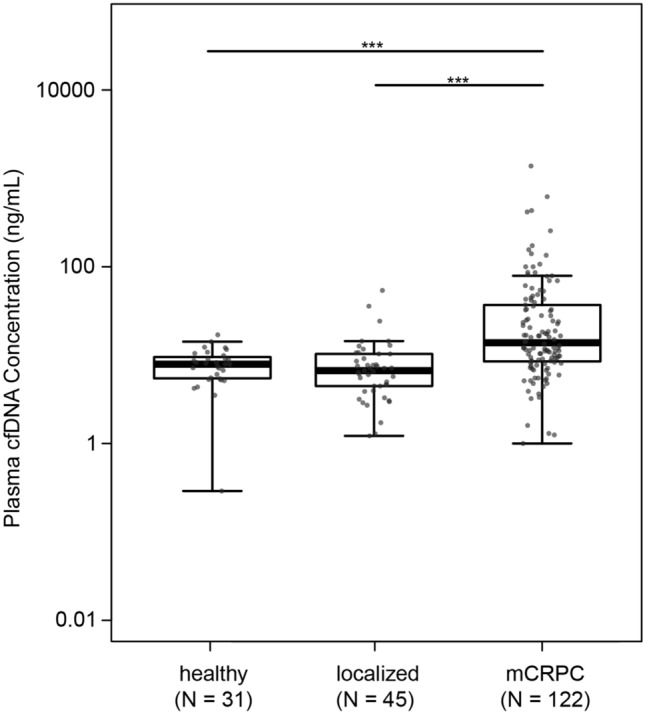
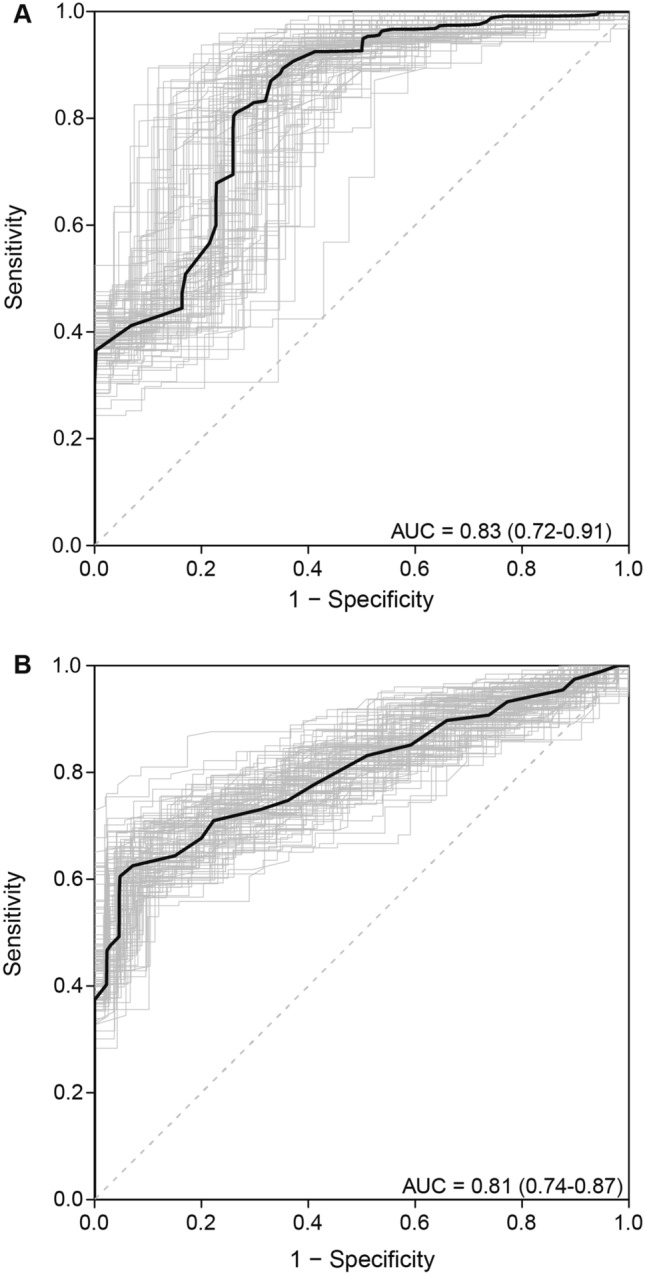
Prostate cancer is the most commonly diagnosed neoplasm in American men. Although existing biomarkers may detect localized prostate cancer, additional strategies are necessary for improving detection and identifying aggressive disease that may require further intervention. One promising, minimally invasive biomarker is cell-free DNA (cfDNA), which consist of short DNA fragments released into circulation by dying or lysed cells that may reflect underlying cancer. Here we investigated whether differences in cfDNA concentration and cfDNA fragment size could improve the sensitivity for detecting more advanced and aggressive prostate cancer. This study included 268 individuals: 34 healthy controls, 112 men with localized prostate cancer who underwent radical prostatectomy (RP), and 122 men with metastatic castration-resistant prostate cancer (mCRPC). Plasma cfDNA concentration and fragment size were quantified with the Qubit 3.0 and the 2100 Bioanalyzer. The potential relationship between cfDNA concentration or fragment size and localized or mCRPC prostate cancer was evaluated with descriptive statistics, logistic regression, and area under the curve analysis with cross-validation. Plasma cfDNA concentrations were elevated in mCRPC patients in comparison to localized disease (OR5ng/mL = 1.34, P = 0.027) or to being a control (OR5ng/mL = 1.69, P = 0.034). Decreased average fragment size was associated with an increased risk of localized disease compared to controls (OR5bp = 0.77, P = 0.0008). This study suggests that while cfDNA concentration can identify mCRPC patients, it is unable to distinguish between healthy individuals and patients with localized prostate cancer. In addition to PSA, average cfDNA fragment size may be an alternative that can differentiate between healthy individuals and those with localized disease, but the low sensitivity and specificity results in an imperfect diagnostic marker. While quantification of cfDNA may provide a quick, cost-effective approach to help guide treatment decisions in advanced disease, its use is limited in the setting of localized prostate cancer.
Conflict of interest statement
JM Chan: Spouse is a full-time employee of GRAIL, Inc. JS Witte: Non-employee founder of Avail Bio, Inc. R Aggarwal: Honoraria (Clovis Oncology), Consulting or Advisory Role (AstraZeneca, Janssen, Dendreon), Research Funding (Zenith Epigenetics, Novartis, Xynomic Pharmaceuticals Inc., Cancer Targeted Technology, Janssen, Merck, Abbvie, Amgen), Travel and Expenses (Xynomic Pharmaceuticals). CL Cario: currently employed at Avail Bio, Inc. AW Wyatt: Commercial Research Grants (Janssen), Honoraria (AstraZeneca, Bayer, and Janssen). F Feng: Consulting or Advisory Role (Blue Earth Diagnostics, Celgene Corp, Genentech, Janssen Oncology, Bayer, Sanofi, Myovant Sciences Inc, Riovant Sciences Ltd, Astellas Pharma Inc), Commercial Research Grants (Zenith Epigenetics), Founding Member (PFS Genomics), Intellectual Property (University of Michigan). T Friedlander: Honoraria (Astellas, AstraZeneca, EMD Serono), Consulting or Advisory role (Seattle Genetics, Pfizer, EMD Serono, Janssen, Abbvie, Dendreon, Dava Oncology), Research Funding (Janssen, Seattle Genetics, Incyte, Bristo Myers Squibb, Neon Therapeutics, Roche/Genentech). L Leong: currently employed at Parker Institute for Cancer Immunotherapy. E Chen, K Lopez, C Márquez, C Chu, P Li, E Oropeza, I Tenggara, J Cowan, J Simko, P Paris, and P Carroll have no conflict of interest to declare.
Figures

References
-
- Mandel P, Metais P. Les acides nucleiques du plasma sanguin ches l’homme. C R Seances Soc Biol Fil. 1948;142:241–243. - PubMed
Publication types
MeSH terms
Substances
Grants and funding
LinkOut - more resources
Full Text Sources
Other Literature Sources
Medical
Research Materials
Miscellaneous
