


Weight loss and risk reduction of obesity-related outcomes in 0.5 million people: evidence from a UK primary care database
- PMID: 33658682
- PMCID: PMC8159734
- DOI: 10.1038/s41366-021-00788-4
Weight loss and risk reduction of obesity-related outcomes in 0.5 million people: evidence from a UK primary care database
Abstract
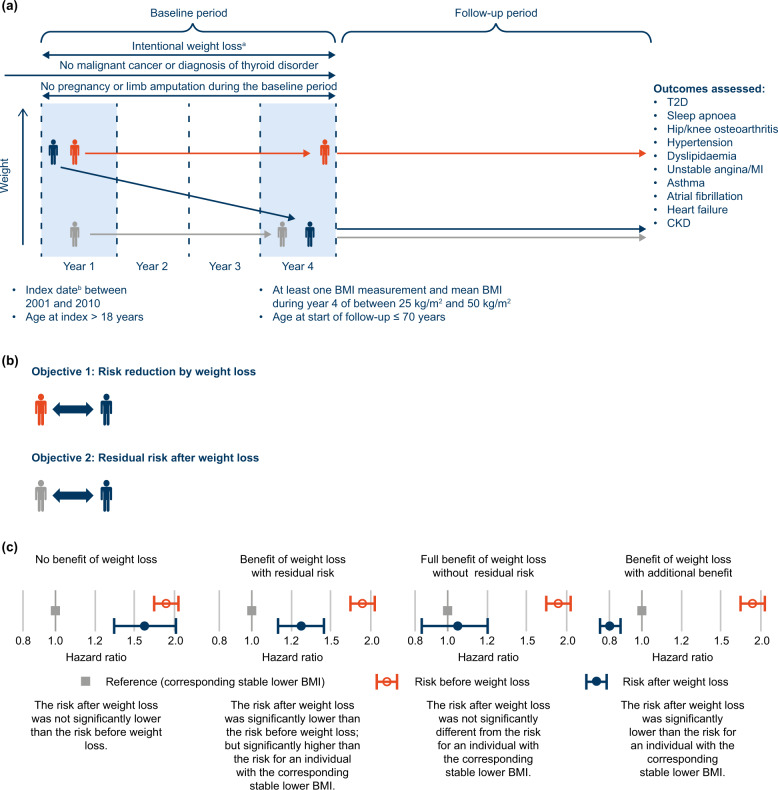
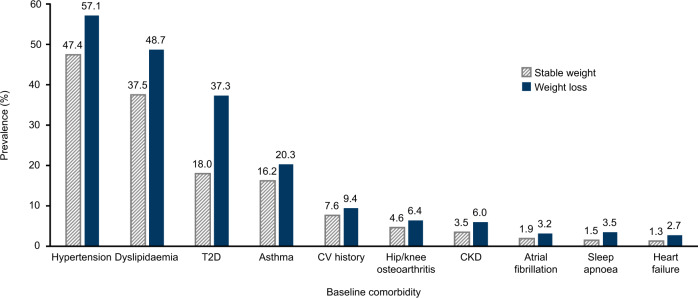
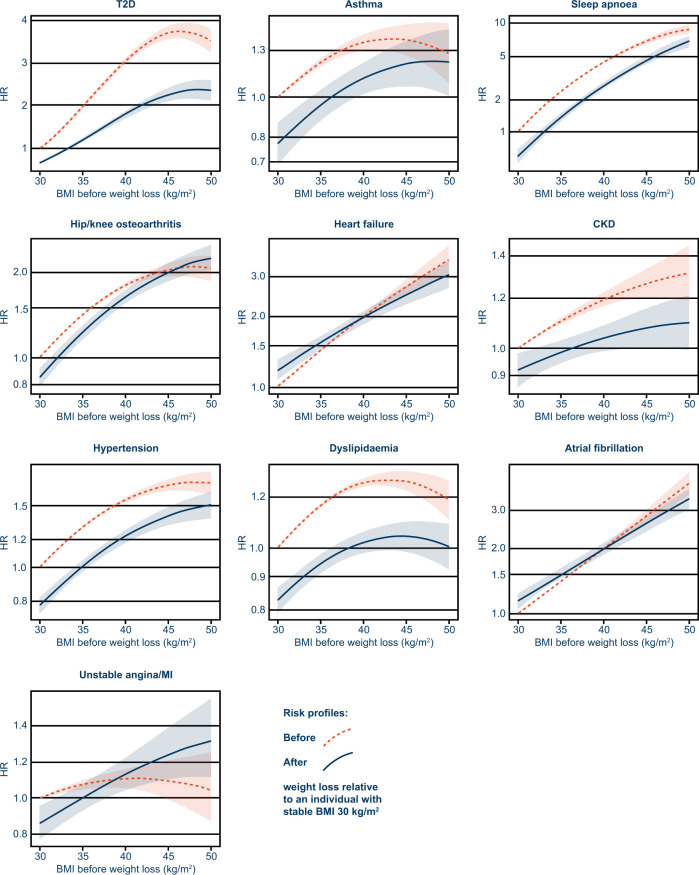
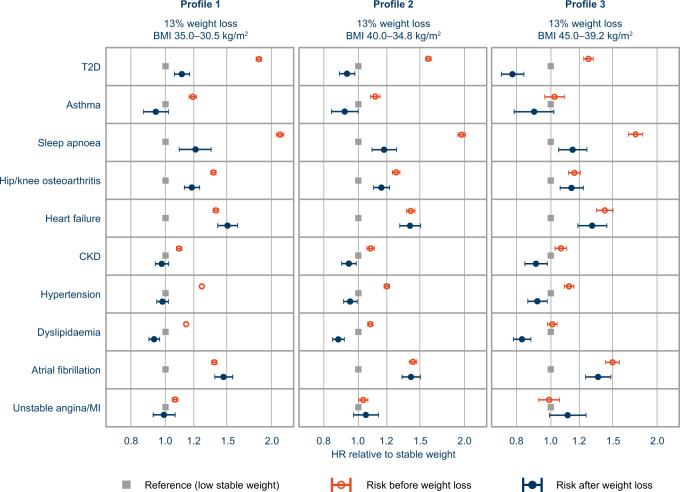
High body mass index (BMI) is known to be associated with various conditions, including type 2 diabetes (T2D), osteoarthritis, cardiovascular disease (CVD) and sleep apnoea; however, the impact of intentional weight loss on the risk of these and other outcomes is not well quantified. We examined the effect of weight loss on ten selected outcomes in a population from the UK Clinical Practice Research Datalink (CPRD) GOLD database. Included individuals were >18 years old at the index date (first BMI value between January 2001 and December 2010). They were categorised by their weight pattern between year 1 post-index and year 4 post-index (baseline period) as having stable weight (-5% to +5%) or weight loss (-25% to -10%, plus evidence of intervention or dietary advice to confirm intention to lose weight). For inclusion, individuals also required a BMI of 25.0-50.0 kg/m2 at the start of the follow-up period, during which the occurrence of ten obesity-related outcomes was recorded. Cox proportional hazard models adjusted for BMI, comorbidities, age, sex and smoking status were used to estimate relative risks for weight loss compared with stable weight. Individuals in the weight-loss cohort had median 13% weight loss. Assuming a BMI of 40 kg/m2 before weight loss, this resulted in risk reductions for T2D (41%), sleep apnoea (40%), hypertension (22%), dyslipidaemia (19%) and asthma (18%). Furthermore, weight loss was associated with additional benefits, with lower risk of T2D, chronic kidney disease, hypertension and dyslipidaemia compared with maintaining the corresponding stable lower BMI throughout the study. This study provides objective, real-world quantification of the effects of weight loss on selected outcomes, with the greatest benefits observed for the established CVD risk factors T2D, hypertension and dyslipidaemia.
Conflict of interest statement
This study was funded by Novo Nordisk A/S. CLH, SL, AHO, AS and VS are employees of, and shareholders in, Novo Nordisk A/S. PM did not receive funding for this collaboration. HEOR Ltd has received funding from Novo Nordisk A/S for work conducted on previous studies.
Figures
References
-
- World Health Organization. WHO technical report series. Obesity: preventing and managing the global epidemic. Report of a WHO Consultation (WHO Technical Report Series 894). 2000. https://www.who.int/nutrition/publications/obesity/WHO_TRS_894/en/. Accessed 30 Jan 2020. - PubMed
Publication types
MeSH terms
LinkOut - more resources
Full Text Sources
Other Literature Sources
Medical
