


Progress of Nanotechnology in Diabetic Retinopathy Treatment
- PMID: 33658779
- PMCID: PMC7917322
- DOI: 10.2147/IJN.S294807
Progress of Nanotechnology in Diabetic Retinopathy Treatment
Abstract
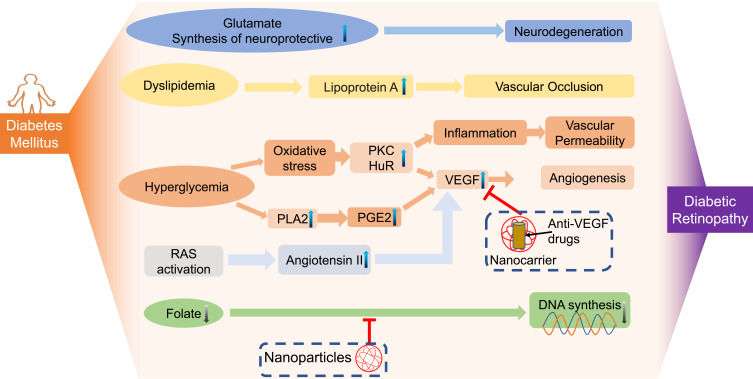
Diabetic retinopathy (DR) is a chronic diabetes complication that progressively manifests itself as blurred vision, eye floaters, distorted vision, and even partial or total loss of vision as a result of retinal detachment in severe cases. Clinically, patients who have undergone variations in the microcirculation of the ocular fundus are treated with laser photocoagulation to improve the circulation of retina; but for patients with macular edema, anti-vascular endothelial growth factor (anti-VEGF) drugs are generally injected to eliminate macular edema and improve vision. The worst cases are patients with fundus hemorrhage or proliferative vitreoretinopathy, for whom vitrectomy has been performed. At present, these clinical treatment methods have widely been used, providing satisfactory results. However, considering the low bioavailability and potential side effects of drugs and the inevitable risks in major surgery, DR prevention, and treatment as well as nerve tissue regeneration in the later stage have always been the focus of research. In recent years, nanotechnology has been increasingly applied in the medical field, leading to new ideas for DR treatment. This study aims to systematically review the research progress of nanotechnology in DR treatment.
Keywords: diabetes mellitus; diabetic retinopathy; drug delivery; nanotechnology.
© 2021 Liu and Wu.
Conflict of interest statement
The authors declare no conflicts of interest for this work.
Figures
References
Publication types
MeSH terms
LinkOut - more resources
Full Text Sources
Other Literature Sources
Medical
