


Good recovery without decompression fasciotomy for crush syndrome caused by using a Japanese-style toilet
- PMID: 33659604
- PMCID: PMC7890425
- DOI: 10.1016/j.tcr.2021.100411
Good recovery without decompression fasciotomy for crush syndrome caused by using a Japanese-style toilet
Erratum in
-
Erratum regarding missing patient consent statement in previously published articles.Trauma Case Rep. 2023 Mar 1;45:100811. doi: 10.1016/j.tcr.2023.100811. eCollection 2023 Jun. Trauma Case Rep. 2023. PMID: 37234579 Free PMC article.
Abstract
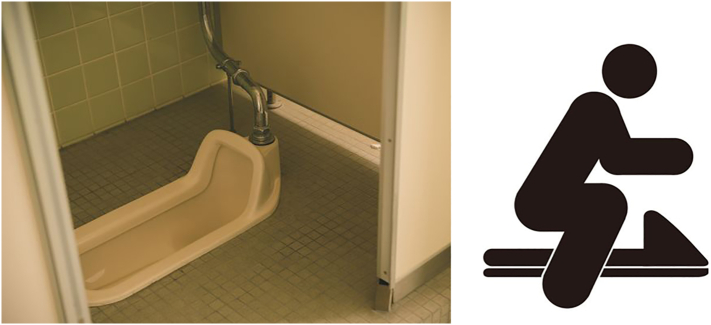
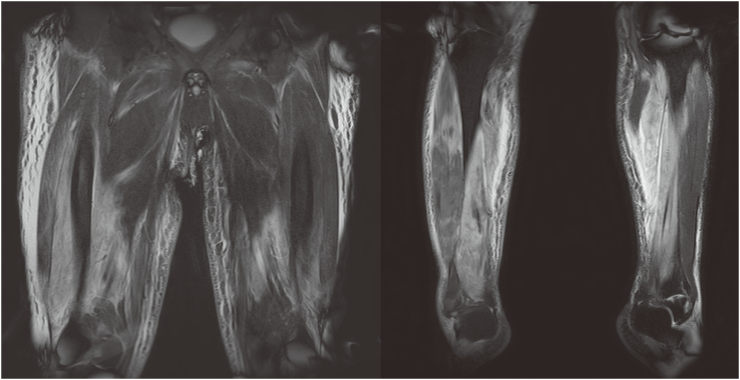
We report a case of crush syndrome that developed while the patient was squatting to use a Japanese-style toilet. The patient was a 61-year-old male with an obese body. He was sitting on the toilet and couldn't stand up, and after a few hours, the landlord found him and called the emergency services. On presentation, the patient was hyperkalemic and in shock, and his serum creatine kinase levels rose to a maximum of 287,600 U/L. He was diagnosed with postural crush syndrome in both lower extremities due to squatting position in a Japanese-style toilet. Subjective symptoms, physical examination, and blood tests were monitored and the patient was observed. As a result, the patient could be treated conservatively without fasciotomy. Dialysis was not necessary because the fluid infusion maintained adequate urine output and corrected the hyperkalemia. Magnetic resonance imaging of both lower extremities showed multiple high-signal areas in the muscles of the bilateral thighs and lower legs. This case suggested that if the wound is closed, the peripheral pulse is palpable, and the patient's symptoms have improved, a fasciotomy should not be performed. People who are too heavy to squat may need to be careful when using this kind of toilet.
Keywords: Crush syndrome; Fasciotomy; Japanese-style toilet; Squatting position.
© 2021 The Author(s).
Conflict of interest statement
The authors have declared that no competing interests exist.
Figures
References
Publication types
LinkOut - more resources
Full Text Sources
Other Literature Sources
Research Materials
