


Artificial intelligence system for automatic deciduous tooth detection and numbering in panoramic radiographs
- PMID: 33661699
- PMCID: PMC8404517
- DOI: 10.1259/dmfr.20200172
Artificial intelligence system for automatic deciduous tooth detection and numbering in panoramic radiographs
Abstract
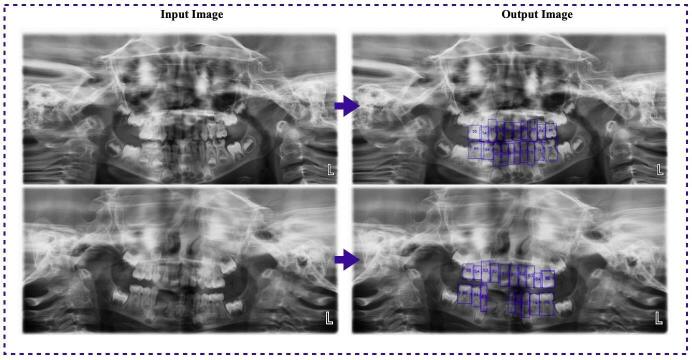
Objective: This study evaluated the use of a deep-learning approach for automated detection and numbering of deciduous teeth in children as depicted on panoramic radiographs.
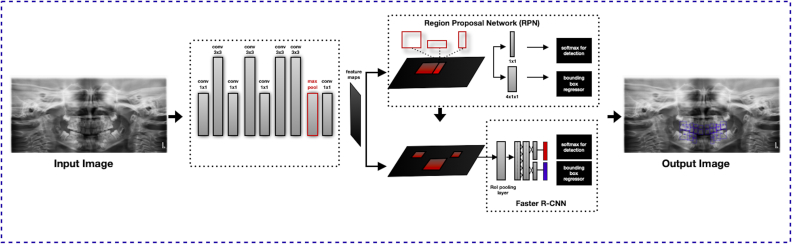
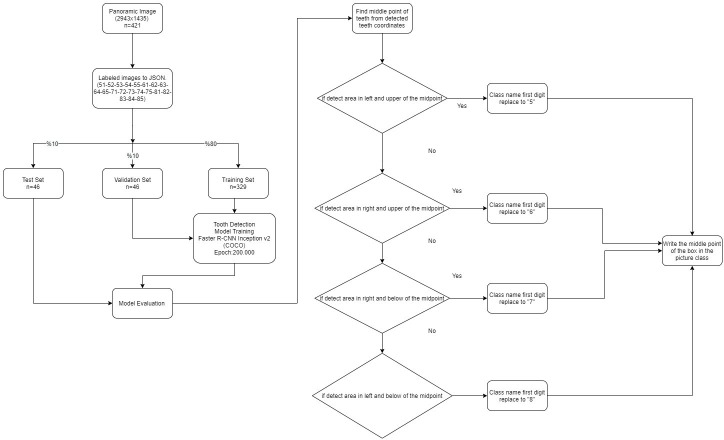
Methods and materials: An artificial intelligence (AI) algorithm (CranioCatch, Eskisehir-Turkey) using Faster R-CNN Inception v2 (COCO) models were developed to automatically detect and number deciduous teeth as seen on pediatric panoramic radiographs. The algorithm was trained and tested on a total of 421 panoramic images. System performance was assessed using a confusion matrix.
Results: The AI system was successful in detecting and numbering the deciduous teeth of children as depicted on panoramic radiographs. The sensitivity and precision rates were high. The estimated sensitivity, precision, and F1 score were 0.9804, 0.9571, and 0.9686, respectively.
Conclusion: Deep-learning-based AI models are a promising tool for the automated charting of panoramic dental radiographs from children. In addition to serving as a time-saving measure and an aid to clinicians, AI plays a valuable role in forensic identification.
Keywords: Artificial intelligence; children; deciduous tooth; deep learning; panoramic radiography; pediatric dentistry; tooth detecting.
Conflict of interest statement
Figures
References
-
- Sabbadini GD. A review of pediatric radiology. J Calif Dent Assoc 2013; 41: 575–81584. - PubMed
MeSH terms
LinkOut - more resources
Full Text Sources
Other Literature Sources
Research Materials
