


Population risk factors for severe disease and mortality in COVID-19: A global systematic review and meta-analysis
- PMID: 33661992
- PMCID: PMC7932512
- DOI: 10.1371/journal.pone.0247461
Population risk factors for severe disease and mortality in COVID-19: A global systematic review and meta-analysis
Abstract
Aim: COVID-19 clinical presentation is heterogeneous, ranging from asymptomatic to severe cases. While there are a number of early publications relating to risk factors for COVID-19 infection, low sample size and heterogeneity in study design impacted consolidation of early findings. There is a pressing need to identify the factors which predispose patients to severe cases of COVID-19. For rapid and widespread risk stratification, these factors should be easily obtainable, inexpensive, and avoid invasive clinical procedures. The aim of our study is to fill this knowledge gap by systematically mapping all the available evidence on the association of various clinical, demographic, and lifestyle variables with the risk of specific adverse outcomes in patients with COVID-19.
Methods: The systematic review was conducted using standardized methodology, searching two electronic databases (PubMed and SCOPUS) for relevant literature published between 1st January 2020 and 9th July 2020. Included studies reported characteristics of patients with COVID-19 while reporting outcomes relating to disease severity. In the case of sufficient comparable data, meta-analyses were conducted to estimate risk of each variable.
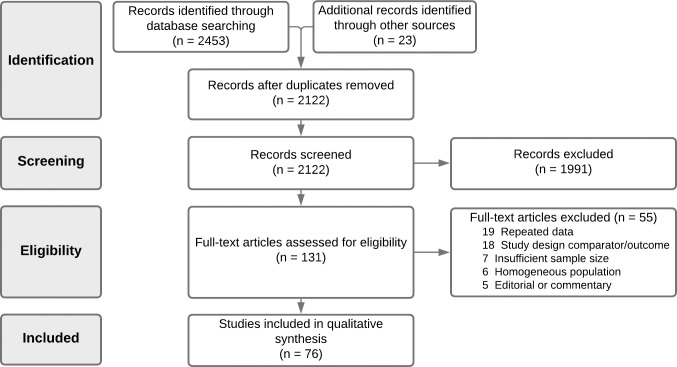
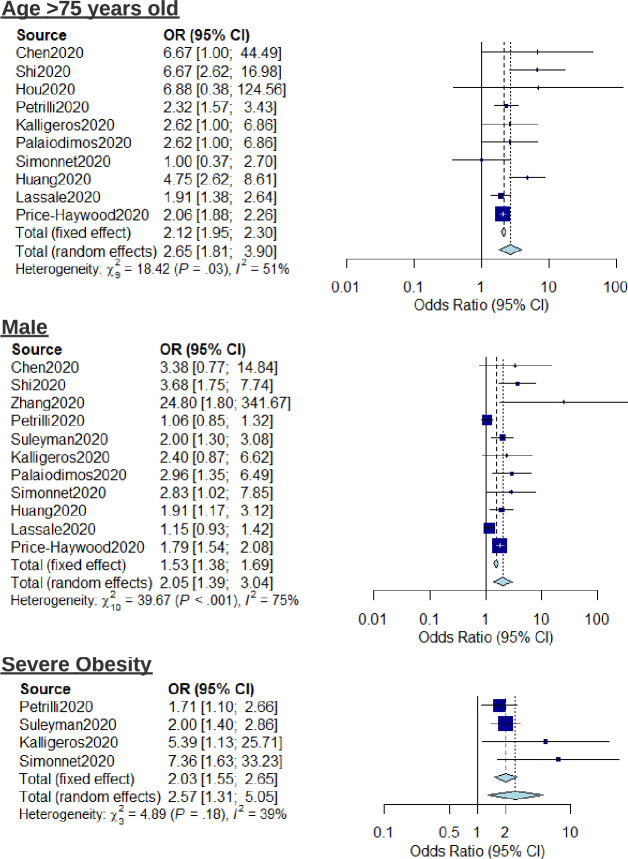
Results: Seventy-six studies were identified, with a total of 17,860,001 patients across 14 countries. The studies were highly heterogeneous in terms of the sample under study, outcomes, and risk measures reported. A large number of risk factors were presented for COVID-19. Commonly reported variables for adverse outcome from COVID-19 comprised patient characteristics, including age >75 (OR: 2.65, 95% CI: 1.81-3.90), male sex (OR: 2.05, 95% CI: 1.39-3.04) and severe obesity (OR: 2.57, 95% CI: 1.31-5.05). Active cancer (OR: 1.46, 95% CI: 1.04-2.04) was associated with increased risk of severe outcome. A number of common symptoms and vital measures (respiratory rate and SpO2) also suggested elevated risk profiles.
Conclusions: Based on the findings of this study, a range of easily assessed parameters are valuable to predict elevated risk of severe illness and mortality as a result of COVID-19, including patient characteristics and detailed comorbidities, alongside the novel inclusion of real-time symptoms and vital measurements.
Conflict of interest statement
A.B, A.B.R., S.P., D.P., A.Y., M.A., are employees of Huma Therapeutics Ltd. D.M & AL declare that they have no conflict of interests to report. This does not alter our adherence to PLOS ONE policies on sharing data and materials.
Figures

References
-
- WHO. Weekly epidemiological update—17 November 2020. World Health Organization; 2020. Nov. Available: https://www.who.int/publications/m/item/weekly-epidemiological-update—17...
Publication types
MeSH terms
LinkOut - more resources
Full Text Sources
Other Literature Sources
Medical
Miscellaneous
