


Pain in adult myotonic dystrophy type 1: relation to function and gender
- PMID: 33663406
- PMCID: PMC7931522
- DOI: 10.1186/s12883-021-02124-9
Pain in adult myotonic dystrophy type 1: relation to function and gender
Abstract
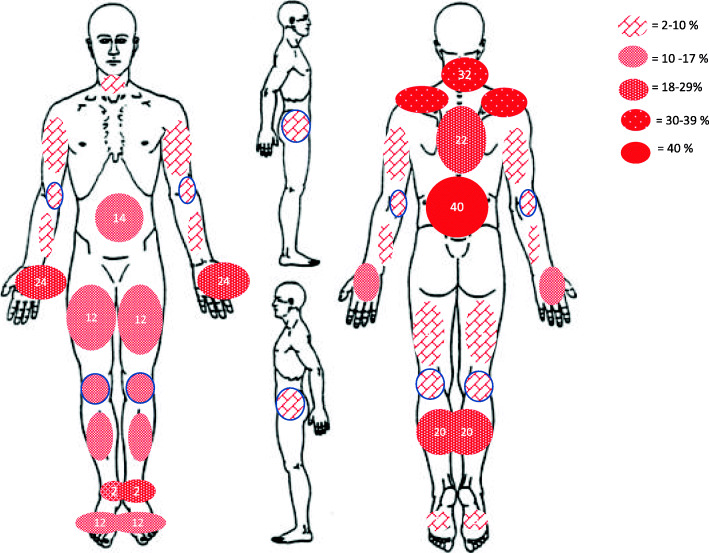
Background: Pain is prevalent in myotonic dystrophy 1 (DM1). This study investigated whether CTG repeat size, disease duration, BMI and motor and psychological function were related to pain in adult patients with DM1, and if there were gender differences regarding intensity and location of pain.
Method: Cross-sectional design. Pain was investigated in 50 genetically confirmed DM1 patients by combining clinical assessment and self-reports of pain intensity and locations. Pain scoring results were related to CTG size, disease duration, muscle strength, walking capacity measured by 6-min walk test, activity of daily life by Katz ADL Index, respiratory function by Forced Vital Capacity and BMI. In addition, the degree of reported pain was related to Quality of life measured by WHOQOL-BREF; fatigue was measured by Fatigue severity scale; psychological functions were measured by Beck Depression Inventory, Beck Anxiety Inventory, IQ and Autism spectrum Quotient.
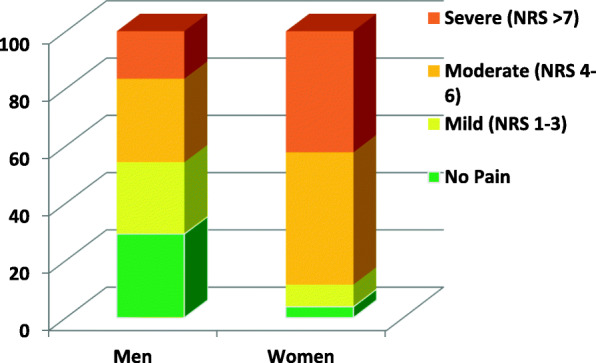
Results: Pain was reported in 84% of the patients and was significantly correlated with CTG size (r = 0.28 p = 0.050), disease duration (r = 0.38 p = 0.007), quality of life (r = - 0.37 p = 0.009), fatigue (r = 0.33 p = 0.02) and forced vital capacity (r = - 0.51, p = 0.005). Significant gender differences, with higher scores for females, were documented. In male subjects the number of pain locations was significantly correlated with quality of life and the autism quotient. In females, pain intensity was significantly correlated with activity, respiratory function and BMI.
Conclusions: Pain in DM1 was prevalent, with a strong association to lung function and other aspects of the disease. Significant gender differences were present for pain intensity and number of pain locations. How pain was related to other symptoms differed between male and female subjects. Our findings highlight the importance of assessments of pain in DM1 patients.
Keywords: Autism quotient; BMI; CTG size; FVC; Fatigue; Gender; Myotonic Dystrophy1; Pain; Quality of life; motor function; psychological function.
Conflict of interest statement
The authors declare that they have no competing interests.
Figures
References
-
- Brook JD, McCurrach ME, Harley HG, Buckler AJ, Church D, Aburatani H, et al. Molecular basis of myotonic dystrophy: expansion of a trinucleotide (CTG) repeat at the 3′ end of a transcript encoding a protein kinase family member. Cell. 1992;68(4):799–808. doi: 10.1016/0092-8674(92)90154-5. - DOI - PubMed
-
- Harper PS, Van Engelen BG. Myotonic dystrophy: present management, future therapy. Oxford: Oxford University Press; 2004. - PubMed
MeSH terms
LinkOut - more resources
Full Text Sources
Other Literature Sources
Medical
