Middle Meningeal Artery Embolization Using Combined Particle Embolization and n-BCA with the Dextrose 5% in Water Push Technique for Chronic Subdural Hematomas: A Prospective Safety and Feasibility Study
- PMID: 33664110
- PMCID: PMC8115365
- DOI: 10.3174/ajnr.A7077
Middle Meningeal Artery Embolization Using Combined Particle Embolization and n-BCA with the Dextrose 5% in Water Push Technique for Chronic Subdural Hematomas: A Prospective Safety and Feasibility Study
Abstract
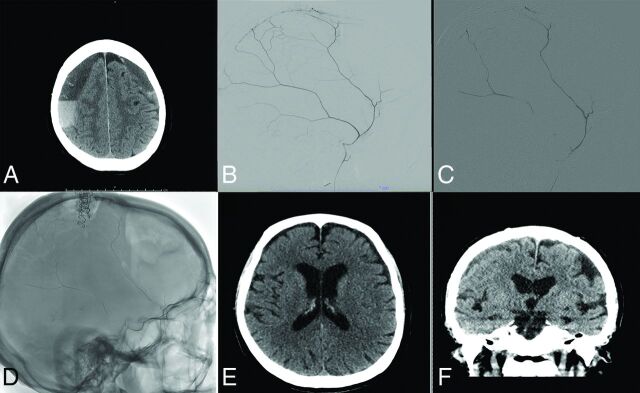
Background and purpose: Embolization of the middle meningeal artery for treatment of refractory or recurrent chronic subdural hematomas has gained momentum during the past few years. Little has been reported on the use of the n-BCA liquid embolic system for middle meningeal artery embolization. We present the technical feasibility of using diluted n-BCA for middle meningeal artery embolization.
Materials and methods: We sought to examine the safety and technical feasibility of the diluted n-BCA liquid embolic system for middle meningeal artery embolization. Patients with chronic refractory or recurrent subdural hematomas were prospectively enrolled from September 2019 to June 2020. The primary outcome was the safety and technical feasibility of the use of diluted n-BCA for embolization of the middle meningeal artery. The secondary end point was the efficacy in reducing hematoma volume.
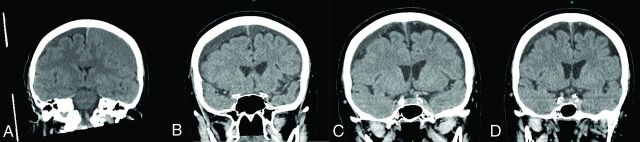
Results: A total of 16 patients were prospectively enrolled. Concomitant burr-hole craniotomies were performed in 12 of the 16 patients. Two patients required an operation following middle meningeal artery embolization for persistent symptoms. The primary end point was met in 100% of cases in which there were no intra- or postprocedural complications. Distal penetration of the middle meningeal artery branches was achieved in all the enrolled cases. A 7-day post-middle meningeal artery embolization follow-up head CT demonstrated improvement (>50% reduction in subdural hematoma volume) in 9/15 (60%) patients, with 6/15 (40%) showing an unchanged or stable subdural hematoma. At day 21, available CT scans demonstrated substantial further improvement (>75% reduction in subdural hematoma volume).
Conclusions: Embolization of the middle meningeal artery using diluted n-BCA and ethiodized oil (1:6) is safe and feasible from a technical standpoint. The use of a dextrose 5% bolus improves distal penetration of the glue.
© 2021 by American Journal of Neuroradiology.
Figures
References
Publication types
MeSH terms
Substances
LinkOut - more resources
Full Text Sources
Other Literature Sources
Miscellaneous