


Cancer and Tumour Suppressor p53 Encounters at the Juncture of Sex Disparity
- PMID: 33664771
- PMCID: PMC7920968
- DOI: 10.3389/fgene.2021.632719
Cancer and Tumour Suppressor p53 Encounters at the Juncture of Sex Disparity
Abstract
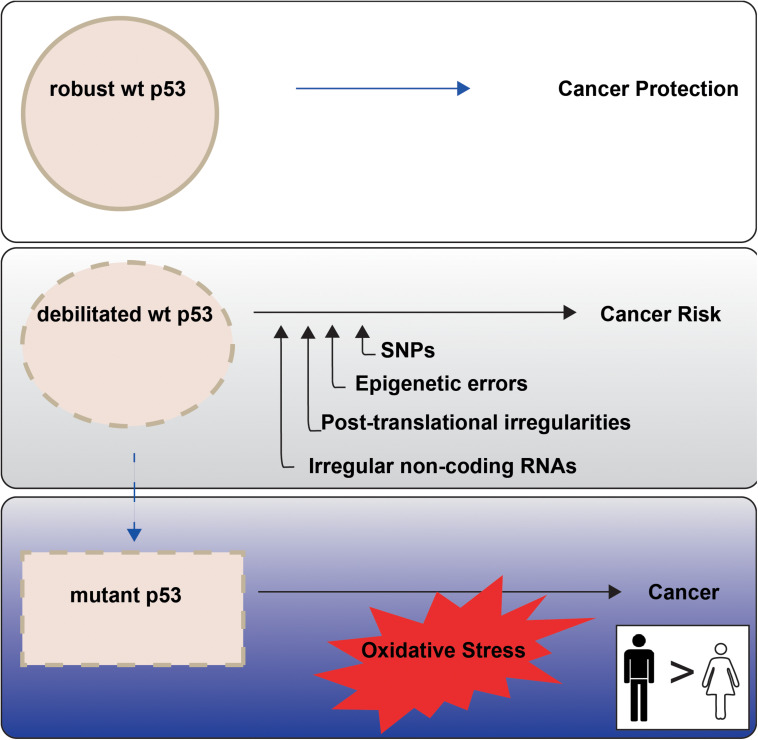
There are many differences in cancer manifestation between men and women. New understanding of the origin of these point to fundamental distinctions in the genetic code and its demise. Tumour suppressor protein p53 is the chief operating officer of cancer defence and critically acts to safeguard against sustained DNA damaged. P53 cannot be ignored in cancer sex disparity. In this review we discuss the greater prevalence and associated death rates for non-reproductive cancers in males. The major tumour suppressor protein p53, encoded in the TP53 gene is our chosen context. It is fitting to ask why somatic TP53 mutation incidence is estimated to be disproportionately higher among males in the population for these types of cancers compared with females? We scrutinised the literature for evidence of predisposing genetic and epigenetic alterations that may explain this sex bias. Our second approach was to explore whether redox activity, either externally imposed or inherent to males and females, may define distinct risks that could contribute to the clear cancer sex disparities.
Keywords: SNPs; cancer; epigenetics; non-coding RNAs; oxidative stress; p53; post translational modifications; sex disparity.
Copyright © 2021 Haupt and Haupt.
Conflict of interest statement
The authors declare that the research was conducted in the absence of any commercial or financial relationships that could be construed as a potential conflict of interest.
Figures
References
Publication types
LinkOut - more resources
Full Text Sources
Other Literature Sources
Research Materials
Miscellaneous
