


Perspectives About Modulating Host Immune System in Targeting SARS-CoV-2 in India
- PMID: 33664772
- PMCID: PMC7921795
- DOI: 10.3389/fgene.2021.637362
Perspectives About Modulating Host Immune System in Targeting SARS-CoV-2 in India
Abstract
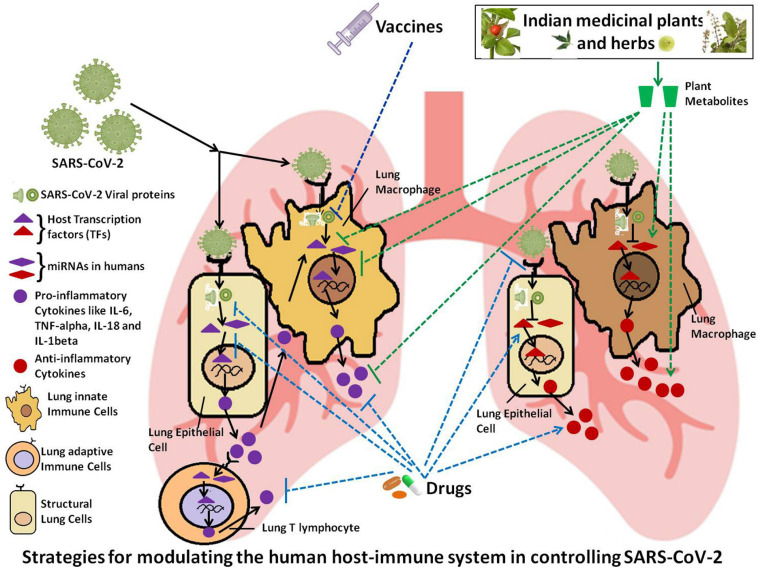
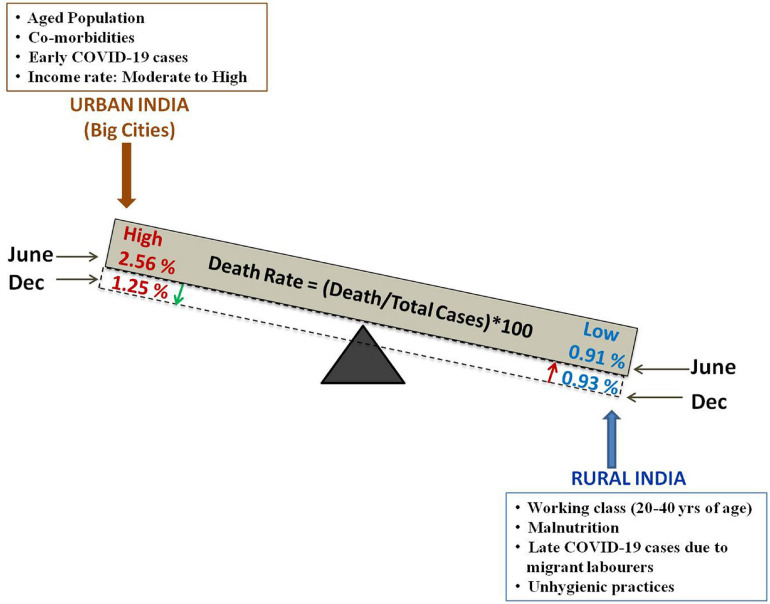
Severe acute respiratory syndrome coronavirus-2 (SARS-CoV-2), the causative agent of coronavirus induced disease-2019 (COVID-19), is a type of common cold virus responsible for a global pandemic which requires immediate measures for its containment. India has the world's largest population aged between 10 and 40 years. At the same time, India has a large number of individuals with diabetes, hypertension and kidney diseases, who are at a high risk of developing COVID-19. A vaccine against the SARS-CoV-2, may offer immediate protection from the causative agent of COVID-19, however, the protective memory may be short-lived. Even if vaccination is broadly successful in the world, India has a large and diverse population with over one-third being below the poverty line. Therefore, the success of a vaccine, even when one becomes available, is uncertain, making it necessary to focus on alternate approaches of tackling the disease. In this review, we discuss the differences in COVID-19 death/infection ratio between urban and rural India; and the probable role of the immune system, co-morbidities and associated nutritional status in dictating the death rate of COVID-19 patients in rural and urban India. Also, we focus on strategies for developing masks, vaccines, diagnostics and the role of drugs targeting host-virus protein-protein interactions in enhancing host immunity. We also discuss India's strengths including the resources of medicinal plants, good food habits and the role of information technology in combating COVID-19. We focus on the Government of India's measures and strategies for creating awareness in the containment of COVID-19 infection across the country.
Keywords: CT scans; SARS-CoV-2; artificial intelligence; genetic variations; host immuno-modulation; medicinal plants; repurposed drugs; vaccines.
Copyright © 2021 Majumdar, Verma, Saha, Bhattacharyya, Maji, Surjit, Kundu, Basu and Saha.
Conflict of interest statement
The authors declare that the research was conducted in the absence of any commercial or financial relationships that could be construed as a potential conflict of interest.
Figures
References
-
- Agrawal D. (2020). Ventilator politics—the big picture. Indian J. Neurotrauma 17 1–2.
Publication types
LinkOut - more resources
Full Text Sources
Other Literature Sources
Miscellaneous
