


Sarcoptic mange severity is associated with reduced genomic variation and evidence of selection in Yellowstone National Park wolves (Canis lupus)
- PMID: 33664786
- PMCID: PMC7896714
- DOI: 10.1111/eva.13127
Sarcoptic mange severity is associated with reduced genomic variation and evidence of selection in Yellowstone National Park wolves (Canis lupus)
Abstract
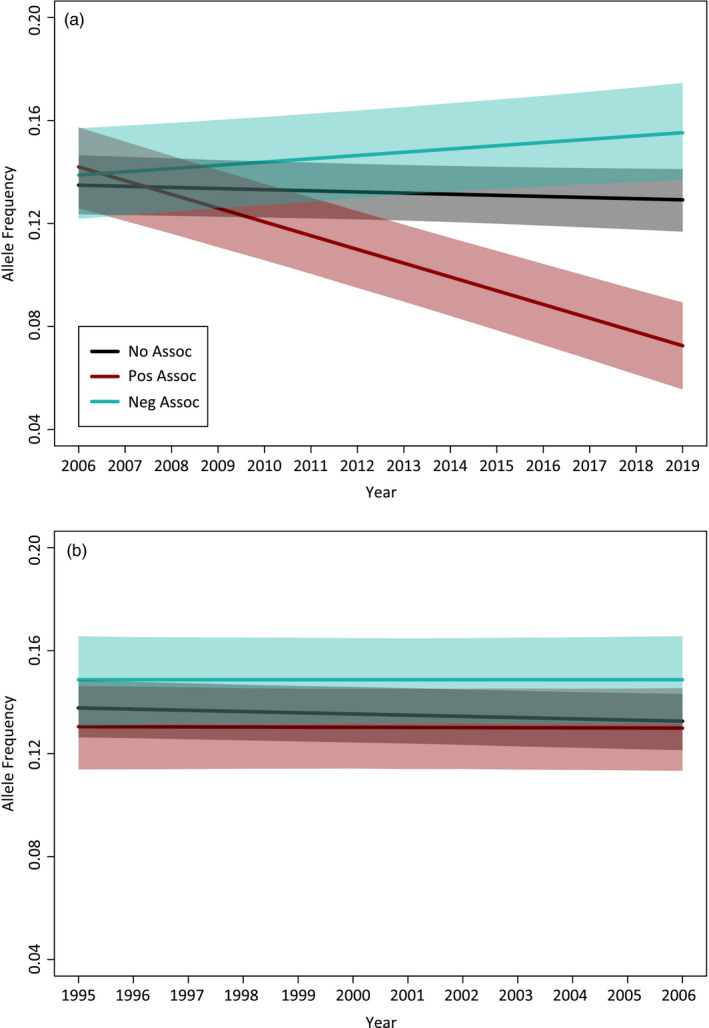
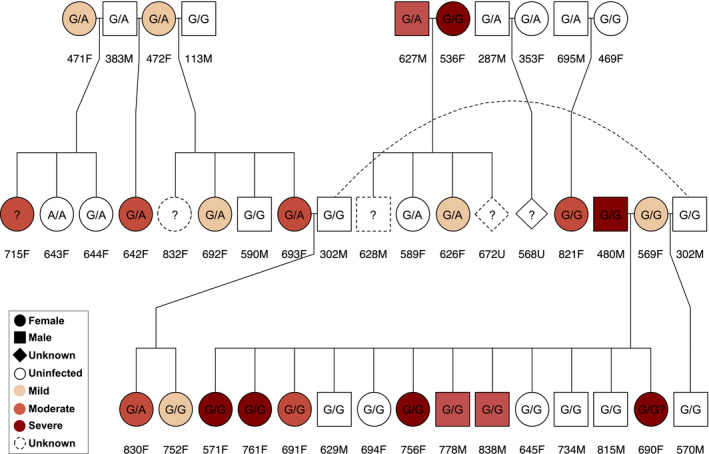
Population genetic theory posits that molecular variation buffers against disease risk. Although this "monoculture effect" is well supported in agricultural settings, its applicability to wildlife populations remains in question. In the present study, we examined the genomics underlying individual-level disease severity and population-level consequences of sarcoptic mange infection in a wild population of canids. Using gray wolves (Canis lupus) reintroduced to Yellowstone National Park (YNP) as our focal system, we leveraged 25 years of observational data and biobanked blood and tissue to genotype 76,859 loci in over 400 wolves. At the individual level, we reported an inverse relationship between host genomic variation and infection severity. We additionally identified 410 loci significantly associated with mange severity, with annotations related to inflammation, immunity, and skin barrier integrity and disorders. We contextualized results within environmental, demographic, and behavioral variables, and confirmed that genetic variation was predictive of infection severity. At the population level, we reported decreased genome-wide variation since the initial gray wolf reintroduction event and identified evidence of selection acting against alleles associated with mange infection severity. We concluded that genomic variation plays an important role in disease severity in YNP wolves. This role scales from individual to population levels, and includes patterns of genome-wide variation in support of the monoculture effect and specific loci associated with the complex mange phenotype. Results yielded system-specific insights, while also highlighting the relevance of genomic analyses to wildlife disease ecology, evolution, and conservation.
Keywords: RAD‐sequencing; ectoparasite; genetics; infection severity; mite infestations; natural selection; sarcoptic mange; wildlife disease.
© 2020 The Authors. Evolutionary Applications published by John Wiley & Sons Ltd.
Conflict of interest statement
None declared.
Figures

References
-
- Abbas, A. , Lichtman, A. H. , & Pillai, S. (2016). Basic immunology: Functions and disorders of the immune system. New York, NY: Elsevier Inc.
-
- Aguilar, A. , Roemer, G. , Debenham, S. , Binns, M. , Garcelon, D. , & Wayne, R. K. (2004). High MHC diversity maintained by balancing selection in an otherwise genetically monomorphic mammal. Proceedings of the National Academy of Sciences, 101(10), 3490–3494. 10.1073/pnas.0306582101 - DOI - PMC - PubMed
LinkOut - more resources
Full Text Sources
