


Successful transcatheter arterial embolization for ruptured adrenocortical tumor in a pediatric patient
- PMID: 33664926
- PMCID: PMC7900638
- DOI: 10.1016/j.radcr.2021.02.008
Successful transcatheter arterial embolization for ruptured adrenocortical tumor in a pediatric patient
Erratum in
-
Erratum regarding missing Declaration of Competing Interest statements in previously published articles.Radiol Case Rep. 2022 Sep 29;17(12):4933. doi: 10.1016/j.radcr.2022.08.054. eCollection 2022 Dec. Radiol Case Rep. 2022. PMID: 36311872 Free PMC article.
Abstract
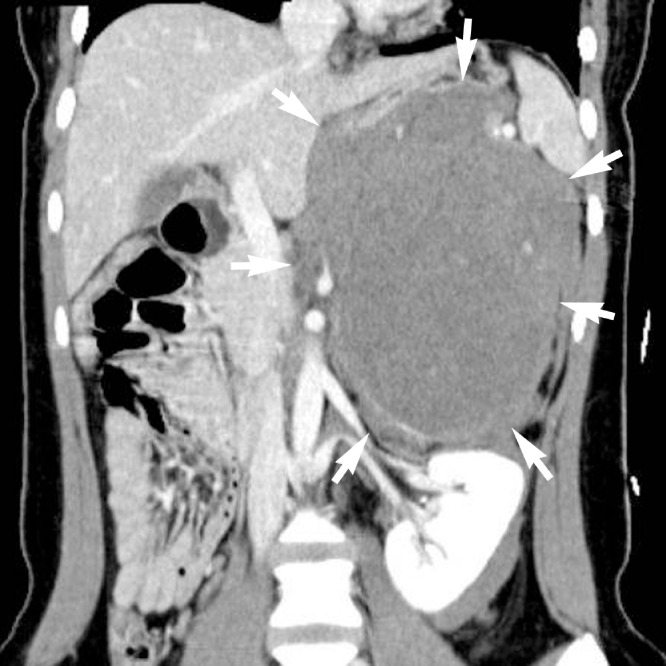
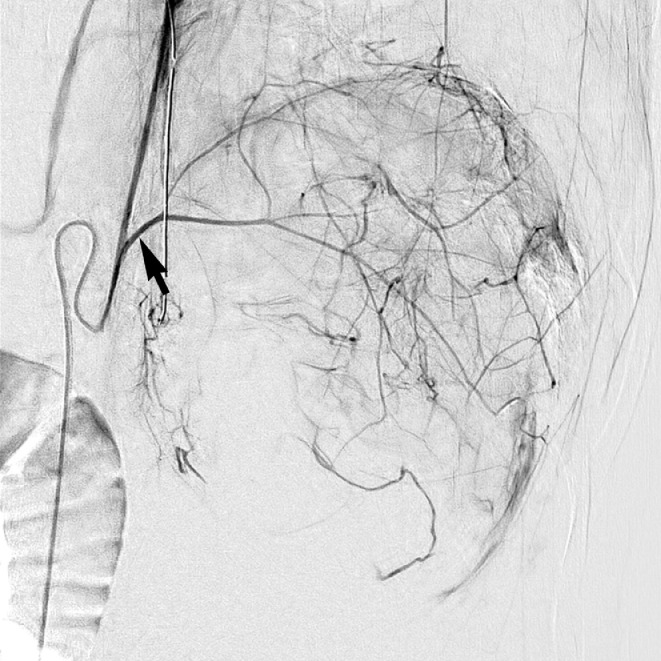
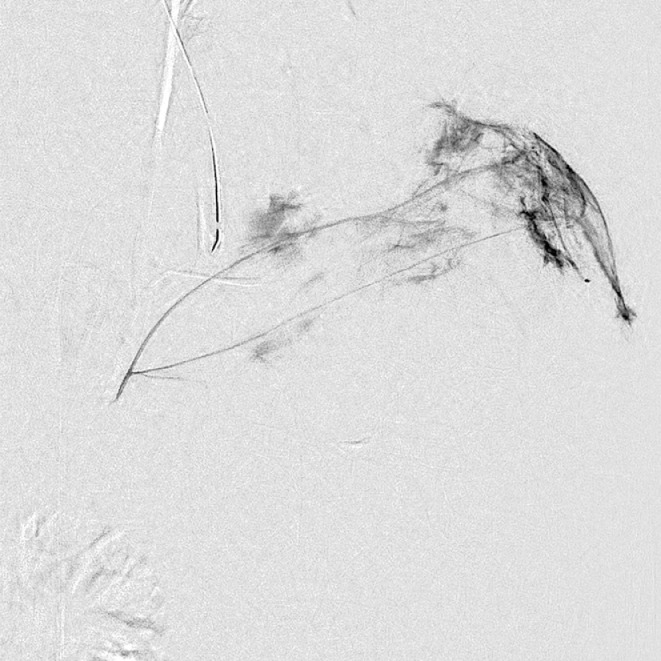
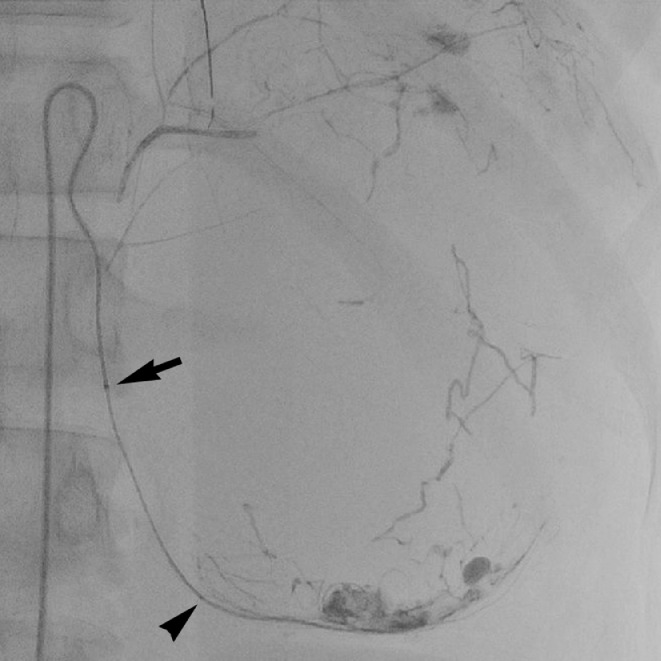
Adrenocortical tumors (ACTs) are rare in children and should be treated as malignant tumors. A 12-year-old female patient was referred to our institute for acute abdomen and hypovolemic shock. She had symptoms of virilization, including lowered voice, beard growth, and hirsutism. An elevated level of dehydroepiandrosterone sulfate was observed, and computed tomography scan showed a large left adrenal mass with massive hemorrhage. Emergency transcatheter arterial embolization was successfully performed using N-buthyl-2-cyanoacrylate as an embolic material. She underwent surgical resection on the following day. Histopathological analysis showed strong degeneration of the tumor and its necrosis, and the tumor was diagnosed as ACT of unknown grade. To our knowledge, this is the first case of a ruptured ACT treated with transcatheter arterial embolization in a pediatric patient.
Keywords: ACT, adrenocortical tumor; Adrenocortical tumor; CT, computed tomography; DHEA-S, dehydroepiandrosterone sulfate; N-butyl-2-cyanoacrylate; NBCA, n-butyl-2-cyanoacrylate; Pediatric; Rupture; TAE, transcatheter arterial embolization; Transarterial embolization.
© 2021 The Authors. Published by Elsevier Inc. on behalf of University of Washington.
Figures
References
-
- Ribeiro R.C., Pinto E.M., Zambetti G.P., Rodriguez-Galindo C. The International Pediatric Adrenocortical Tumor Registry initiative: contributions to clinical, biological, and treatment advances in pediatric adrenocortical tumors. Mol. Cell. Endocrinol. 2012;351:37–43. - PubMed
-
- Lee K.A., Jin H.Y. Non-surgically treated case of nonfunctioning ruptured adrenal adenoma in a patient on hemodialysis. Endocrine. 2019;65:213–216. - PubMed
-
- Ichijo T., Ueshiba H., Nawata H., Yanase T. A nationwide survey of adrenal incidentalomas in Japan: the first report of clinical and epidemiological features. Endocr J. 2020;67:141–152. - PubMed
Publication types
LinkOut - more resources
Full Text Sources
Other Literature Sources
