


Susceptibility for Some Infectious Diseases in Patients With Diabetes: The Key Role of Glycemia
- PMID: 33665182
- PMCID: PMC7921169
- DOI: 10.3389/fpubh.2021.559595
Susceptibility for Some Infectious Diseases in Patients With Diabetes: The Key Role of Glycemia
Abstract
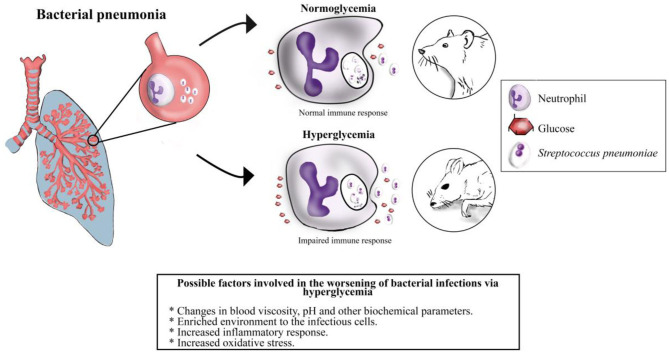
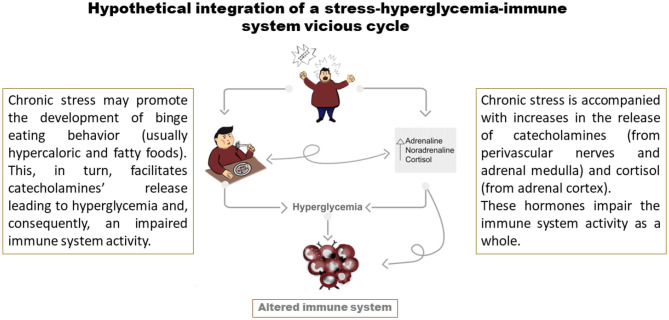
Uncontrolled diabetes results in several metabolic alterations including hyperglycemia. Indeed, several preclinical and clinical studies have suggested that this condition may induce susceptibility and the development of more aggressive infectious diseases, especially those caused by some bacteria (including Chlamydophila pneumoniae, Haemophilus influenzae, and Streptococcus pneumoniae, among others) and viruses [such as coronavirus 2 (CoV2), Influenza A virus, Hepatitis B, etc.]. Although the precise mechanisms that link glycemia to the exacerbated infections remain elusive, hyperglycemia is known to induce a wide array of changes in the immune system activity, including alterations in: (i) the microenvironment of immune cells (e.g., pH, blood viscosity and other biochemical parameters); (ii) the supply of energy to infectious bacteria; (iii) the inflammatory response; and (iv) oxidative stress as a result of bacterial proliferative metabolism. Consistent with this evidence, some bacterial infections are typical (and/or have a worse prognosis) in patients with hypercaloric diets and a stressful lifestyle (conditions that promote hyperglycemic episodes). On this basis, the present review is particularly focused on: (i) the role of diabetes in the development of some bacterial and viral infections by analyzing preclinical and clinical findings; (ii) discussing the possible mechanisms by which hyperglycemia may increase the susceptibility for developing infections; and (iii) further understanding the impact of hyperglycemia on the immune system.
Keywords: COVID-19; diabetes; hyperglycemia; immune system; infections.
Copyright © 2021 Chávez-Reyes, Escárcega-González, Chavira-Suárez, León-Buitimea, Vázquez-León, Morones-Ramírez, Villalón, Quintanar-Stephano and Marichal-Cancino.
Conflict of interest statement
The authors declare that the research was conducted in the absence of any commercial or financial relationships that could be construed as a potential conflict of interest. The handling editor and reviewer AV declared a shared affiliation with one of the authors EC-S at time of review.
Figures
References
-
- Rosenberg CS. Wound healing in the patient with diabetes mellitus. Nurs Clin North Am. (1990) 25:247–61. - PubMed
Publication types
MeSH terms
LinkOut - more resources
Full Text Sources
Other Literature Sources
Medical
