


E2F1: Cause and Consequence of DNA Replication Stress
- PMID: 33665206
- PMCID: PMC7921158
- DOI: 10.3389/fmolb.2020.599332
E2F1: Cause and Consequence of DNA Replication Stress
Abstract
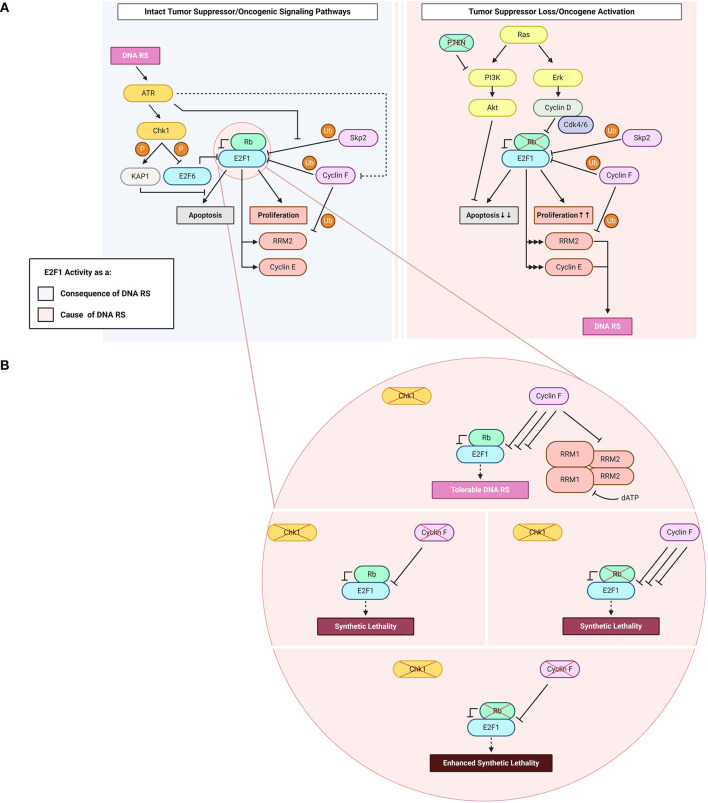
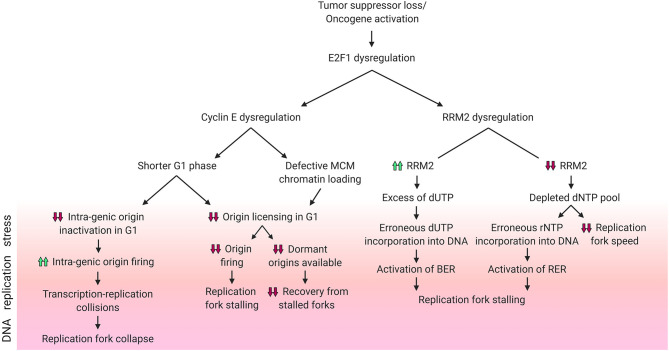
In mammalian cells, cell cycle entry occurs in response to the correct stimuli and is promoted by the transcriptional activity of E2F family members. E2F proteins regulate the transcription of S phase cyclins and genes required for DNA replication, DNA repair, and apoptosis. The activity of E2F1, the archetypal and most heavily studied E2F family member, is tightly controlled by the DNA damage checkpoints to modulate cell cycle progression and initiate programmed cell death, when required. Altered tumor suppressor and oncogenic signaling pathways often result in direct or indirect interference with E2F1 regulation to ensure higher rates of cell proliferation independently of external cues. Despite a clear link between dysregulated E2F1 activity and cancer progression, literature on the contribution of E2F1 to DNA replication stress phenotypes is somewhat scarce. This review discusses how dysfunctional tumor suppressor and oncogenic signaling pathways promote the disruption of E2F1 transcription and hence of its transcriptional targets, and how such events have the potential to drive DNA replication stress. In addition to the involvement of E2F1 upstream of DNA replication stress, this manuscript also considers the role of E2F1 as a downstream effector of the response to this type of cellular stress. Lastly, the review introduces some reflections on how E2F1 activity is integrated with checkpoint control through post-translational regulation, and proposes an exploitable tumor weakness based on this axis.
Keywords: DNA replication stress; E2F1; cyclin E; cyclin F; retinoblastoma; ribonucleotide reductase; ubiquitin proteasome system.
Copyright © 2021 Fouad, Hauton and D'Angiolella.
Conflict of interest statement
The authors declare that the research was conducted in the absence of any commercial or financial relationships that could be construed as a potential conflict of interest.
Figures
References
-
- Banerjee D., Schnieders B., Fu J. Z., Adhikari D., Zhao S. C., Bertino J. R. (1998). Role of E2F-1 in chemosensitivity. Cancer Res. 58, 4292–4296. - PubMed
Publication types
Grants and funding
LinkOut - more resources
Full Text Sources
Other Literature Sources
