


Characteristics and limitations of a secondary dose check software for VMAT plan calculation
- PMID: 33666339
- PMCID: PMC7984465
- DOI: 10.1002/acm2.13206
Characteristics and limitations of a secondary dose check software for VMAT plan calculation
Abstract
Purpose: To assess the implementation, accuracy, and validity of the dosimetric leaf gap correction (DLGC) in Mobius3D VMAT plan calculations.
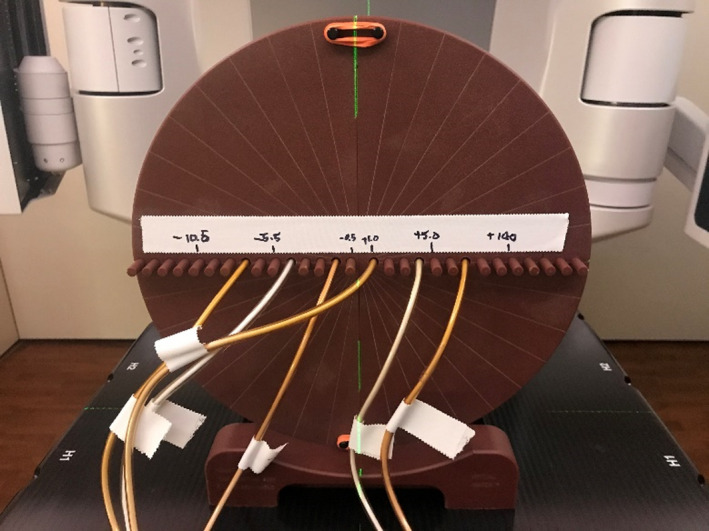
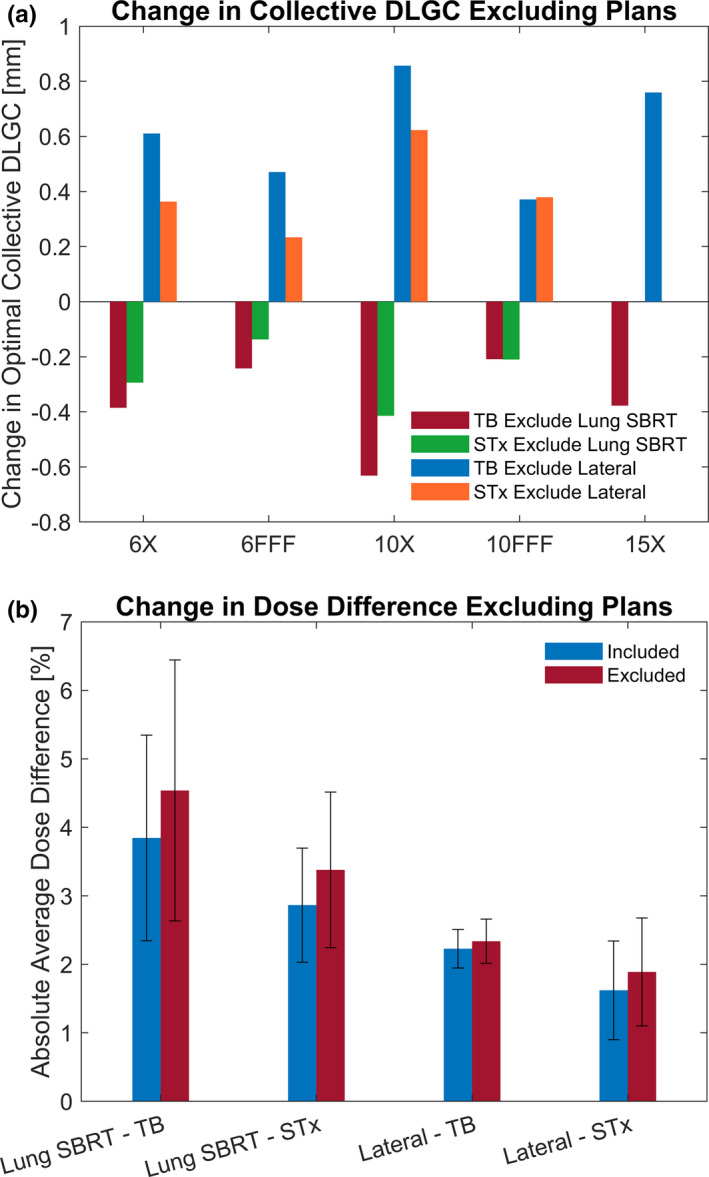
Methods: The optimal Mobius3D DLGC was determined for both a TrueBeam with a Millennium multi-leaf collimator and a TrueBeamSTx with a high-definition multi-leaf collimator. By analyzing a broad series of seven VMAT plans and comparing the calculated to the measured dose delivered to a cylindrical phantom, optimal DLGC values were determined by minimizing the dose difference for both the collection of all plans, as well as for each plan individually. The effects of plan removal from the optimization of the collective DLGC value, as well as plan-specific DLGC values, were explored to determine the impact of plan suite design on the final DLGC determination.
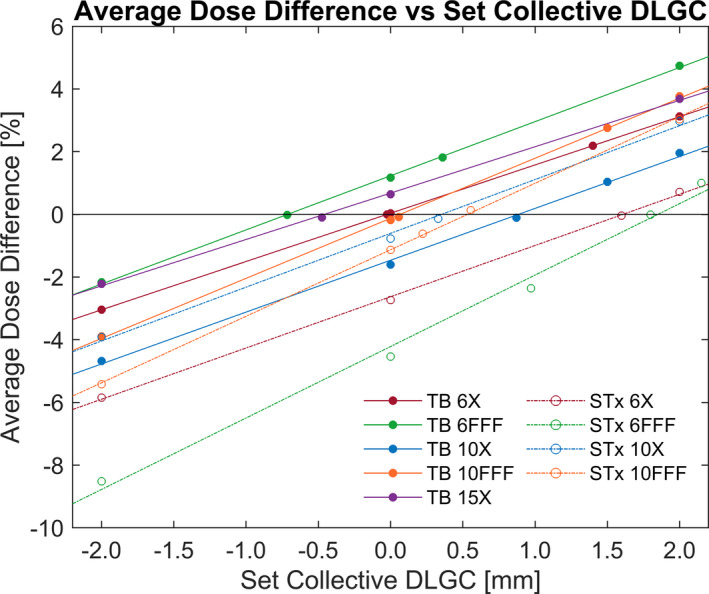
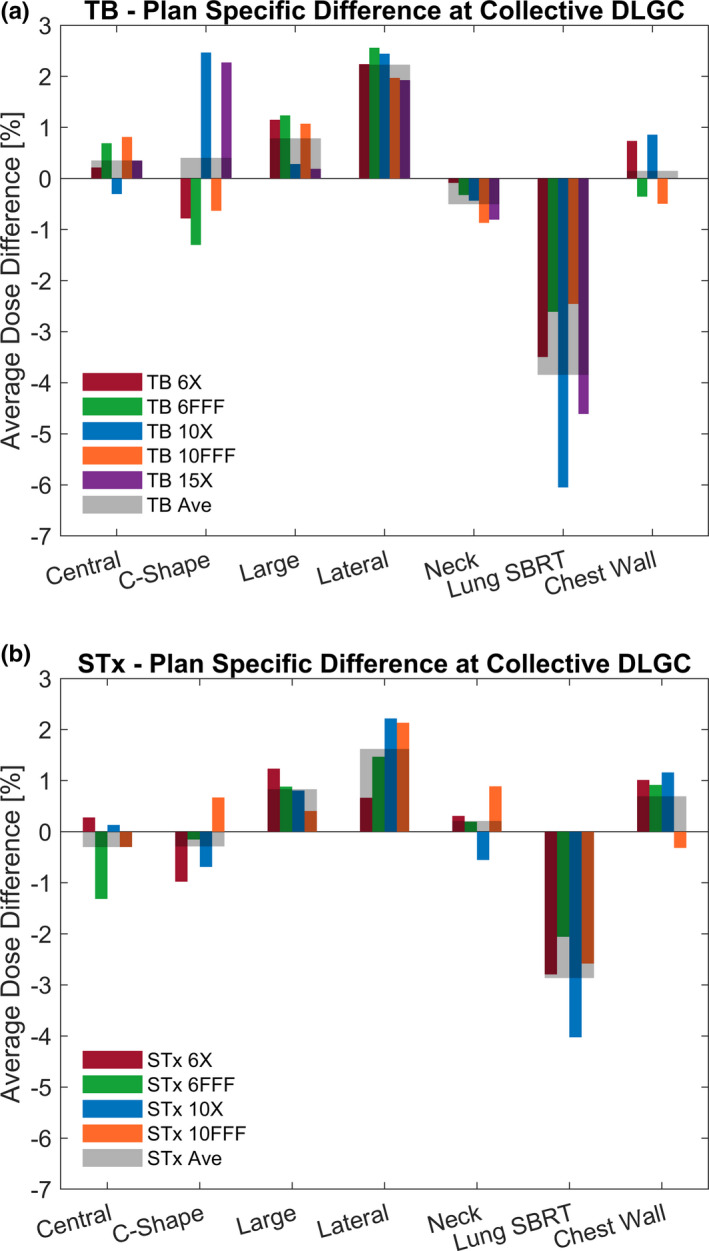
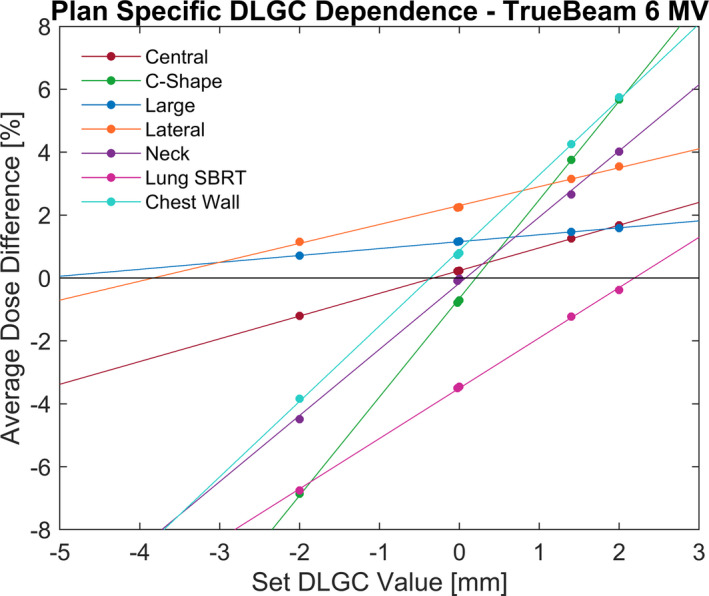
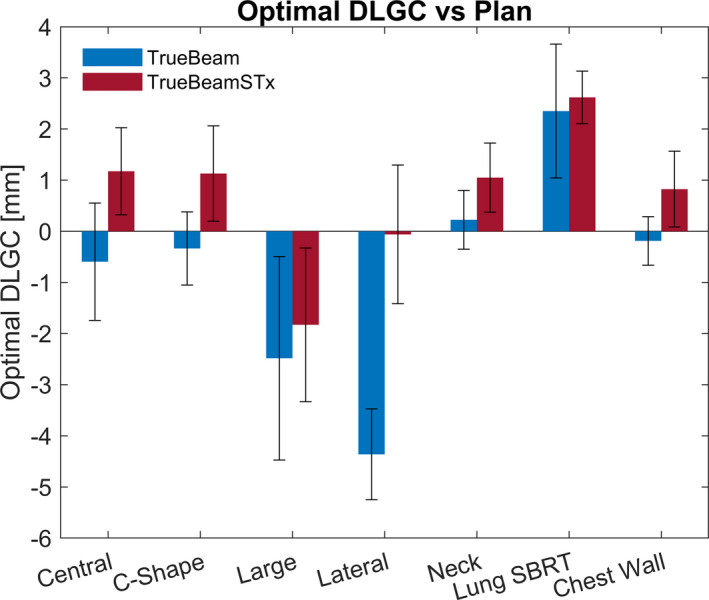
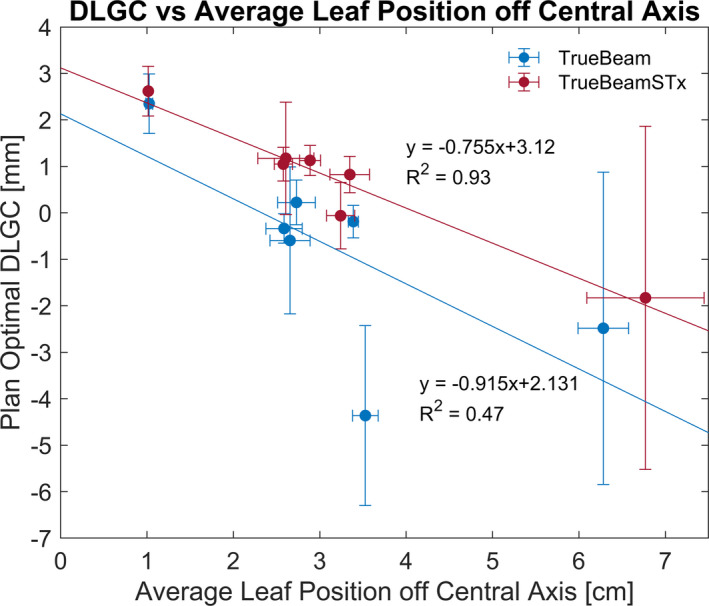
Results: Optimal collective DLGC values across all energies were between -0.71 and 0.89 mm for the TrueBeam, and between 0.35 and 1.85 mm for the TrueBeamSTx. The dose differences ranged between -6.1% and 2.6% across all plans when the optimal collective DLGC values were used. On a per-plan basis, the plan-specific optimal DLGC values ranged from -4.36 to 2.35 mm for the TrueBeam, and between -1.83 and 2.62 mm for the TrueBeamSTx. Comparing the plan-specific optimal DLGC to the average absolute leaf position from the central axis for each plan, a negative correlation was observed.
Conclusions: The optimal DLGC determination depends on the plans investigated, making it essential for users to utilize a suite of test plans that encompasses the full range of expected clinical plans when determining the optimal DLGC value. Validation of the secondary dose calculation should always be based on measurements, and not a comparison with the primary TPS. Varying disagreement with measurements across plans for a single DLGC value indicates potential limitations in the Mobius3D MLC model.
Keywords: MLC model; Mobius3D; dosimetric leaf gap; leaf offset; secondary dose check.
© 2021 The Authors. Journal of Applied Clinical Medical Physics published by Wiley Periodicals, Inc. on behalf of American Association of Physicists in Medicine.
Conflict of interest statement
The authors have no conflict of interest to report.
Figures
References
-
- Childress N, Stevens E, Eklund D, Zhang M. Mobius3D White Paper: Dose Calculation Algorithm. In.: Mobius Medical Systems; 2012.
-
- Inc.' VMS . Mobius 3D: Instructions for Use; 2020.
-
- LoSasso T, Chui CS, Ling CC. Physical and dosimetric aspects of a multileaf collimation system used in the dynamic mode for implementing intensity modulated radiotherapy. Med Phys. 1998;25:1919–1927. - PubMed
MeSH terms
LinkOut - more resources
Full Text Sources
Other Literature Sources
Miscellaneous
