Review
. 2021 Mar 4;28(3):378-393.
doi: 10.1016/j.stem.2021.02.013.

Targeting Energy Metabolism in Cancer Stem Cells: Progress and Challenges in Leukemia and Solid Tumors

Affiliations
Review

Targeting Energy Metabolism in Cancer Stem Cells: Progress and Challenges in Leukemia and Solid Tumors

Courtney L Jones et al. Cell Stem Cell. .

Abstract

Malignant stem cells have long been considered a key therapeutic target in leukemia. Therapeutic strategies designed to target the fundamental biology of leukemia stem cells while sparing normal hematopoietic cells may provide better outcomes for leukemia patients. One process in leukemia stem cell biology that has intriguing therapeutic potential is energy metabolism. In this article we discuss the metabolic properties of leukemia stem cells and how targeting energy metabolism may provide more effective therapeutic regimens for leukemia patients. In addition, we highlight the similarities and differences in energy metabolism between leukemia stem cells and malignant stem cells from solid tumors.


Conflict of interest statement

Declaration of Interest The authors declare no conflict of interest.

Figures
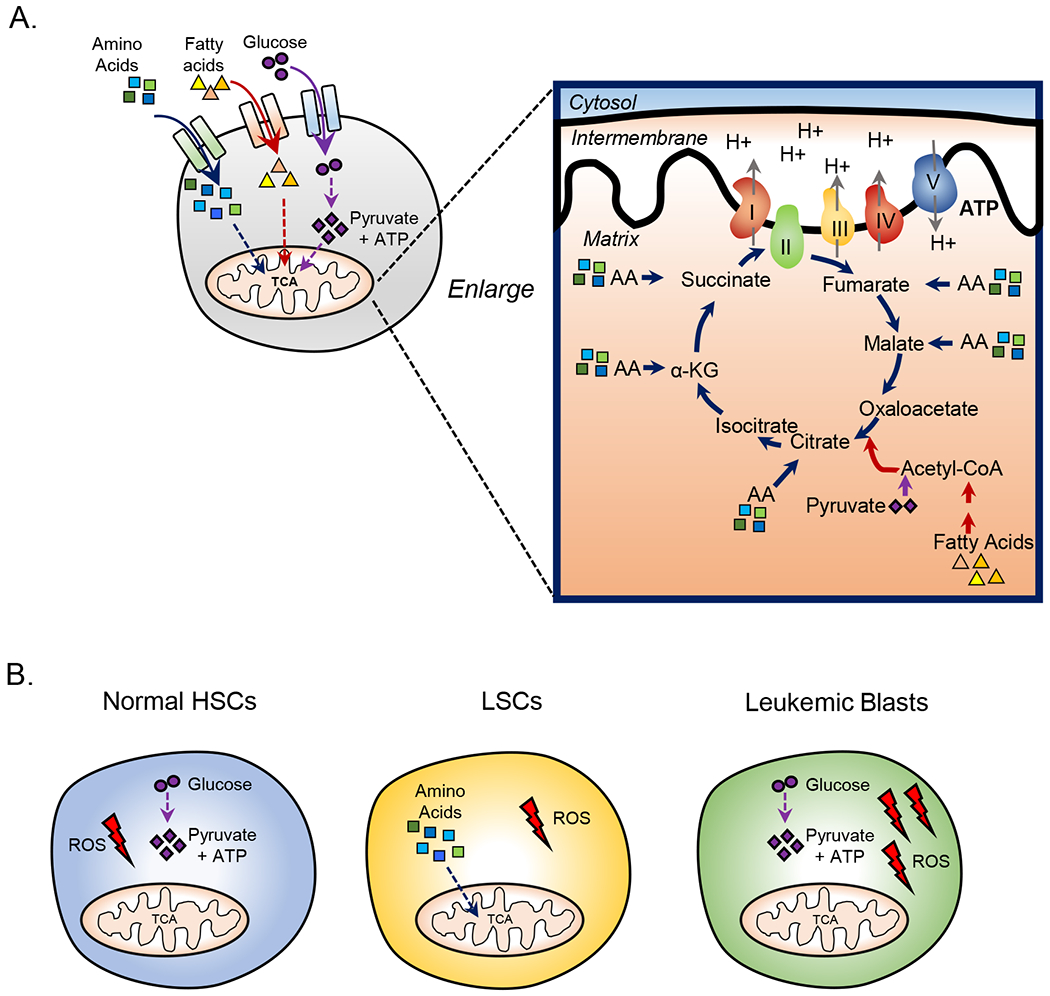
Figure 1:
Figure 1:. LSCs utilize OXPHOS for energy production
A. Cells generate ATP through glycolysis or oxidative phosphorylation. Each of these pathways rely on the breakdown of metabolites including glucose, fatty acids, and amino acids. B. Figure shows the essential energy pathways used to produce energy (ATP) in the indicated cell types. Normal HSCs and mature leukemic blasts are highly glycolytic and rely on glycolysis for ATP production. LSCs use oxidative phosphorylation to produce ATP and therefore rely on oxidative phosphorylation for survival. Cancer stem cells from several cancer types including pancreatic cancer, glioma, and multiple carcinomas are also highly dependent on OXPHOS. Despite relying on different energy pathways HSCs and LSCs have relatively low levels of reactive oxygen species (ROS) likely due to low levels of OXPHOS and spare capacity in these populations compared to mature leukemic blasts which have increased levels of ROS.
Figure 2:
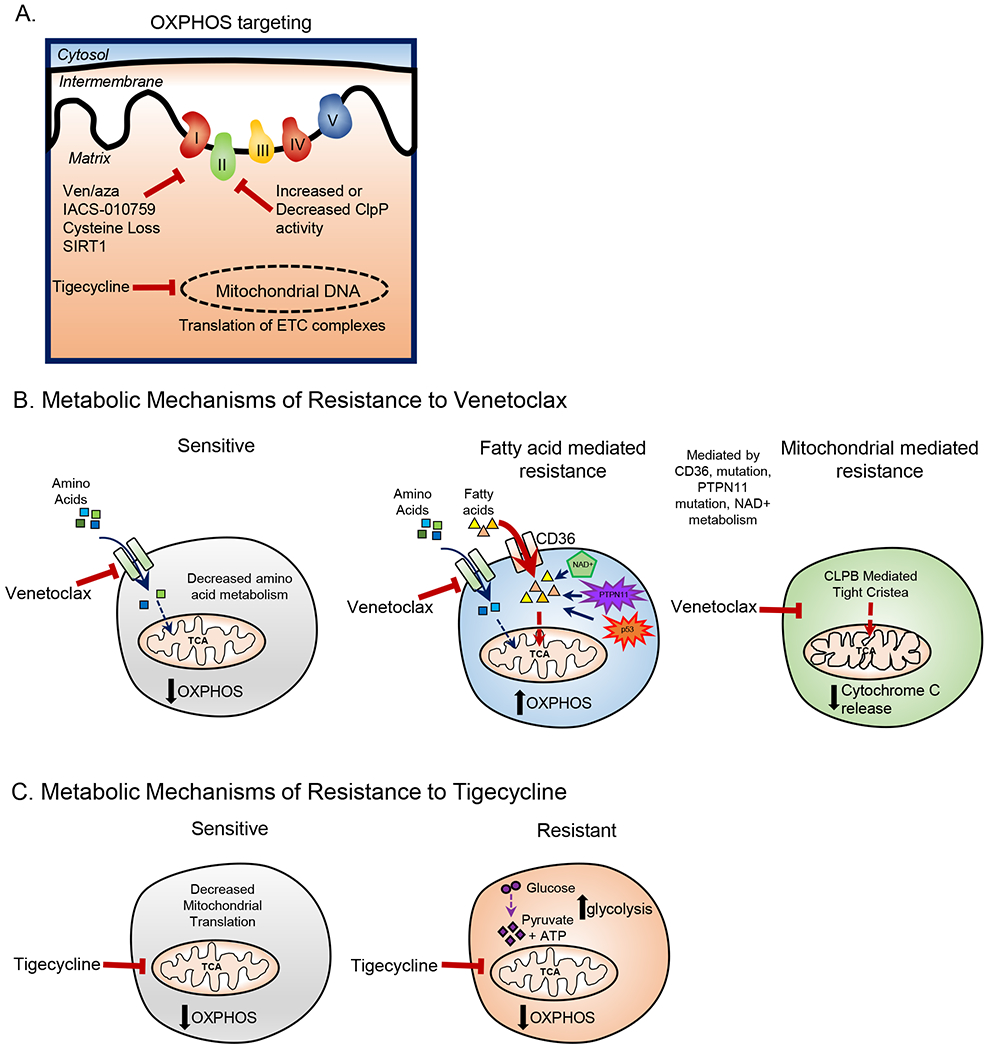
Figure 2:. Targeting OXPHOS and Therapy Resistance in LSCs
A. OXPHOS in LSCs can be targeted by venetoclax with azacitidine treatment, IACS-010759 treatment, cysteine depletion, ClpP activation or inhibition, inhibition of mitochondrial translation, and SIRT1 deletion. B. In sensitive LSCs venetoclax decreases amino acid metabolism resulting in decreased OXPHOS. Venetoclax resistance in LSCs has been shown to be mediated by increases in fatty acid metabolism which can be caused by increased expression in fatty acid transporter CD36, mutations in TP53, and potentially other mechanisms. Further, venetoclax resistance can be caused by changes in mitochondrial cristae structure which is mediated by CLPB expression. C. In sensitive CSCs tigecycline decreases mitochondrial translation resulting in decreased OXPHOS. Tigecycline resistant CSCs upregulate glycolysis to compensate for the loss of OXPHOS.

References

    1. ABRAHAM A, QIU S, CHACKO BK, LI H, PATERSON A, HE J, AGARWAL P, SHAH M, WELNER R, DARLEY-USMAR VM & BHATIA R 2019. SIRT1 regulates metabolism and leukemogenic potential in CML stem cells. The Journal of clinical investigation, 129, 2685–2701. - PMC - PubMed
    1. ADANE B, YE H, KHAN N, PEI S, MINHAJUDDIN M, STEVENS BM, JONES CL, D’ALESSANDRO A, REISZ JA, ZABEREZHNYY V, GASPARETTO M, HO TC, KELLY KK, MYERS JR, ASHTON JM, SIEGENTHALER J, KUME T, CAMPBELL EL, POLLYEA DA, BECKER MW & JORDAN CT 2019. The Hematopoietic Oxidase NOX2 Regulates Self-Renewal of Leukemic Stem Cells. Cell Rep, 27, 238–254.e6. - PMC - PubMed
    1. AGATHOCLEOUS M, MEACHAM CE, BURGESS RJ, PISKOUNOVA E, ZHAO Z, CRANE GM, COWIN BL, BRUNER E, MURPHY MM, CHEN W, SPANGRUDE GJ, HU Z, DEBERARDINIS RJ & MORRISON SJ 2017. Ascorbate regulates haematopoietic stem cell function and leukaemogenesis. Nature, 549, 476–481. - PMC - PubMed
    1. AL-HAJJ M, WICHA MS, BENITO-HERNANDEZ A, MORRISON SJ & CLARKE MF 2003. Prospective identification of tumorigenic breast cancer cells. Proc Natl Acad Sci U S A, 100, 3983–8. - PMC - PubMed
    1. ANDERSON AS, ROBERTS PC, FRISARD MI, HULVER MW & SCHMELZ EM 2014. Ovarian tumor-initiating cells display a flexible metabolism. Exp Cell Res, 328, 44–57. - PMC - PubMed

Publication types