


Anxiety, depression and stress during the COVID-19 pandemic: Results from a cross-sectional survey
- PMID: 33667763
- PMCID: PMC8548032
- DOI: 10.1016/j.jpsychires.2021.02.059
Anxiety, depression and stress during the COVID-19 pandemic: Results from a cross-sectional survey
Abstract
Background: Multiple survey studies have demonstrated a mental health (MH) burden of COVID-19 globally. However, few studies have examined relevant risk factors for pandemic-related MH issues.
Methods: A link to an online survey was posted from April 8th - June 11th, 2020 which included questions regarding COVID-19 experience, perceived impact of the pandemic on life domains (e.g., social communication, finances), behavioural alterations (e.g., online activities, substance use), and MH treatment history. Current psychiatric symptom severity and impairment were evaluated using the Generalized Anxiety Disorder-7, Patient Health Questionnaire-9, and the Perceived Stress Scale.
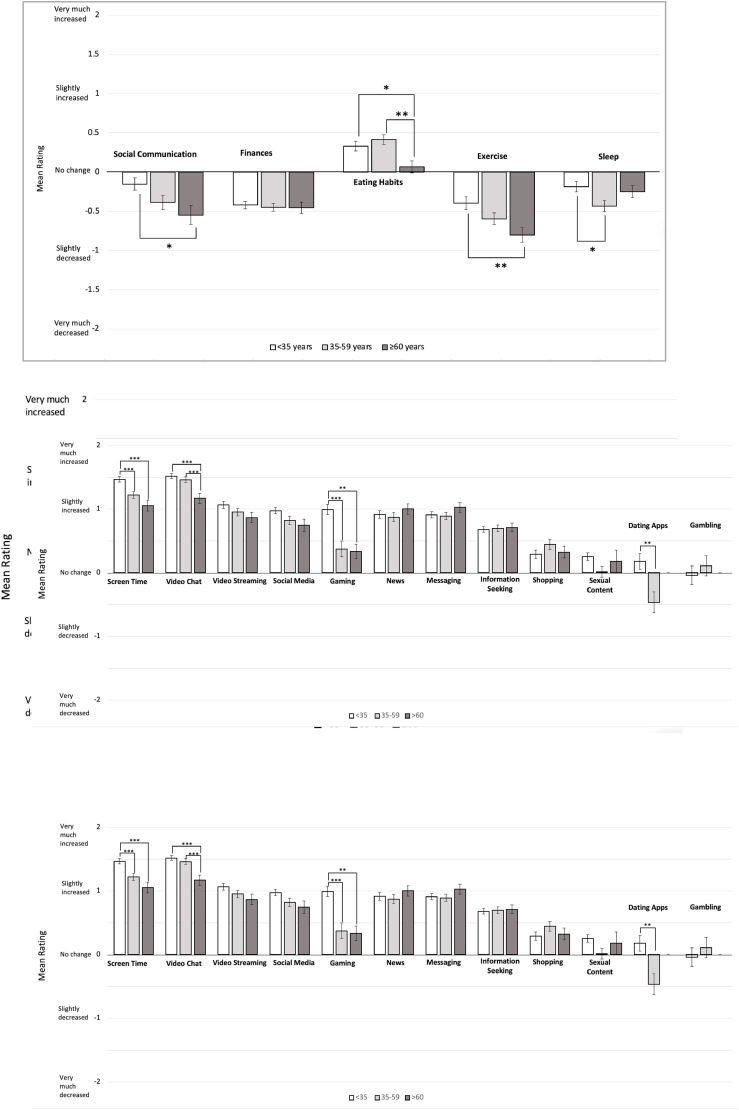
Results: Overall, 632 individuals (82% female, mean age:42.04 ± 16.56) in Canada and the United States completed the survey. While few reported contracting COVID-19 (0.5%), the impact of the pandemic was evident, with a vast majority reporting anxiety around COVID-19 infecting loved ones (88%). Almost half (43%) reported previous MH treatment and 31% met criteria for GAD, 29% for MDD and 63% reported significantly high levels of stress. Female sex, younger age and past MH treatment emerged as significant predictors of these issues(p < .01). Age-related differences in the impact of COVID-19 on life domains, substance use, and online activity were also noted.
Conclusion: The findings from the current sample add to the growing literature suggesting negative effects of COVID-19 on MH, while highlighting specific risk factors. Age may be an important factor in predicting MH during this pandemic.
Keywords: Anxiety; COVID-19; Coronavirus; Depression; Mental health; Stress.
Copyright © 2021. Published by Elsevier Ltd.
Conflict of interest statement
Dr. Turna has nothing to disclose.
Ms. Zhang has nothing to disclose.
Ms. Lamberti has nothing to disclose.
Ms. Patterson has nothing to disclose.
Dr. Simpson has nothing to disclose.
Dr. Francisco has nothing to disclose.
Dr. Goldman Bergmann reports grants from Coordenação de Aperfeiçoamento de Pessoal de Nivel Superior – Brasil (CAPES), outside the submitted work.
Dr. Van Ameringen reports personal fees from Allergan, personal fees from Almatica, personal fees from Brainsway, personal fees from Lundbeck, personal fees from Myriad Neuroscience, personal fees from Otsuka, grants and personal fees from Purdue Pharma (Canada), other from Janssen-Ortho Inc, personal fees from Pfizer, grants from Hamilton Academic Health Sciences Organization, Innovation Grant, outside the submitted work.
Figures
References
-
- Adams C. 2020. Eating Well during Coronavirus/COVID-19.https://www.bda.uk.com/resource/eating-well-during-coronavirus-covid-19....
-
- American Psychological Association . 2020. Stress In AmericaTM2020: Stress In the Time of COVID-19, Volume Three.https://www.apa.org/news/press/releases/stress/2020/stress-in-america-co...
-
- Ammar A., Brach M., Trabelsi K., Chtourou H., Boukhris O., Masmoudi L., Bouaziz B., Bentlage E., How D., Ahmed M., Müller P., Müller N., Aloui A., Hammouda O. Effects of COVID-19 home confinement on eating behaviour and physical activity: results of the ECLB-COVID19 International Online Survey. Nutrients. 2020;12:1583–1596. - PMC - PubMed
MeSH terms
LinkOut - more resources
Full Text Sources
Other Literature Sources
Medical
Miscellaneous
