


Advances in Sensing, Response and Regulation Mechanism of Salt Tolerance in Rice
- PMID: 33668247
- PMCID: PMC7956267
- DOI: 10.3390/ijms22052254
Advances in Sensing, Response and Regulation Mechanism of Salt Tolerance in Rice
Abstract
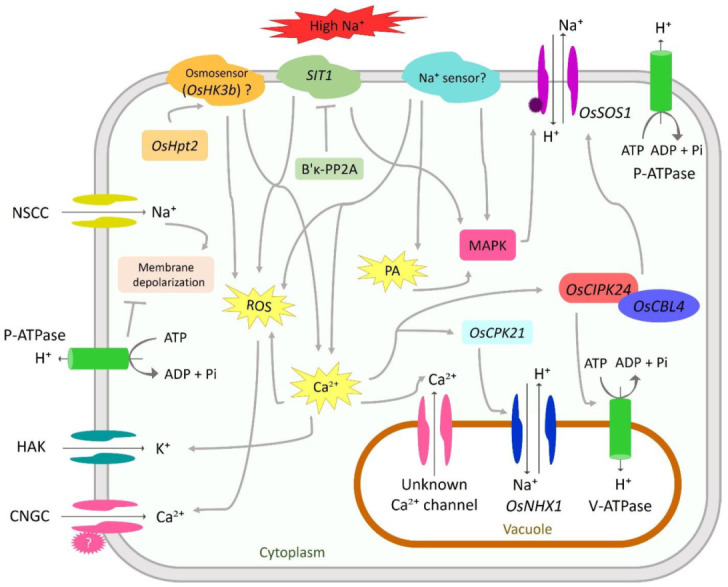
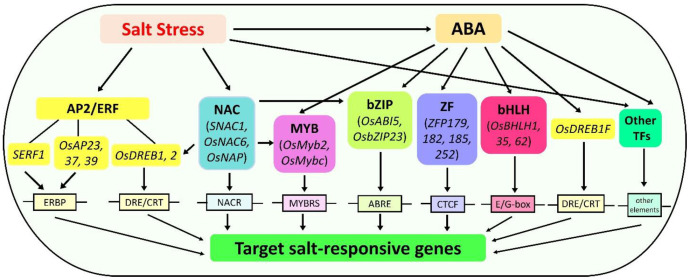
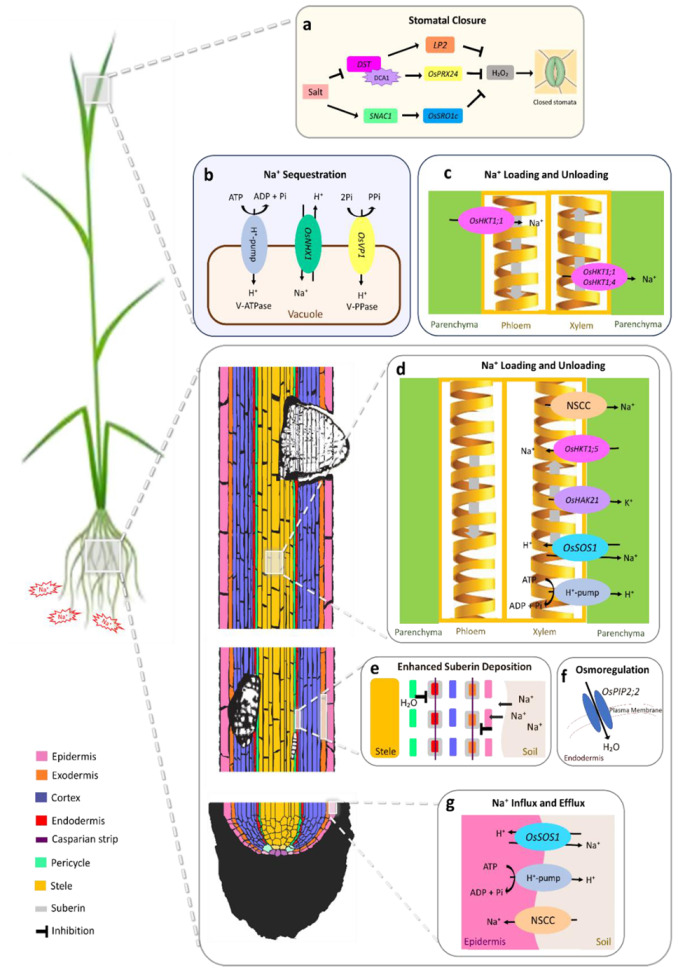
Soil salinity is a serious menace in rice production threatening global food security. Rice responses to salt stress involve a series of biological processes, including antioxidation, osmoregulation or osmoprotection, and ion homeostasis, which are regulated by different genes. Understanding these adaptive mechanisms and the key genes involved are crucial in developing highly salt-tolerant cultivars. In this review, we discuss the molecular mechanisms of salt tolerance in rice-from sensing to transcriptional regulation of key genes-based on the current knowledge. Furthermore, we highlight the functionally validated salt-responsive genes in rice.
Keywords: antioxidation; ion homeostasis; osmoregulation; rice; salinity; sensing; signaling; transcription factors.
Conflict of interest statement
The authors declare that they have no competing interests.
Figures
References
-
- Zeng L., Shannon M.C., Grieve C.M. Evaluation of salt tolerance in rice genotypes by multiple agronomic parameters. Euphytica. 2002;127:235–245. doi: 10.1023/A:1020262932277. - DOI
-
- Lutts S., Kinet J.M., Bouharmont J. Effects of salt stress on growth mineral nutrition and proline accumulation in relation to osmotic adjustment in rice (Oryza sativa L.) cultivars differing in salinity resistance. Plant Growth Regul. 1996;19:207–218. doi: 10.1007/BF00037793. - DOI
-
- Cui H., Takeoka Y., Wada T. Effect of sodium chloride on the panicle and spikelet morphogenesis in rice. Jpn. J. Crop. Sci. 1995;64:593–600. doi: 10.1626/jcs.64.593. - DOI
-
- Khatun S., Flowers T.J. Effects of salinity on seed set in rice. Plant Cell. Environ. 1995;18:61–67. doi: 10.1111/j.1365-3040.1995.tb00544.x. - DOI
Publication types
MeSH terms
Substances
Grants and funding
LinkOut - more resources
Full Text Sources
Other Literature Sources
