


Prognostic Significance of Prostate-Specific Antigen Persistence after Radical Prostatectomy: A Systematic Review and Meta-Analysis
- PMID: 33668270
- PMCID: PMC7956516
- DOI: 10.3390/cancers13050948
Prognostic Significance of Prostate-Specific Antigen Persistence after Radical Prostatectomy: A Systematic Review and Meta-Analysis
Abstract
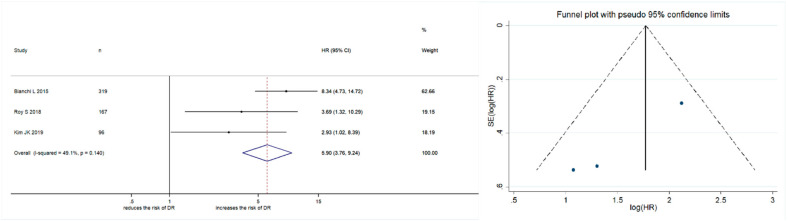
We performed a systematic review and meta-analysis to assess the prognostic value of prostate-specific antigen (PSA) persistence 4-8 weeks after radical prostatectomy (RP) in patients with prostate cancer, using studies from Medline, Scopus, and Cochrane Library, on 10 October 2020. Studies were eligible if they compared patients with postoperative PSA persistence 4-8 weeks after RP to those without such persistence to assess the value of PSA persistence in prognosticating biochemical recurrence (BCR), disease recurrence, cancer-specific mortality (CSM), and overall mortality (OM) by multivariable analysis. Our review and analysis included nine studies published between 2008 and 2019 with 14,455 patients. Of those studies, 12.0% showed postoperative PSA persistence. PSA persistence was associated with BCR (HR: 4.44, 95% CI: 2.84-6.93), disease recurrence (HR: 3.43, 95% CI: 1.62-7.25), and CSM (HR: 2.32, 95% CI: 1.83-2.95). We omitted meta-analysis on the association of PSA persistence with OM due to an insufficient number of studies. PSA persistence was associated with disease recurrence in a sub-group of patients with pathological nodal involvement (HR: 5.90, 95% CI: 3.76-9.24). Understanding detection of PSA persistence at 4-8 weeks after RP might be useful for patient counseling, follow-up scheduling, and clinical decision-making regarding adjuvant therapies.
Keywords: PSA persistence; meta-analysis; nodal involvement; prostate cancer; recurrence.
Conflict of interest statement
The authors declare no conflict of interest.
Figures


References
-
- Gallina A., Chun F.K.-H., Suardi N., Eastham J.A., Perrotte P., Graefen M., Hutterer G., Huland H., Klein E.A., Reuther A., et al. Comparison of stage migration patterns between Europe and the USA: An analysis of 11 350 men treated with radical prostatectomy for prostate cancer. BJU Int. 2008;101:1513–1518. doi: 10.1111/j.1464-410X.2008.07519.x. - DOI - PubMed
-
- EAU-ESTRO-SIOG Guidelines on Prostate Cancer. [(accessed on 28 October 2020)];2020 Available online: https://uroweb.org/guidelines/
Publication types
LinkOut - more resources
Full Text Sources
Other Literature Sources
Research Materials
Miscellaneous
