


Adolescent Menstrual Health Literacy in Low, Middle and High-Income Countries: A Narrative Review
- PMID: 33668788
- PMCID: PMC7956698
- DOI: 10.3390/ijerph18052260
Adolescent Menstrual Health Literacy in Low, Middle and High-Income Countries: A Narrative Review
Abstract
Background: Poor menstrual health literacy impacts adolescents' quality of life and health outcomes across the world. The aim of this systematic review was to identify concerns about menstrual health literacy in low/middle-income countries (LMICs) and high-income countries (HICs).
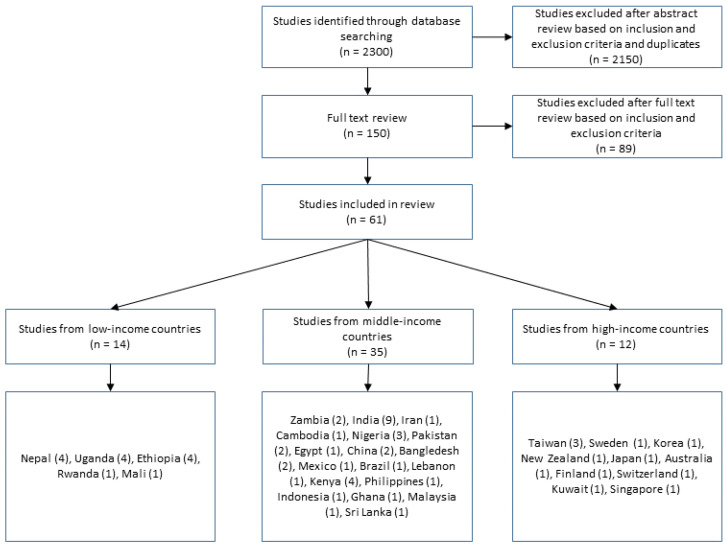
Methods: Relevant social science and medical databases were searched for peer-reviewed papers published from January 2008 to January 2020, leading to the identification of 61 relevant studies.
Results: A thematic analysis of the data revealed that LMICs report detrimental impacts on adolescents in relation to menstrual hygiene and cultural issues, while in HICs, issues related to pain management and long-term health outcomes were reported more frequently.
Conclusions: In order to improve overall menstrual health literacy in LMICs and HICs, appropriate policies need to be developed, drawing on input from multiple stakeholders to ensure evidence-based and cost-effective practical interventions.
Keywords: dysmenorrhea; menstrual health education; menstrual health literacy; menstrual hygiene management; menstruation.
Conflict of interest statement
The authors declare no conflict of interest.
Figures
References
-
- Puberty Education & Menstrual Hygiene Management—UNESCO Digital Library. United Nations Educational, Scientific and Cultural Organization; Paris, France: 2014.
-
- Keith B. Girls’ and Women’s Right to Menstrual Health: Evidence and Opportunities. PATH; Seattle, WA, USA: 2016.
-
- Kane-Hartnett L. Integrating Menstrual Hygiene Management to Achieve the SDGs. International Women’s Health Coalition; New York, NY, USA: 2018.
Publication types
MeSH terms
LinkOut - more resources
Full Text Sources
Other Literature Sources
Medical
