


Traditional Bulgarian Dairy Products: Ethnic Foods with Health Benefits
- PMID: 33668910
- PMCID: PMC7996614
- DOI: 10.3390/microorganisms9030480
Traditional Bulgarian Dairy Products: Ethnic Foods with Health Benefits
Abstract
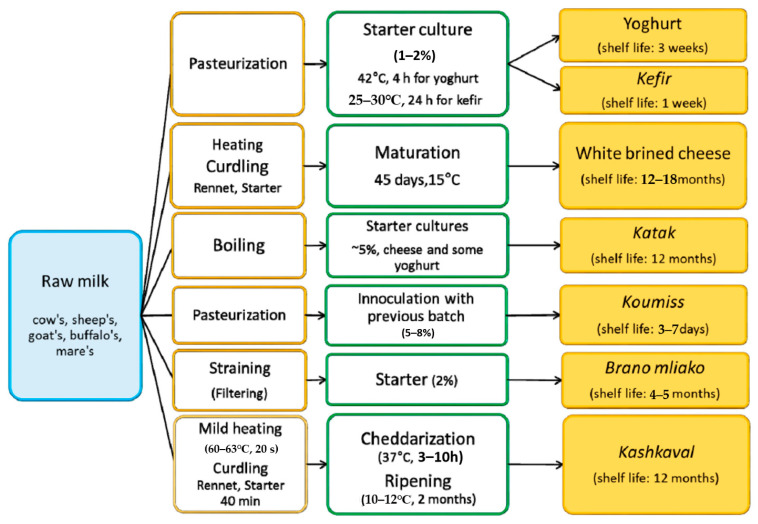
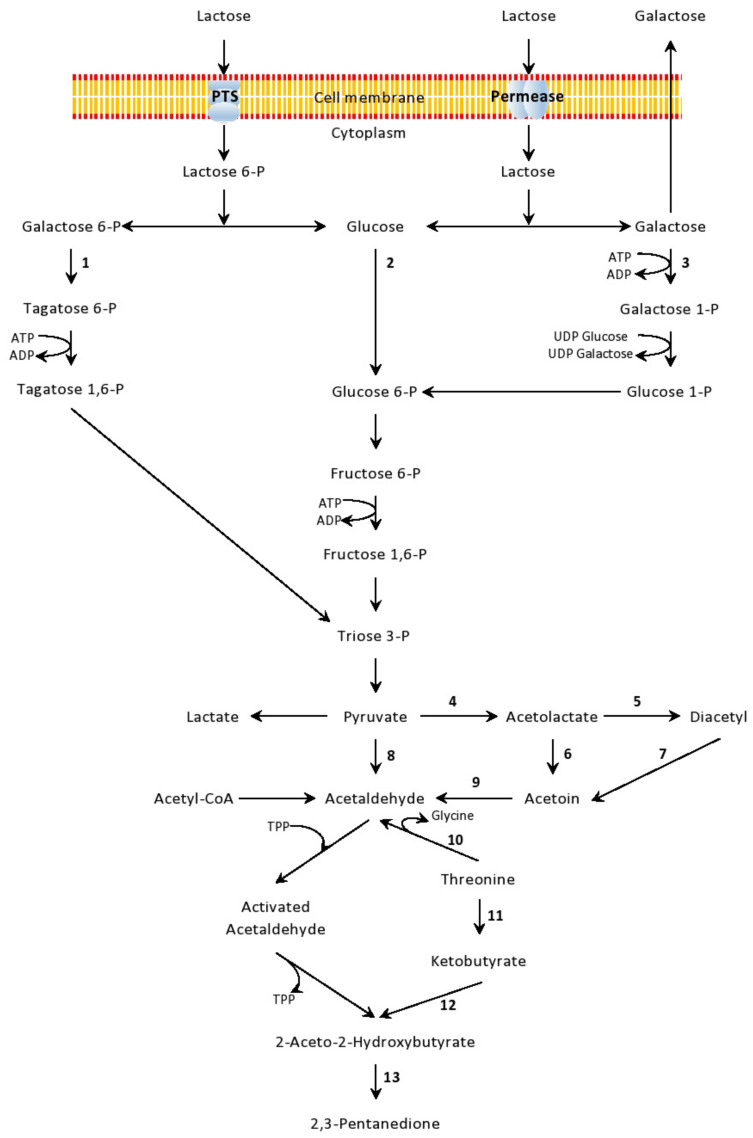
The reported health effects of fermented dairy foods, which are traditionally manufactured in Bulgaria, are connected with their microbial biodiversity. The screening and development of probiotic starters for dairy products with unique properties are based exclusively on the isolation and characterization of lactic acid bacterial (LAB) strains. This study aims to systematically describe the LAB microbial content of artisanal products such as Bulgarian-type yoghurt, white brined cheese, kashkaval, koumiss, kefir, katak, and the Rhodope's brano mliako. The original technologies for their preparation preserve the valuable microbial content and improve their nutritional and probiotic qualities. This review emphasises the features of LAB starters and the autochthonous microflora, the biochemistry of dairy food production, and the approaches for achieving the fortification of the foods with prebiotics, bioactive peptides (ACE2-inhibitors, bacteriocins, cyclic peptides with antimicrobial activity), immunomodulatory exopolysaccharides, and other metabolites (indol-3-propionic acid, free amino acids, antioxidants, prebiotics) with reported beneficial effects on human health. The link between the microbial content of dairy foods and the healthy human microbiome is highlighted.
Keywords: LAB; bioactive peptides; kashkaval; katak; kefir; koumiss; probiotics; white brined cheese; yoghurt.
Conflict of interest statement
The authors declare no conflict of interest. The funders had no role in the design of the study; in the collection, analyses, or interpretation of data, or in the writing of the manuscript.
Figures
References
-
- Tribby D. Yogurt. In: Clark S., Costello M., Drake M., Bodyfelt F., editors. The Sensory Evaluation of Dairy Products. 2nd ed. Springer Science & Business Media; New York, NY, USA: 2009. pp. 191–224.
-
- Rul F. Fermented Foods, Part II: Technological Interventions. CRC Press; Boca Raton, FL, USA: 2017. Yogurt: Microbiology, organoleptic properties and probiotic potential; pp. 419–450.
-
- Yang Y., Shevchenko A., Knaust A., Abuduresule I., Li W., Hu X., Wang C., Shevchenko A. Proteomics evidence for kefir dairy in Early Bronze Age China. J. Archaeol. Sci. 2014;45:178–186. doi: 10.1016/j.jas.2014.02.005. - DOI
-
- Kostov D. Domestic and wild animals, from the Neolithic period, in the “Azmashka” settlement hill, near Stara Zagora. Thrakia J. Sci. 2006;4:55–60. (In Bulgarian)
-
- LB Bulgaricum, Yoghurt History. [(accessed on 10 January 2021)]; Available online: https://lbbulgaricum.bg/en/about-the-company/history/
Publication types
Grants and funding
- National Research Programme approved by DCM # 577/17.08.2018/Bulgarian Ministry of Education and Science with financial support by the "Healthy Foods for a Strong Bio-Economy and Quality of Life",
- Contract KP-06-COST7 with national co-financing to COST Action 18101/National Scientific Fund, Republic of Bulgaria
LinkOut - more resources
Full Text Sources
Other Literature Sources
Molecular Biology Databases
Miscellaneous
