


A Review on the Role of Food-Derived Bioactive Molecules and the Microbiota-Gut-Brain Axis in Satiety Regulation
- PMID: 33669189
- PMCID: PMC7919798
- DOI: 10.3390/nu13020632
A Review on the Role of Food-Derived Bioactive Molecules and the Microbiota-Gut-Brain Axis in Satiety Regulation
Abstract
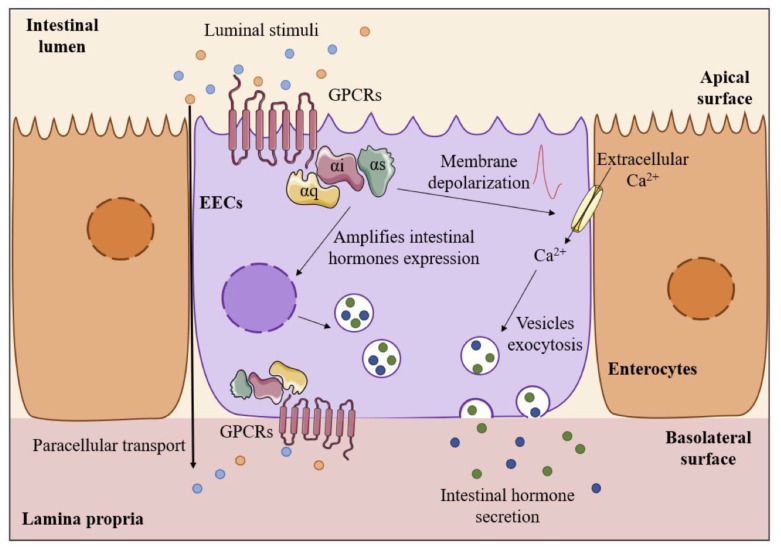
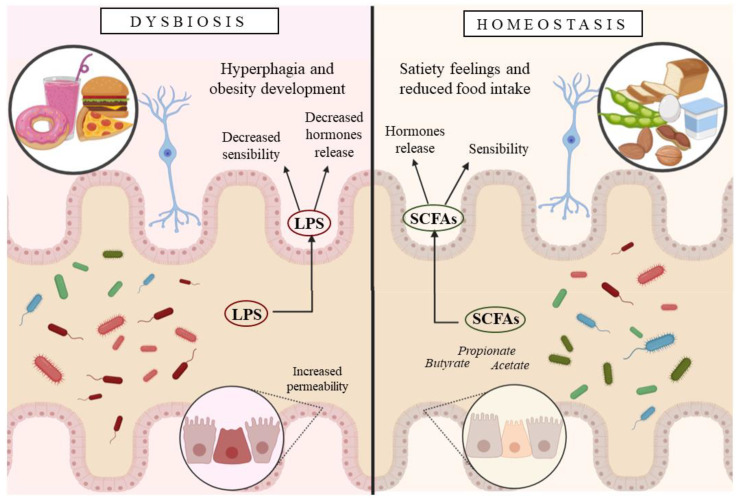
Obesity is a chronic disease resulting from an imbalance between energy intake and expenditure. The growing relevance of this metabolic disease lies in its association with other comorbidities. Obesity is a multifaceted disease where intestinal hormones such as cholecystokinin (CCK), glucagon-like peptide 1 (GLP-1), and peptide YY (PYY), produced by enteroendocrine cells (EECs), have a pivotal role as signaling systems. Receptors for these hormones have been identified in the gut and different brain regions, highlighting the interconnection between gut and brain in satiation mechanisms. The intestinal microbiota (IM), directly interacting with EECs, can be modulated by the diet by providing specific nutrients that induce environmental changes in the gut ecosystem. Therefore, macronutrients may trigger the microbiota-gut-brain axis (MGBA) through mechanisms including specific nutrient-sensing receptors in EECs, inducing the secretion of specific hormones that lead to decreased appetite or increased energy expenditure. Designing drugs/functional foods based in bioactive compounds exploiting these nutrient-sensing mechanisms may offer an alternative treatment for obesity and/or associated metabolic diseases. Organ-on-a-chip technology represents a suitable approach to model multi-organ communication that can provide a robust platform for studying the potential of these compounds as modulators of the MGBA.
Keywords: bioactive peptides; gut–brain axis; hormones; in vitro models; intestine; obesity; prebiotics; probiotics.
Conflict of interest statement
The authors declare no conflict of interest.
Figures

References
-
- Calzada-León R., Altamirano-Bustamante N., Ruiz-Reyes M.L. Neuroendocrine and gastrointestinal modulators of appetite and satiety. Med. Bull. Child. Hosp. Mex. 2008;65:468–487. doi: 10.2307/j.ctvkrkkms.11. - DOI
-
- World Health Organitation Obesity and Overweight. [(accessed on 21 March 2020)]; Available online: https://www.who.int/news-room/fact-sheets/detail/obesity-and-overweight.
Publication types
MeSH terms
Grants and funding
LinkOut - more resources
Full Text Sources
Other Literature Sources
