Review
. 2021 Feb 16;22(4):1949.
doi: 10.3390/ijms22041949.

Context-Dependent Roles of RNA Modifications in Stress Responses and Diseases

Affiliations
Review

Context-Dependent Roles of RNA Modifications in Stress Responses and Diseases

Emma Wilkinson et al. Int J Mol Sci. .

Abstract

RNA modifications are diverse post-transcriptional modifications that regulate RNA metabolism and gene expression. RNA modifications, and the writers, erasers, and readers that catalyze these modifications, serve as important signaling machineries in cellular stress responses and disease pathogenesis. In response to stress, RNA modifications are mobilized to activate or inhibit the signaling pathways that combat stresses, including oxidative stress, hypoxia, therapeutic stress, metabolic stress, heat shock, DNA damage, and ER stress. The role of RNA modifications in response to these cellular stressors is context- and cell-type-dependent. Due to their pervasive roles in cell biology, RNA modifications have been implicated in the pathogenesis of different diseases, including cancer, neurologic and developmental disorders and diseases, and metabolic diseases. In this review, we aim to summarize the roles of RNA modifications in molecular and cellular stress responses and diseases.

Keywords: RNA modifications; cellular stress; disease; m6A.


Conflict of interest statement

The authors declare no conflict of interest. The funders had no role in the design of the study; in the collection, analyses, or interpretation of data; in the writing of the manuscript, or in the decision to publish the results.

Figures
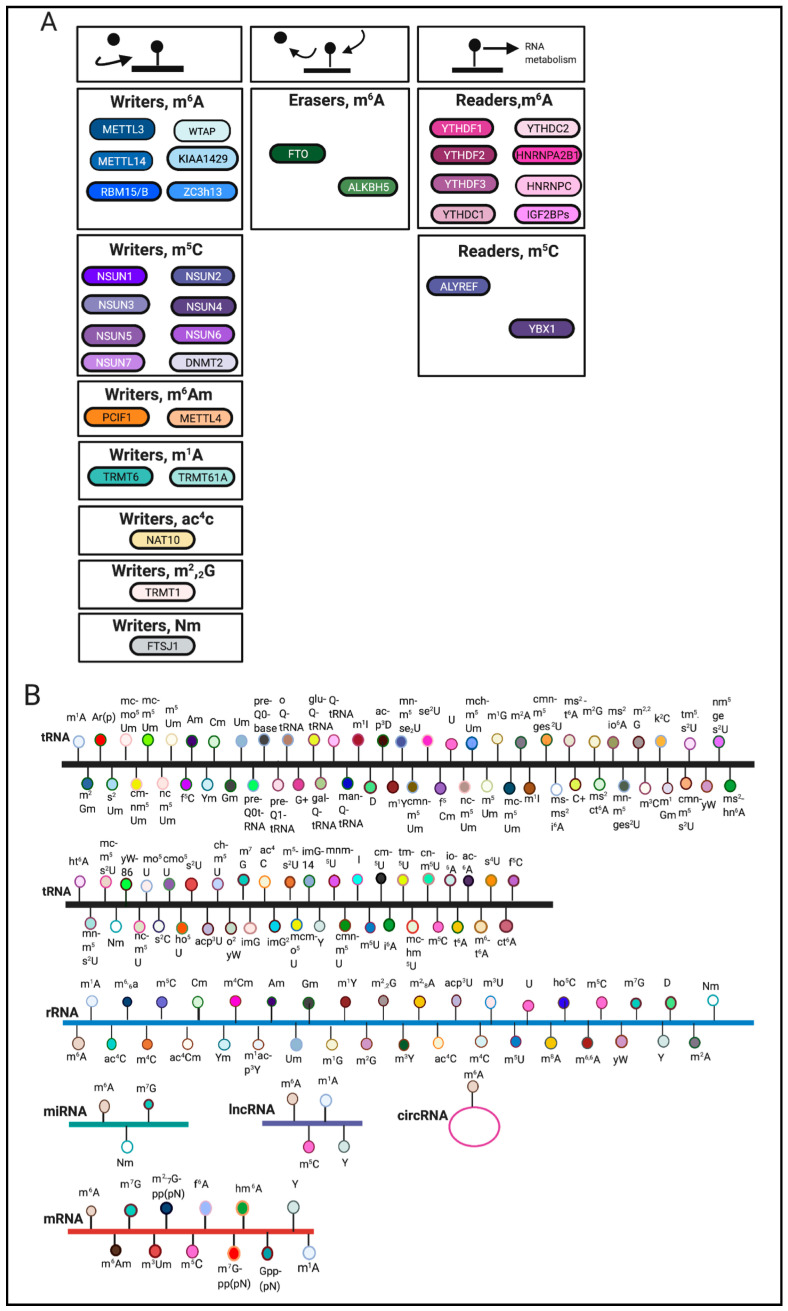
Figure 1
Figure 1
Overview of RNA modifications. (A). Writers, erasers and readers involved in catalyzing various RNA modifications. (B). Noted are RNA modifications that have been identified on tRNA, rRNA, mRNA, miRNA, lncRNA, circRNA [1,2,6,7,8,9,10,11]. The schematic was created using BioRender.
Figure 2
Figure 2
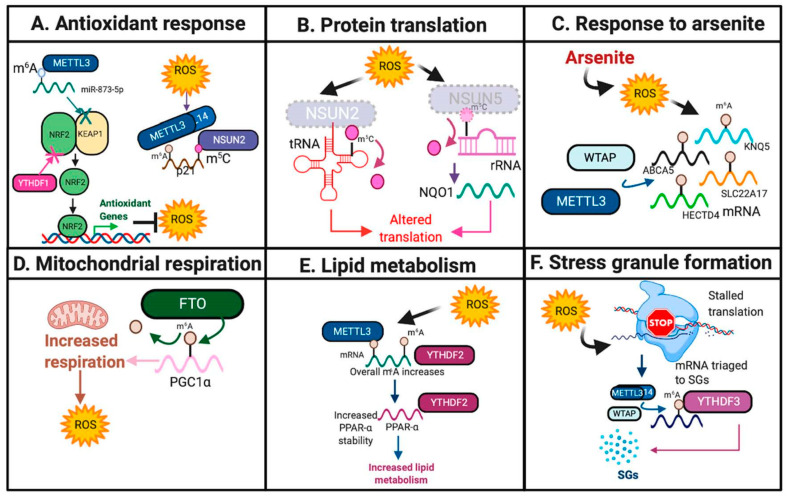
RNA modifications in response to oxidative stress. Highlighted are the diverse pathways and mechanisms by which RNA modifications respond to oxidative stress. Featured pathways include: (A). Antioxidant response. (B). Protein translation. (C). Response to arsenite. (D). Mitochondrial respiration. (E). Lipid metabolism. (F). Stress granule formation. The schematic was created using BioRender.
Figure 3
Figure 3
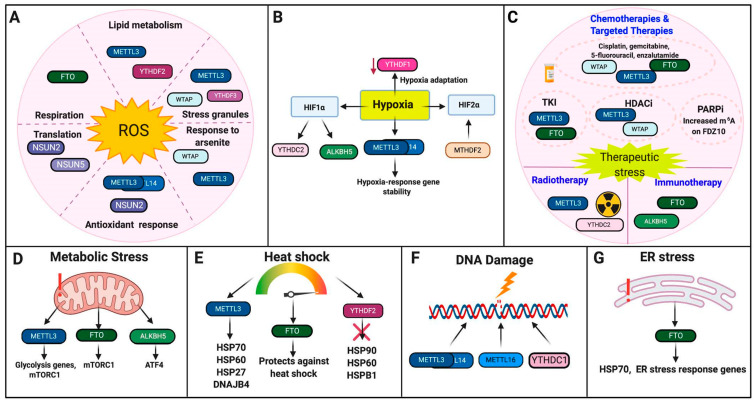
RNA Modifications in cellular stress responses. Highlighted are the roles of RNA modifications in response to cellular stresses. (A). Oxidative Stress. (B). Hypoxia. (C). Therapeutic Stress. (D). Metabolic Stress. (E). Heat Shock. (F). DNA damage. (G). ER Stress. The schematic was made using BioRender.
Figure 4
Figure 4
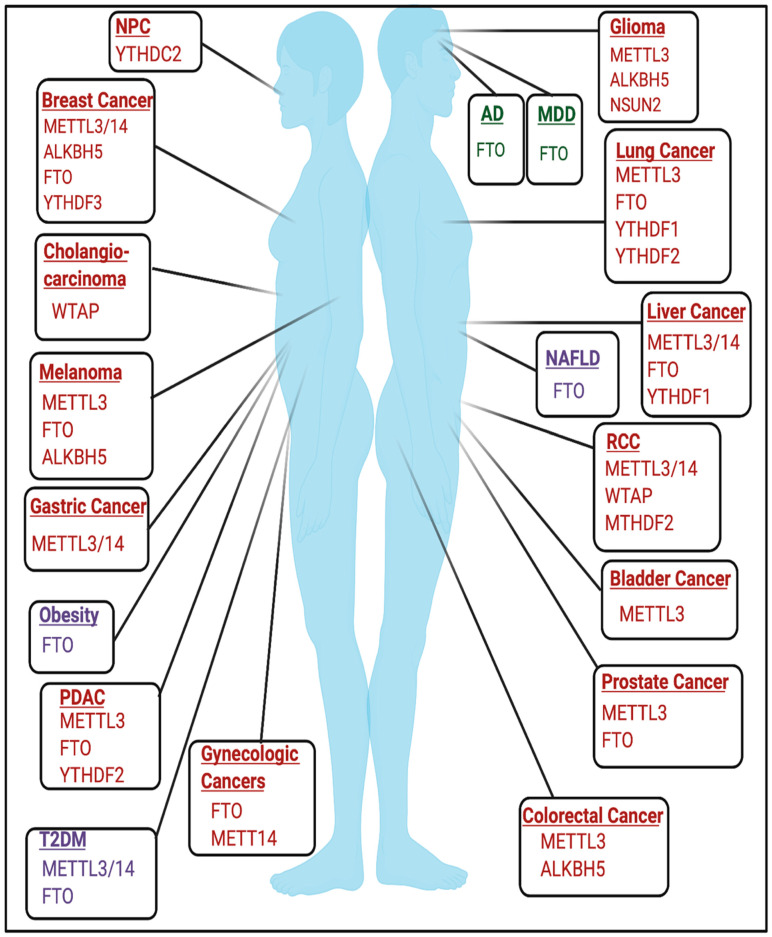
RNA Modifications in diseases. Highlighted are the regulators of RNA modifications that have established roles in regulating disease pathogenesis across genders as well as sex-specific diseases such as breast cancer, gynecologic cancers, and prostate cancer. Windows in red are modifiers implicated in cancer. Windows in purple are metabolic diseases. Windows in green are neurologic diseases. Not pictured are developmental disorders. The schematic was created using BioRender.

References

    1. Boccaletto P., Machnicka M.A., Purta E., Piatkowski P., Baginski B., Wirecki T.K., de Crécy-Lagard V., Ross R., Limbach P.A., Kotter A., et al. MODOMICS: A database of RNA modification pathways. 2017 update. Nucleic Acids Res. 2018;46:D303–D307. doi: 10.1093/nar/gkx1030. - DOI - PMC - PubMed
    1. Zhao B.S., Roundtree I.A., He C. Post-transcriptional gene regulation by mRNA modifications. Nat. Rev. Mol. Cell Biol. 2017;18:31–42. doi: 10.1038/nrm.2016.132. - DOI - PMC - PubMed
    1. Motorin Y., Helm M. RNA nucleotide methylation. Wiley Interdiscip. Rev. RNA. 2011;2:611–631. doi: 10.1002/wrna.79. - DOI - PubMed
    1. Helm M., Motorin Y. Detecting RNA modifications in the epitranscriptome: Predict and validate. Nat. Rev. Genet. 2017;18:275–291. doi: 10.1038/nrg.2016.169. - DOI - PubMed
    1. Bohnsack K.E., Höbartner C., Bohnsack M.T. Eukaryotic 5-methylcytosine (m⁵C) RNA Methyltransferases: Mechanisms, Cellular Functions, and Links to Disease. Genes (Basel) 2019;10:102. doi: 10.3390/genes10020102. - DOI - PMC - PubMed

LinkOut - more resources