Review
. 2021 Feb 21;13(4):904.
doi: 10.3390/cancers13040904.

Metabolism of Innate Immune Cells in Cancer

Affiliations
Review

Metabolism of Innate Immune Cells in Cancer

Ronan Talty et al. Cancers (Basel). .

Abstract

Cancer cells possess specific metabolic requirements for their survival, proliferation, and progression. Within a shared microenvironment, immune cells depend on competing metabolic pathways for their development and effector function. As a result, local acidification, hypoxia, and nutrient depletion in the tumor microenvironment can alter the antitumor immune response and even promote resistance to immunotherapies such as immune checkpoint blockade and adoptive cell transfer. Although T cells are the primary effectors of the antitumor response, growing evidence demonstrates that innate immune cells are critical to successful tumor clearance. This review aims to summarize current research related to the innate immune system, metabolism, and cancer. We first discuss the specific metabolic requirements of innate immune cells for immune activation and suppression and conclude by highlighting ongoing clinical applications of these findings.

Keywords: cancer; immunotherapy; innate immunity; metabolism.


Conflict of interest statement

The authors declare no conflict of interest.

Figures
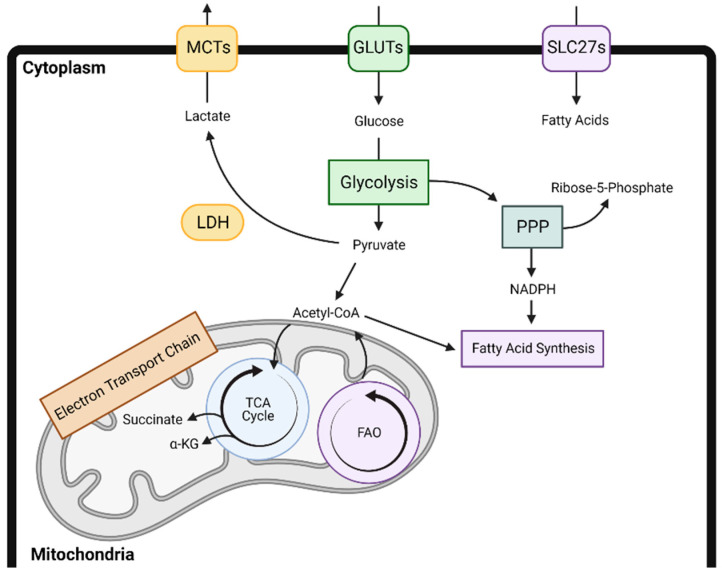
Figure 1
Figure 1
An overview of the major metabolic pathways including glycolysis, the tricarboxylic acid cycle, fatty acid synthesis, fatty acid oxidation, oxidative phosphorylation, and the pentose phosphate pathway and their interactions. α-KG—alpha-ketoglutarate; FAO—fatty acid oxidation; GLUT—glucose transporter; LDH—lactate dehydrogenase; MCT—monocarboxylate transporter; PPP—pentose phosphate pathway; SLC27—Solute carrier family 27; TCA—tricarboxylic acid.
Figure 2
Figure 2
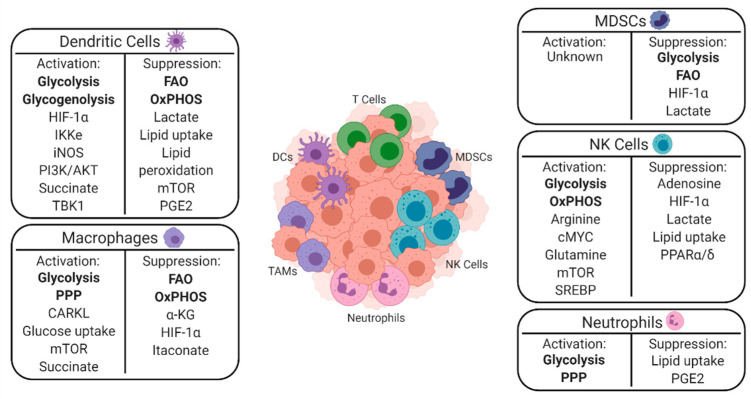
A depiction of innate immune cells within the TME and a summary of the metabolic pathways that lead them to promote either immune activation or suppression. Major metabolic pathways are denoted in bold, with key signaling molecules listed below them. CARKL—carbohydrate kinase-like protein; cMYC - HIF-1α—hypoxia inducible factor 1-alpha; IKKɛ - IkB kinase-ɛ; iNOS—inducible nitric oxide synthase; mTOR—mammalian target of rapamycin; OxPHOS—oxidative phosphorylation; PGE2—prostaglandin E2; PI3K—phosphatidylinositol 3-kinase; PPAR—peroxisome proliferator-activated receptor; SREBP1—sterol regulatory element binding protein; TBK1—tank binding kinase 1.
Figure 3
Figure 3
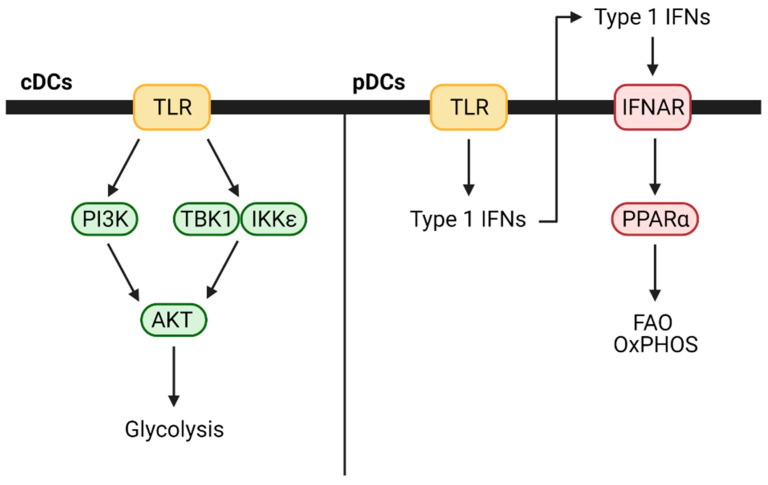
Metabolic changes that occur in DC subsets following TLR activation. IFNAR—interferon alpha-beta receptor; TLR—toll-like receptor.
Figure 4
Figure 4
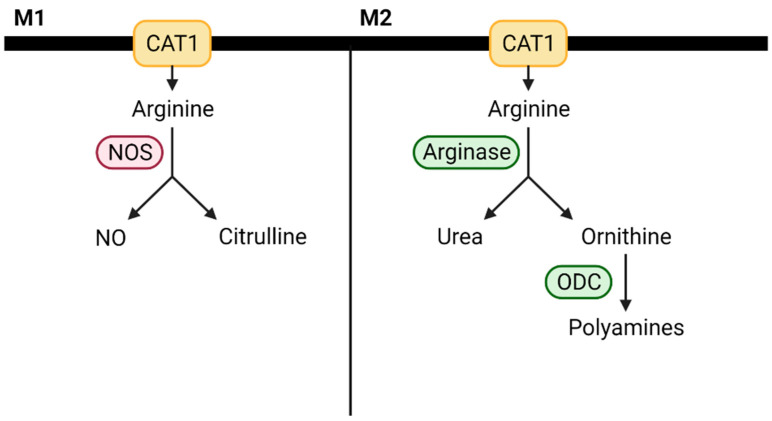
Alterations in arginine metabolism influence macrophage polarizaiton. CAT1—cationic amino acid transporter 1; NO—nitric oxide; ODC—ornithine decarboxylase.

References

    1. De Berardinis R.J., Chandel N.S. Fundamentals of cancer metabolism. Sci. Adv. 2016;2:e1600200. doi: 10.1126/sciadv.1600200. - DOI - PMC - PubMed
    1. Lee N., Kim D. Cancer metabolism: Fueling more than just growth. Mol. Cells. 2016;39:847. doi: 10.14348/molcells.2016.0310. - DOI - PMC - PubMed
    1. DeBerardinis R.J., Lum J.J., Hatzivassiliou G., Thompson C.B. The Biology of Cancer: Metabolic Reprogramming Fuels Cell Growth and Proliferation. Cell Metab. 2008;7:11–20. doi: 10.1016/j.cmet.2007.10.002. - DOI - PubMed
    1. Domblides C., Lartigue L., Faustin B. Control of the Antitumor Immune Response by Cancer Metabolism. Cells. 2019;8:104. doi: 10.3390/cells8020104. - DOI - PMC - PubMed
    1. Biswas S.K. Metabolic Reprogramming of Immune Cells in Cancer Progression. Immunity. 2015;43:435–449. doi: 10.1016/j.immuni.2015.09.001. - DOI - PubMed

LinkOut - more resources