


Associations among Heavy Metals and Proteinuria and Chronic Kidney Disease
- PMID: 33670331
- PMCID: PMC7918558
- DOI: 10.3390/diagnostics11020282
Associations among Heavy Metals and Proteinuria and Chronic Kidney Disease
Abstract
Background: The prevalence of chronic kidney disease (CKD) is increasing annually in Taiwan. In addition to traditional risk factors, heavy metals contribute to the development of CKD. The aim of this study was to investigate associations among heavy metals and proteinuria and CKD in the general population in Southern Taiwan. We also explored the interaction and synergetic effects among heavy metals on proteinuria.
Methods: We conducted a health survey in the general population living in Southern Taiwan between June 2016 and September 2018. Seven heavy metals were measured: blood lead (Pb) and urine nickel (Ni), chromium (Cr), manganese (Mn), arsenic (As), copper (Cu), and cadmium (Cd). Proteinuria was measured using reagent strips. CKD was defined as an estimated glomerular filtration rate (eGFR) of <60 mL/min/1.73 m2.
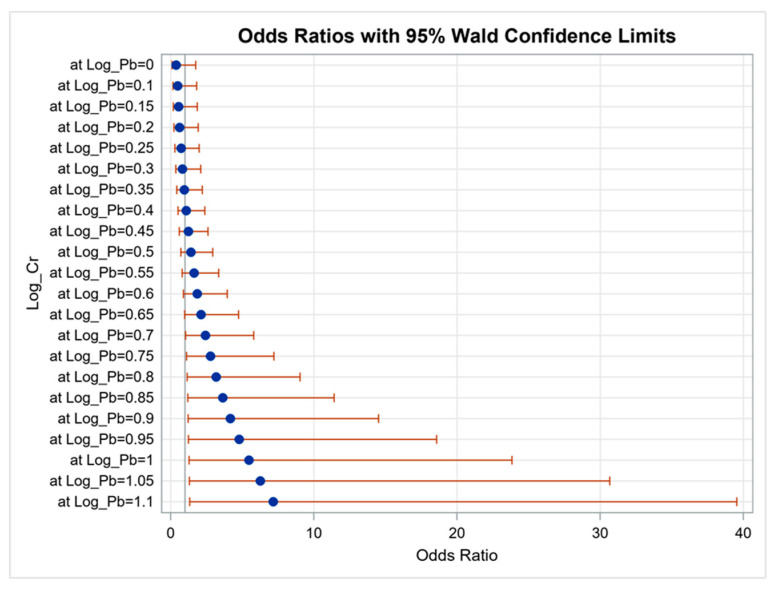
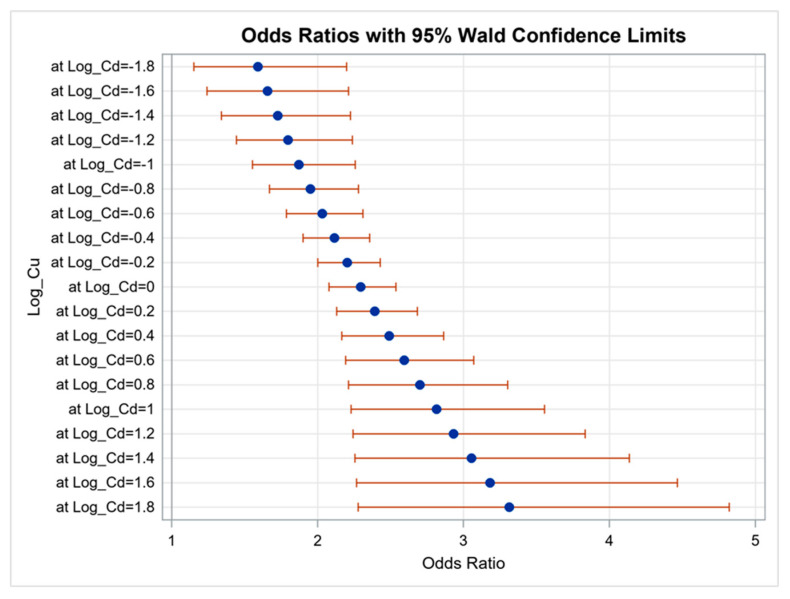
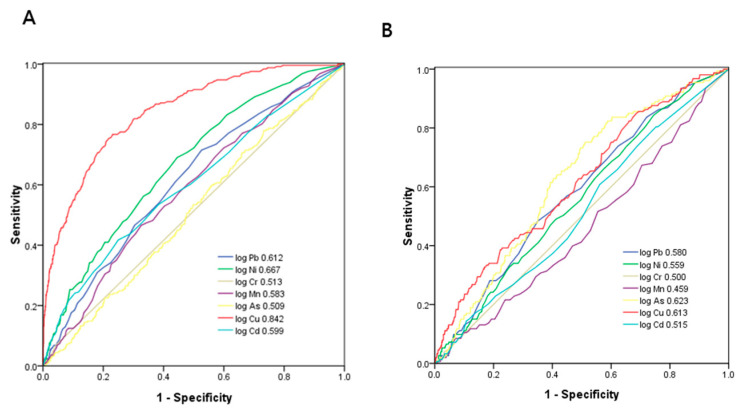
Results: The mean age of the 2447 participants was 55.1 ± 13.2 years and included 977 males and 1470 females. Participants with high blood Pb and high urine Ni, Mn, Cu, and Cd were significantly associated with proteinuria. Interactions between blood Pb and urine Cr, and between urine Cd and Cu, had significant effects on proteinuria. The participants with high blood Pb and high urine Cu were significantly associated with an eGFR of <60 mL/min/1.73 m2.
Conclusion: High blood Pb and high urine Cu may be associated with proteinuria and an eGFR of <60 mL/min/1.73 m2. High urine Ni, Mn, and Cd were significantly associated with proteinuria. Co-exposure to Cd and Cu, and Pb and Cr, may have synergistic effects on proteinuria.
Keywords: chronic kidney disease; estimated glomerular filtration rate; heavy metals; proteinuria; renal function.
Conflict of interest statement
The authors declare no conflict of interest.
Figures
References
-
- Landrigan P.J., Sly J.L., Ruchirawat M., Silva E.R., Huo X., Diaz-Barriga F., Zar H.J., King M., Ha E.H., Asante K.A., et al. Health Consequences of Environmental Exposures: Changing Global Patterns of Exposure and Disease. Ann. Glob. Health. 2016;82:10–19. doi: 10.1016/j.aogh.2016.01.005. - DOI - PubMed
Grants and funding
LinkOut - more resources
Full Text Sources
Other Literature Sources
Research Materials
Miscellaneous
