


The Psychological and Physical Effects of Forests on Human Health: A Systematic Review of Systematic Reviews and Meta-Analyses
- PMID: 33670337
- PMCID: PMC7918603
- DOI: 10.3390/ijerph18041770
The Psychological and Physical Effects of Forests on Human Health: A Systematic Review of Systematic Reviews and Meta-Analyses
Abstract
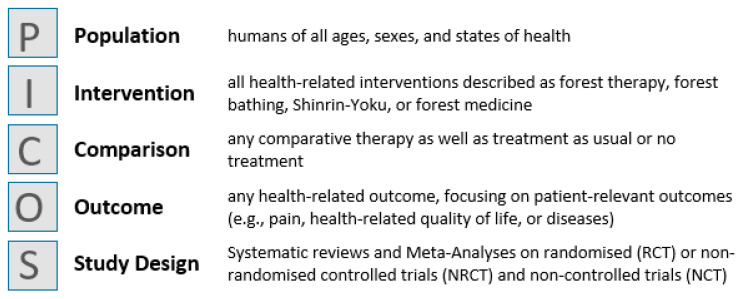
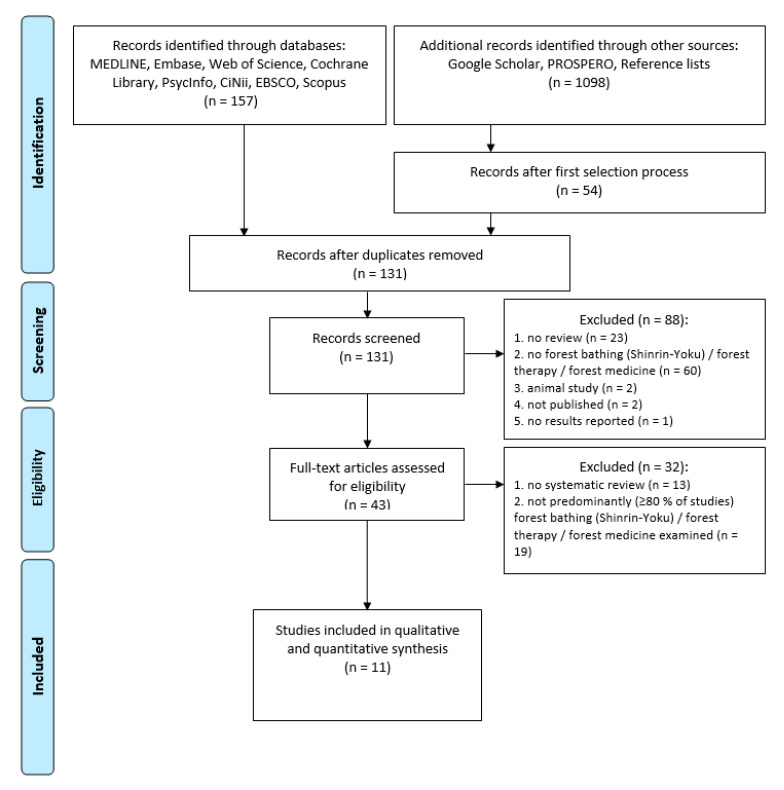
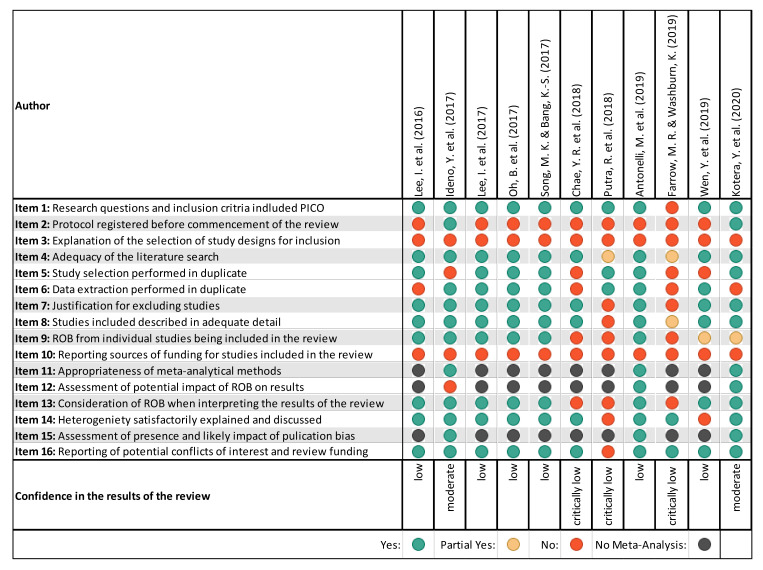
The aim of this systematic review of systematic reviews was to identify, summarise, and synthesise the available evidence of systematic reviews (SRs) and meta-analyses (MAs) on the preventative and therapeutic psychological and physical effects of forest-based interventions. Methods: Both bibliographic databases and grey literature sources were searched for SRs and MAs published until May 2020. Eight databases were searched for relevant articles: MEDLINE, Embase, Web of Science, Cochrane Library, PsycInfo, CiNii, EBSCO, and Scopus. Grey literature was sourced from Google Scholar and other web-based search tools. SRs and MAs that included randomised controlled (RCT), non-randomised controlled (NRCT), and non-controlled trials (NCT) on health-related effects of forest-based interventions were eligible if they had searched at least two databases. The methodological quality of eligible reviews was assessed by AMSTAR-2. Results: We evaluated 11 systematic reviews covering 131 different primary intervention studies, mostly from Asian countries, three of which included supplementary meta-analyses. The quality assessment resulted in moderate confidence in the results of two reviews, low confidence in six, and critically low confidence in three. The results of the eight moderate and low-rated reviews indicated that forest-based interventions are beneficial to the cardiovascular system, immune system, and mental health (in the areas of stress, depression, anxiety, and negative emotions). Evidence for the effectiveness of forest-based interventions on metabolic parameters in adults, the severity of atopic dermatitis in children and adolescents, and social skills and sociality in healthy primary school children was weak. Discussion/Conclusions: Evidence suggests beneficial therapeutic effects of forest-based interventions on hypertension, stress, and mental-health disorders, such as depression and anxiety. Changes in immunological and inflammatory parameters after forest therapy should be verified in bio-geographically native forests. In the future, more attention should be paid to careful planning, implementation, and reporting of primary studies and to systematic reviews on the effects of forest-based interventions.
Keywords: Shinrin-Yoku; forest bathing; forest medicine; forest therapy; prevention; systematic reviews.
Conflict of interest statement
The Chair of Public Health and Health Services Research (IBE) at the LMU received study support (third-party funding for the research project). A.S. and G.I. are the authors of a recently published book on forest therapy [11]. They also developed a scientifically based curriculum for training in forest therapy and forest bathing in 2018. Since 2019, A.S. and G.I. have been teaching health interventions in the preventive setting in the forest. A forest therapy seminar will follow in 2021. The authors declare no conflict of interest.
Figures
References
-
- United Nations Department of Economic and Social Affairs (UN/DESA): World Urbanization Prospects: The 2018 Revision. [(accessed on 27 November 2020)]; Available online: https://population.un.org/wup/Publications/Files/WUP2018-KeyFacts.pdf.
-
- Corazon S.S., Sidenius U., Poulsen D.V., Gramkow M.C., Stigsdotter U.K. Psycho-Physiological Stress Recovery in Outdoor Nature-Based Interventions: A Systematic Review of the Past Eight Years of Research. Int. J. Environ. Res. Public Health. 2019;16:1711. doi: 10.3390/ijerph16101711. - DOI - PMC - PubMed
Publication types
MeSH terms
LinkOut - more resources
Full Text Sources
Other Literature Sources
Medical
