


Mitochondriopathies as a Clue to Systemic Disorders-Analytical Tools and Mitigating Measures in Context of Predictive, Preventive, and Personalized (3P) Medicine
- PMID: 33670490
- PMCID: PMC7922866
- DOI: 10.3390/ijms22042007
Mitochondriopathies as a Clue to Systemic Disorders-Analytical Tools and Mitigating Measures in Context of Predictive, Preventive, and Personalized (3P) Medicine
Abstract
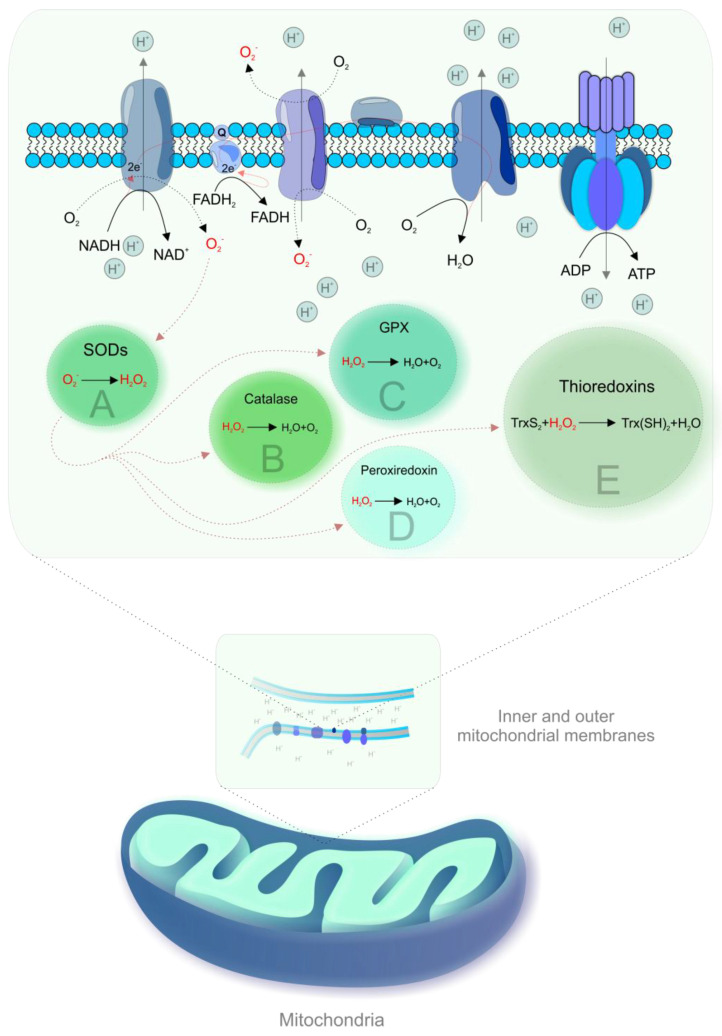
The mitochondrial respiratory chain is the main site of reactive oxygen species (ROS) production in the cell. Although mitochondria possess a powerful antioxidant system, an excess of ROS cannot be completely neutralized and cumulative oxidative damage may lead to decreasing mitochondrial efficiency in energy production, as well as an increasing ROS excess, which is known to cause a critical imbalance in antioxidant/oxidant mechanisms and a "vicious circle" in mitochondrial injury. Due to insufficient energy production, chronic exposure to ROS overproduction consequently leads to the oxidative damage of life-important biomolecules, including nucleic acids, proteins, lipids, and amino acids, among others. Different forms of mitochondrial dysfunction (mitochondriopathies) may affect the brain, heart, peripheral nervous and endocrine systems, eyes, ears, gut, and kidney, among other organs. Consequently, mitochondriopathies have been proposed as an attractive diagnostic target to be investigated in any patient with unexplained progressive multisystem disorder. This review article highlights the pathomechanisms of mitochondriopathies, details advanced analytical tools, and suggests predictive approaches, targeted prevention and personalization of medical services as instrumental for the overall management of mitochondriopathy-related cascading pathologies.
Keywords: ATP synthesis; COVID-19; DNA repair; ROS overproduction; antioxidant mechanisms; apoptosis; biomarker panels; cancer; chronic inflammation; diagnostic tools; dietary habits; disease predisposition; dysfunction; energy metabolism; health policy; individualised patient profile; injury; life-style; liquid biopsy; mitochondrial function; mitochondriopathy; multi-parametric analysis and machine learning; neurodegeneration; oxidative damage; pathology; predictive, preventive, and personalized medicine (PPPM/3PM); socio-economic burden; suboptimal health conditions; systemic disorders; tumorigenesis; vasoconstriction; vicious circle.
Conflict of interest statement
The authors declare no conflict of interest.
Figures
References
Publication types
MeSH terms
Substances
LinkOut - more resources
Full Text Sources
Other Literature Sources
Medical
