


Forefront Users' Experience Evaluation by Employing Together Virtual Reality and Electroencephalography: A Case Study on Cognitive Effects of Scents
- PMID: 33670698
- PMCID: PMC7922691
- DOI: 10.3390/brainsci11020256
Forefront Users' Experience Evaluation by Employing Together Virtual Reality and Electroencephalography: A Case Study on Cognitive Effects of Scents
Abstract
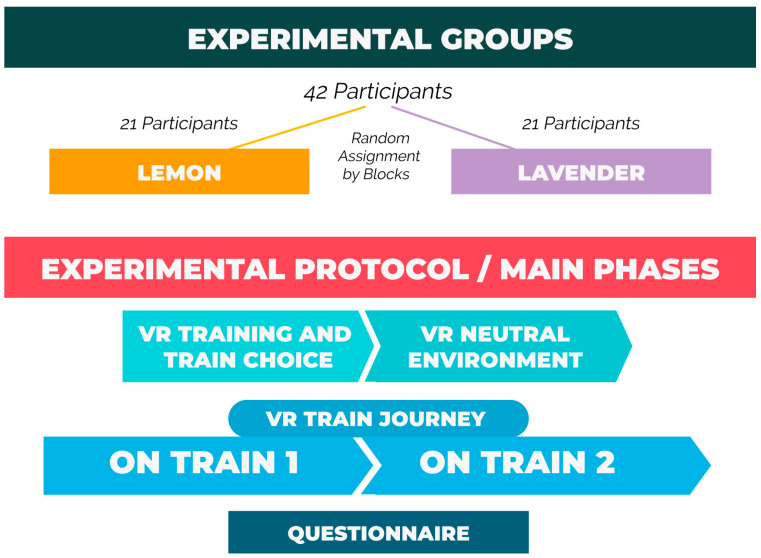
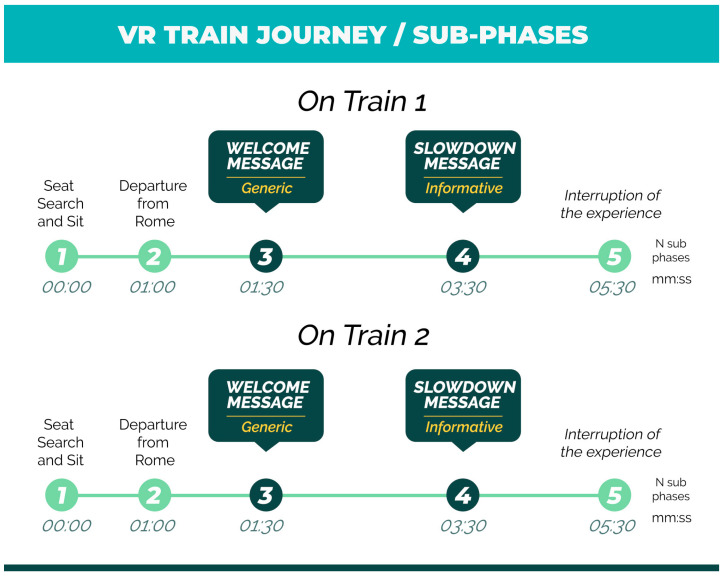
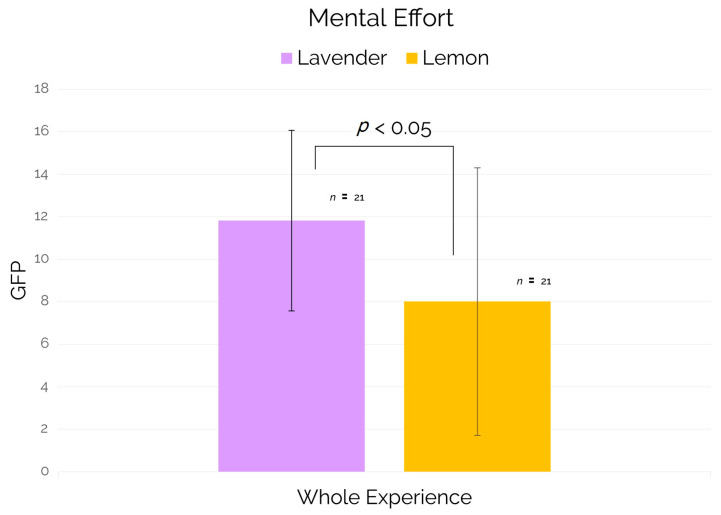
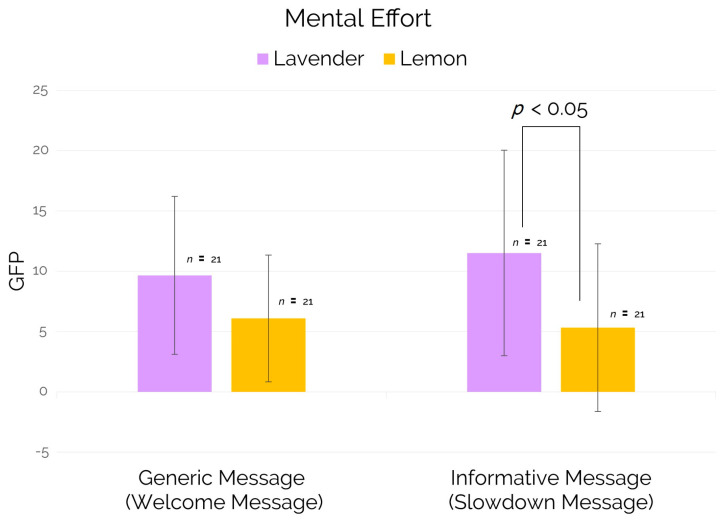
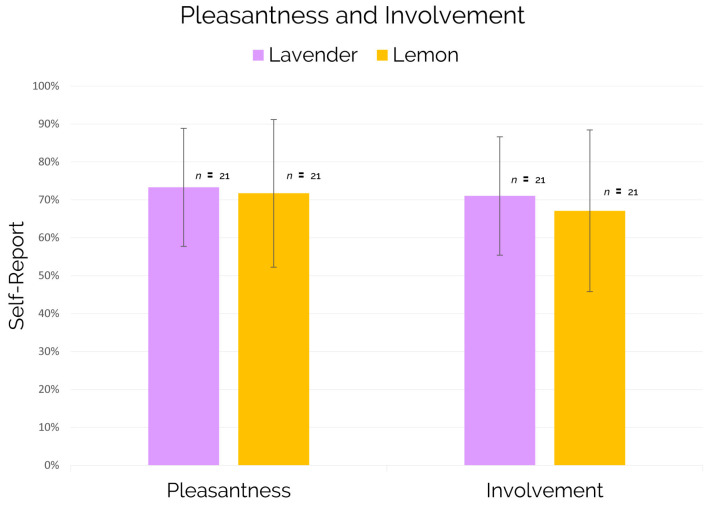
Scents have the ability to affect peoples' mental states and task performance with to different extents. It has been widely demonstrated that the lemon scent, included in most all-purpose cleaners, elicits stimulation and activation, while the lavender scent elicits relaxation and sedative effects. The present study aimed at investigating and fostering a novel approach to evaluate users' experience with respect to scents' effects through the joint employment of Virtual Reality and users' neurophysiological monitoring, in particular Electroencephalography. In particular, this study, involving 42 participants, aimed to compare the effects of lemon and lavender scents on the deployment of cognitive resources during a daily life experience consisting in a train journey carried out in virtual reality. Our findings showed a significant higher request of cognitive resources during the processing of an informative message for subjects exposed to the lavender scent with respect to the lemon exposure. No differences were found between lemon and lavender conditions on the self-reported items of pleasantness and involvement; as this study demonstrated, the employment of the lavender scent preserves the quality of the customer experience to the same extent as the more widely used lemon scent.
Keywords: Electroencephalography (EEG); lavender; lemon; mental effort; neuroscience; scent; smell; virtual reality (VR).
Conflict of interest statement
The authors declare no conflict of interest.
Figures
References
-
- Unity Real-Time Development Platform|3D, 2D VR & AR Engine. [(accessed on 1 February 2021)]; Available online: https://unity.com.
-
- The Most Powerful Real-Time 3D Creation Platform-Unreal Engine. [(accessed on 1 February 2021)]; Available online: https://www.unrealengine.com/en-US.
-
- Edler D., Keil J., Wiedenlübbert T., Sossna M., Kühne O., Dickmann F. Immersive VR experience of redeveloped post-industrial sites: The example of ‘Zeche Holland’ in Bochum-Wattenscheid. KN J. Cartogr. Geogr. Inf. 2019;69:267–284. doi: 10.1007/s42489-019-00030-2. - DOI
-
- Hruby F., Castellanos I., Ressl R. Cartographic scale in immersive virtual environments. KN J. Cartogr. Geogr. Inf. 2020;2020:1–7. doi: 10.1007/s42489-020-00055-y. - DOI
LinkOut - more resources
Full Text Sources
Other Literature Sources
