


Impact of Sensitization of Family Caregivers upon Treatment Compliance among Geriatric Patients Suffering from Elder Abuse and Neglect
- PMID: 33670706
- PMCID: PMC7922918
- DOI: 10.3390/healthcare9020226
Impact of Sensitization of Family Caregivers upon Treatment Compliance among Geriatric Patients Suffering from Elder Abuse and Neglect
Abstract
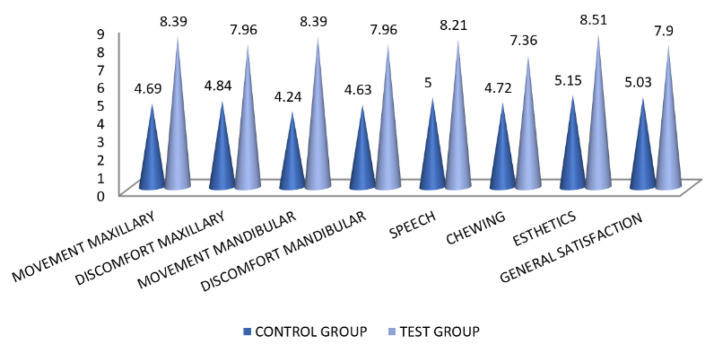
Geriatric patients in various outpatient department (OPDs) have been found to agonize from elder abuse and neglect (EAN). Such suffering imposes depressive states within individuals, which in turn affects treatment compliance. The objective of this study was to evaluate the impact of sensitization (psychotherapeutic) of family caregivers (FCGs) upon two denture treatment parameters (maintenance and treatment satisfaction) among EAN patients and compare the differences in outcome with non-abused patients. A survey of completely edentulous subjects (n = 860, aged 41-80 years) provided a sampling frame of 332 EAN patients from which 150 patients (including FCGs) fulfilling the study criteria were distributed (simple random, convenient) into two groups (Group A-control, Group B-test). FCG sensitization for subjects in Group B was performed by a clinical psychologist in 2-4 short (30 min) sessions. Demographic characteristics (frequency) were measured using a self-reported questionnaire, denture maintenance was measured using a denture hygiene index (scores), and treatment satisfaction was analyzed on a 10-point visual analog scale. Relevant data were calculated for means and absolute/relative frequencies. Any difference between two groups was estimated using an unpaired t-test while the level of relationship was determined by Karl Pearson's test at a p-value of < 0.05. The results showed highest frequency (38.6%) for neglect, with elder neglect (EN) being most common (38.14% alone and 14% in combination). EN was found more if the FCG was a son (52%), in the age group (21-30 years), and with low education and low income (75%). Patients whose FCGs were counselled (Group B) demonstrated low denture plaque scores (mean = 1.38 ± 0.618), while demonstrating comparatively higher scores in six different parameters of treatment satisfaction. Differences between the two groups for both parameters were also found to be statistically significant. Psychotherapeutic counselling in the form of FCG sensitization brings better results of denture maintenance and treatment satisfaction.
Keywords: complete denture; denture hygiene; elder mistreatment; family neglect; treatment compliance.
Conflict of interest statement
The authors declare no conflict of interest during the conductance of the actual study or during the reporting and publishing the results of this study.
Figures
References
-
- Atetwe L.K. Prevalence of elder abuse in Emuhaya sub-county, Vihiga County, Kenya. In: Shankardass M., editor. International Handbook of Elder Abuse and Mistreatment. Springer; Singapore: 2020. - DOI
-
- Randel J., German T., Ewing D. The Ageing and Development Report: Poverty, Independence and the World’s Older People. Earthscan; London, UK: 1999.
-
- Fougère B., Morley J.E., Decavel F., Nourhashémi F., Abele P., Resnick B., Rantz M., Lai C.K.Y., Moyle W., Pédra M., et al. Development and implementation of the advanced practice nurse worldwide with an interest in geriatric care. J. Am. Med Dir. Assoc. 2016;17:782–788. doi: 10.1016/j.jamda.2016.05.009. - DOI - PubMed
-
- Mattoo K.A., Garg R., Dhingra S. Classifying elder abuse—A review. Gerontol. Geriatr. Res. 2019;2:118.
LinkOut - more resources
Full Text Sources
Other Literature Sources
Research Materials
