


Effects of the Monomeric Components of Poly-hydroxybutyrate-co-hydroxyhexanoate on the Growth of Vibrio penaeicida In Vitro and on the Survival of Infected Kuruma Shrimp (Marsupenaeus japonicus)
- PMID: 33671683
- PMCID: PMC7926579
- DOI: 10.3390/ani11020567
Effects of the Monomeric Components of Poly-hydroxybutyrate-co-hydroxyhexanoate on the Growth of Vibrio penaeicida In Vitro and on the Survival of Infected Kuruma Shrimp (Marsupenaeus japonicus)
Abstract
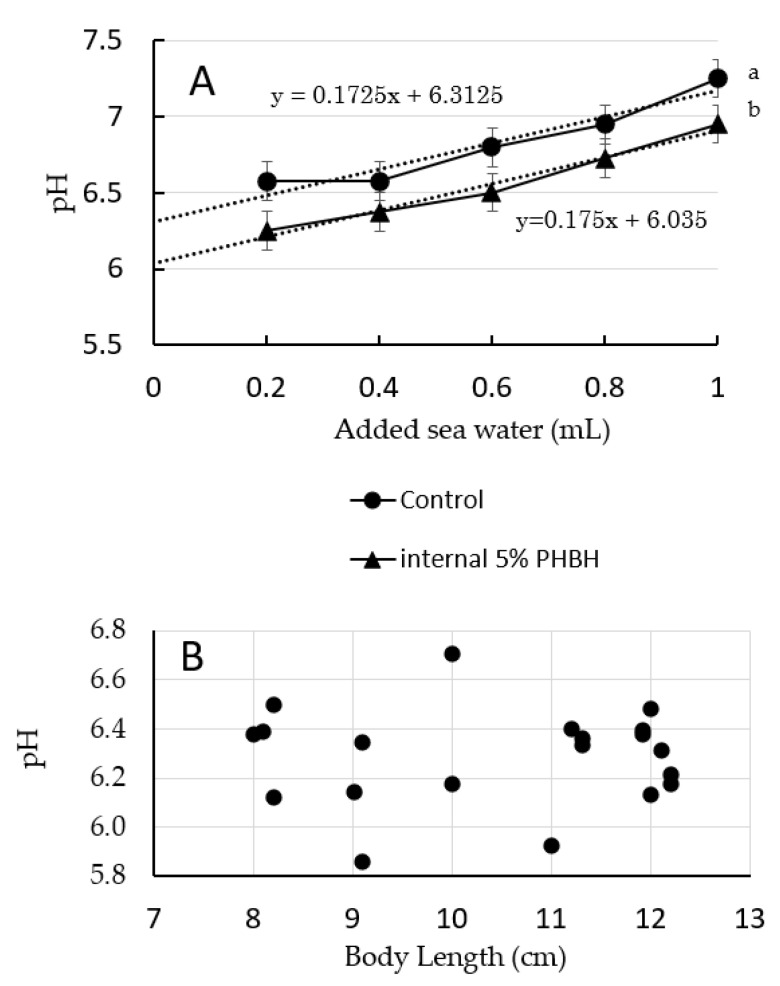
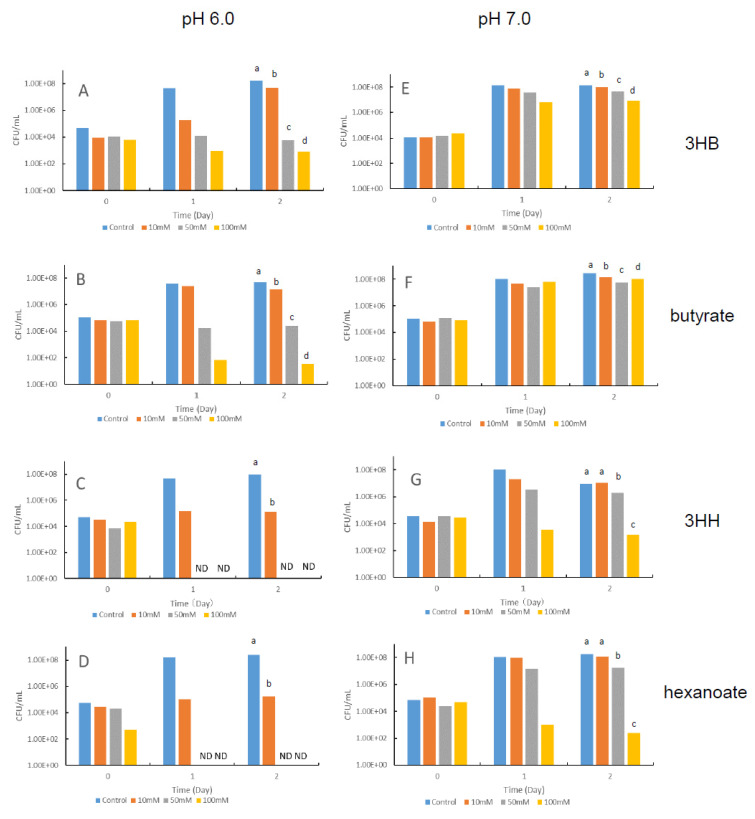
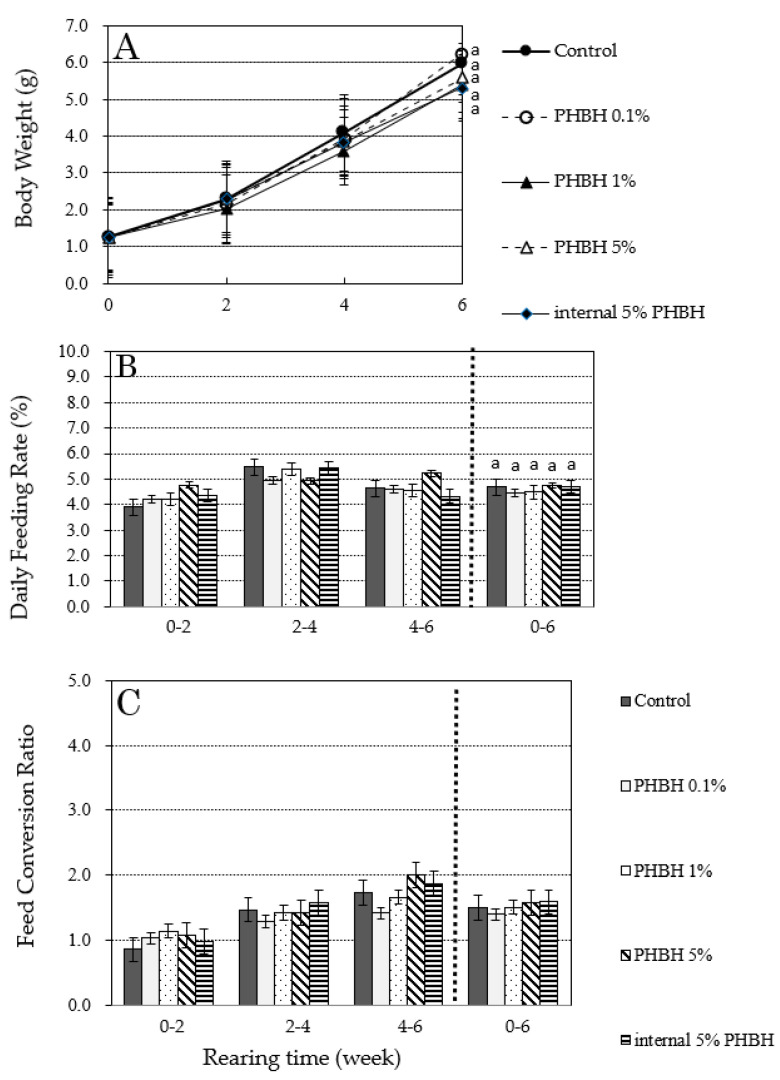
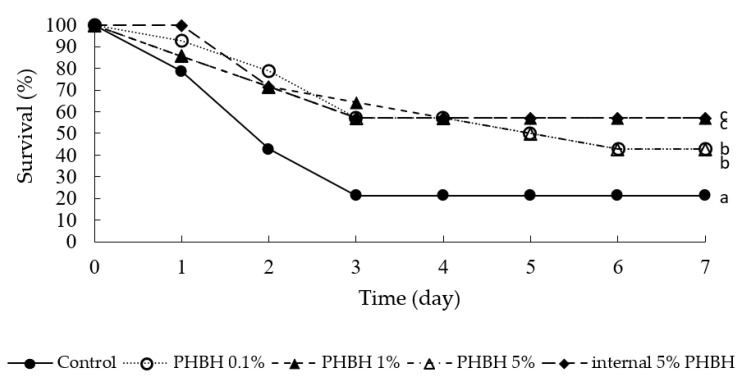
Here, we investigated the inhibitory effects of the biodegradable, water-insoluble polymer poly-hydroxybutyrate-co-hydroxyhexanoate (PHBH) and its two constituent monomers, the hydroxyalkanoic acids 3-hydroxybutyrate (3HB) and 3-hydroxyhexanoate (3HH), on the growth of the shrimp-pathogenic bacterium Vibrio penaeicida. In vitro experiments revealed that 3HH showed greater growth inhibitory activity than 3HB against V. penaeicida. In addition, the activities of hydroxyalkanoic acids were pH dependent, being greater at pH 6.0 than at pH 7.0. Investigation of the pH of the shrimp gut revealed a pH range of 5.9-6.7 (mean 6.29 ± SD 0.20), indicating that the physiological environment was suitable for 3HB and 3HH to exert their inhibitory activities against V. penaeicida. In vivo bacterial challenge experiments revealed that survival rates in kuruma shrimp (Marsupenaeus japonicus) infected by V. penaeicida were significantly increased in shrimp reared on feed containing PHBH (0.1%-5% w/w PHBH) compared with that in shrimp reared on standard diet alone. Supplementation with PHBH had no significant effects on three shrimp growth parameters: increase in body weight, daily feeding rate, and feed conversion ratio. These results suggest that supplementation of standard diet with PHBH will increase shrimp resistance to infection by V. penaeicida, thereby increasing shrimp aquaculture productivity.
Keywords: Marsupenaeus japonicus; inhibitory effect; pathogenic Vibrio; poly-hydroxybutyrate-co-hydroxyhexanoate (PHBH); short- and medium-chain hydroxyalkanoic acids; shrimp survival.
Conflict of interest statement
The authors declare no conflict of interest. The funders had no role in any part of this study.
Figures
References
-
- FAO . The State of World Fisheries and Aquaculture 2020: Sustainability in Action. Food and Agriculture Organization of the United Nations; Rome, Italy: 2020. 224p
-
- Aksornkoae S., Tokrisna R. Overview of shrimp farming and mangrove loss in Thailand. In: Barbier E.B., Sathirathai S., editors. Shrimp Farming and Mangrove Loss in Thailand. Edward Elgar; Cheltenham, UK: 2004. pp. 37–51.
-
- Teeyaporn K., Fukami K., Songsangjinda P., Muangyao P. Isolation and characterization of Noctiluca-killing bacteria from a shrimp aquaculture pond in Thailand. Fish. Sci. 2011;77:657–664.
-
- Ferreira J.G., Falconer L., Kittiwanich J., Ross L., Saurel C., Wellman K., Zhu C.B., Suvanachai P. Analysis of production and environmental effects of Nile tilapia and white shrimp culture in Thailand. Aquaculture. 2015;447:23–36. doi: 10.1016/j.aquaculture.2014.08.042. - DOI
-
- Muangyao P., Fukami K., Songsangjinda P., Predalumpaburta Y. Stimulation by gutweed to increase the abundance of insect larvae as food for shrimp aquaculture in Thailand. Aquaculture. 2020;519:734740. doi: 10.1016/j.aquaculture.2019.734740. - DOI
LinkOut - more resources
Full Text Sources
Other Literature Sources
