


Role of Zinc (Zn) in Human Reproduction: A Journey from Initial Spermatogenesis to Childbirth
- PMID: 33671837
- PMCID: PMC7926410
- DOI: 10.3390/ijms22042188
Role of Zinc (Zn) in Human Reproduction: A Journey from Initial Spermatogenesis to Childbirth
Abstract
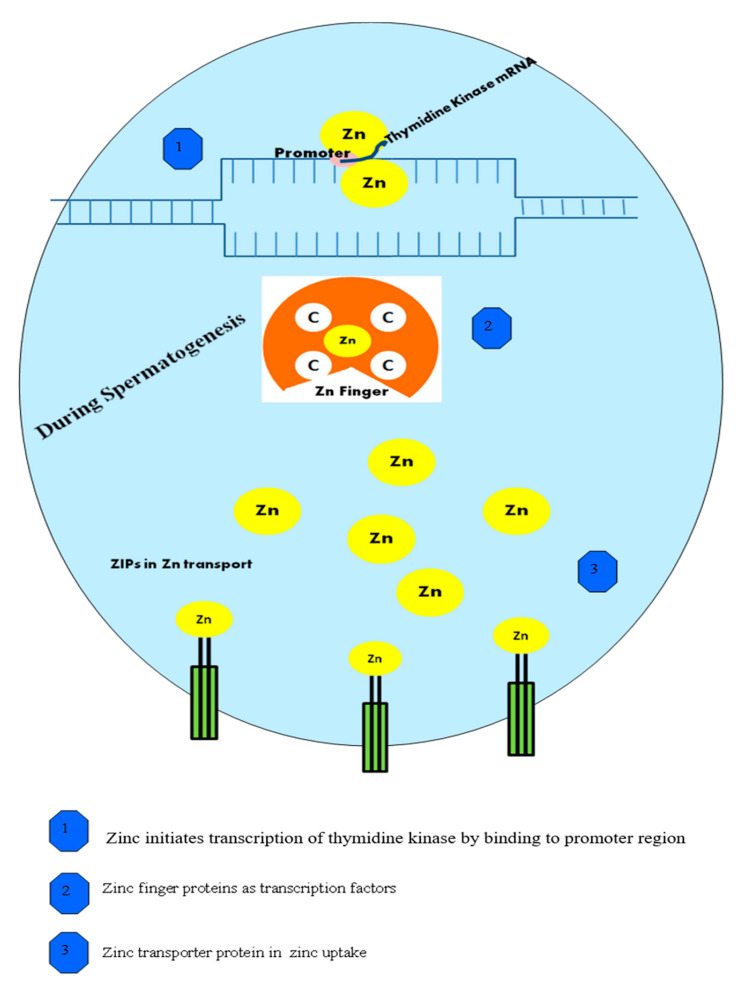
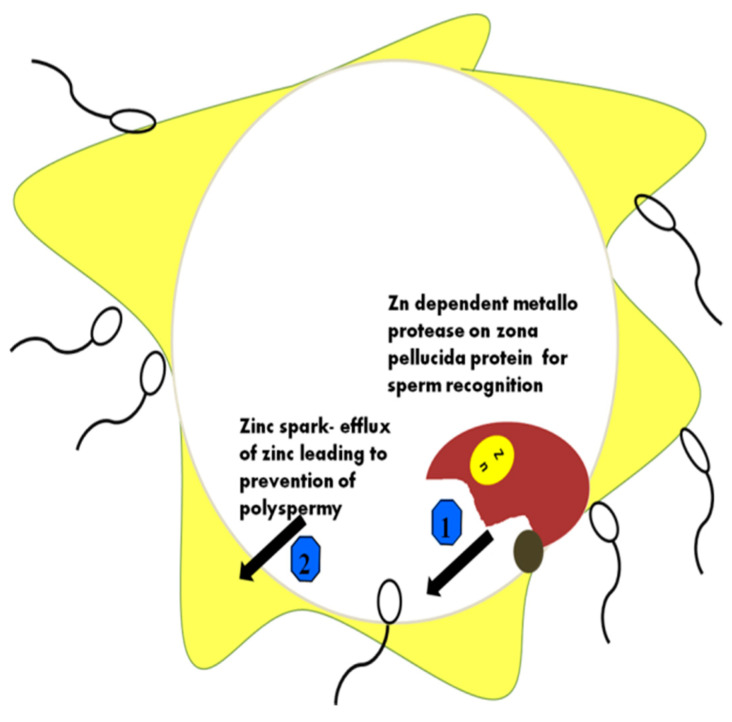
Zinc (Zn), the second-most necessary trace element, is abundant in the human body. The human body lacks the capacity to store Zn; hence, the dietary intake of Zn is essential for various functions and metabolism. The uptake of Zn during its transport through the body is important for proper development of the three major accessory sex glands: the testis, epididymis, and prostate. It plays key roles in the initial stages of germ cell development and spermatogenesis, sperm cell development and maturation, ejaculation, liquefaction, the binding of spermatozoa and prostasomes, capacitation, and fertilization. The prostate releases more Zn into the seminal plasma during ejaculation, and it plays a significant role in sperm release and motility. During the maternal, labor, perinatal, and neonatal periods, the part of Zn is vital. The average dietary intake of Zn is in the range of 8-12 mg/day in developing countries during the maternal period. Globally, the dietary intake of Zn varies for pregnant and lactating mothers, but the average Zn intake is in the range of 9.6-11.2 mg/day. The absence of Zn and the consequences of this have been discussed using critical evidence. The events and functions of Zn related to successful fertilization have been summarized in detail. Briefly, our current review emphasizes the role of Zn at each stage of human reproduction, from the spermatogenesis process to childbirth. The role of Zn and its supplementation in in vitro fertilization (IVF) opens opportunities for future studies on reproductive biology.
Keywords: cellular metabolism; human reproduction; male infertility; seminal plasma; zinc.
Conflict of interest statement
The authors declared “No conflict of interest”.
Figures
References
-
- Shukla A.K., Tiwari P.K., Pakhare A., Prakash C. Zinc and iron in soil, plant, animal and human health. Indian J. Fertil. 2016;12:133–149.
-
- Prasad A.S. Metabolism of Trace Metals in Man Volume I (1984): Developmental Aspects. CRC Press; New York, NY, USA: 2017. Trace metals in growth and sexual maturation.
-
- World Health Organization . Global Status Report on Alcohol and Health 2018. World Health Organization; Geneva, Switzerland: 2019.
-
- Kovacik A., Tirpak F., Tomka M., Miskeje M., Tvrda E., Arvay J., Fik M. Trace elements content in semen and their interactions with sperm quality and RedOx status in freshwater fish Cyprinus carpio: A correlation study. J. Trace Elem. Med. Biol. 2018;50:399–407. doi: 10.1016/j.jtemb.2018.08.005. - DOI - PubMed
Publication types
MeSH terms
Substances
LinkOut - more resources
Full Text Sources
Other Literature Sources
