


Long-Term Shaping of Corticostriatal Synaptic Activity by Acute Fasting
- PMID: 33671915
- PMCID: PMC7918979
- DOI: 10.3390/ijms22041916
Long-Term Shaping of Corticostriatal Synaptic Activity by Acute Fasting
Abstract
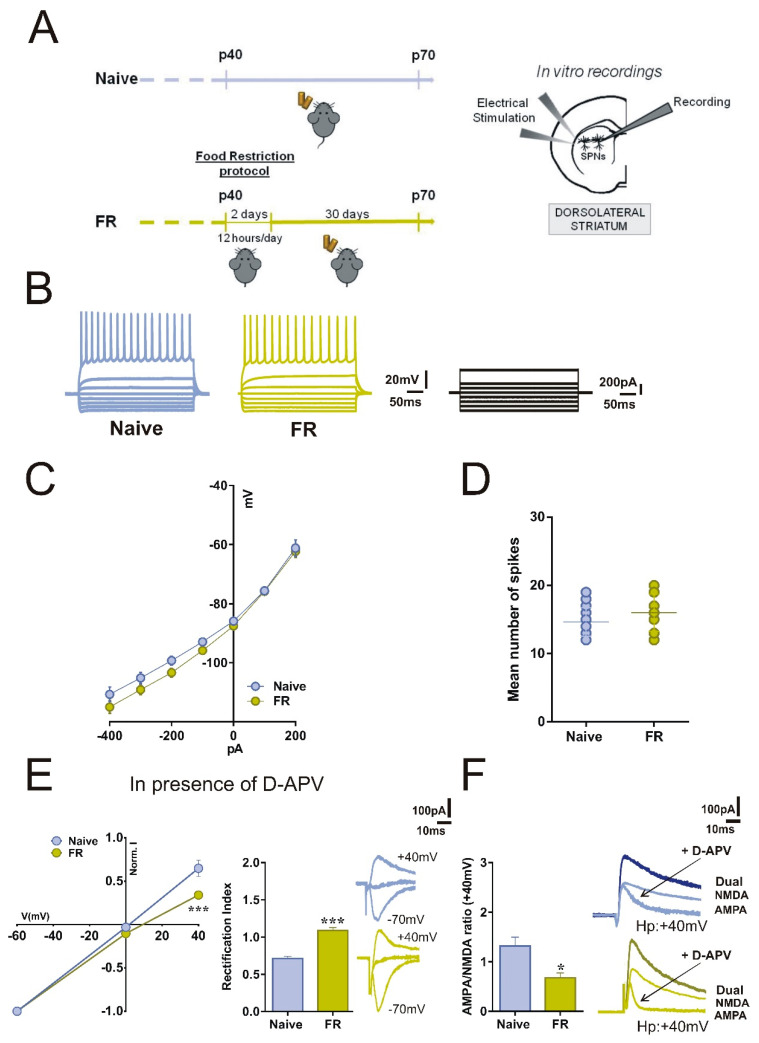
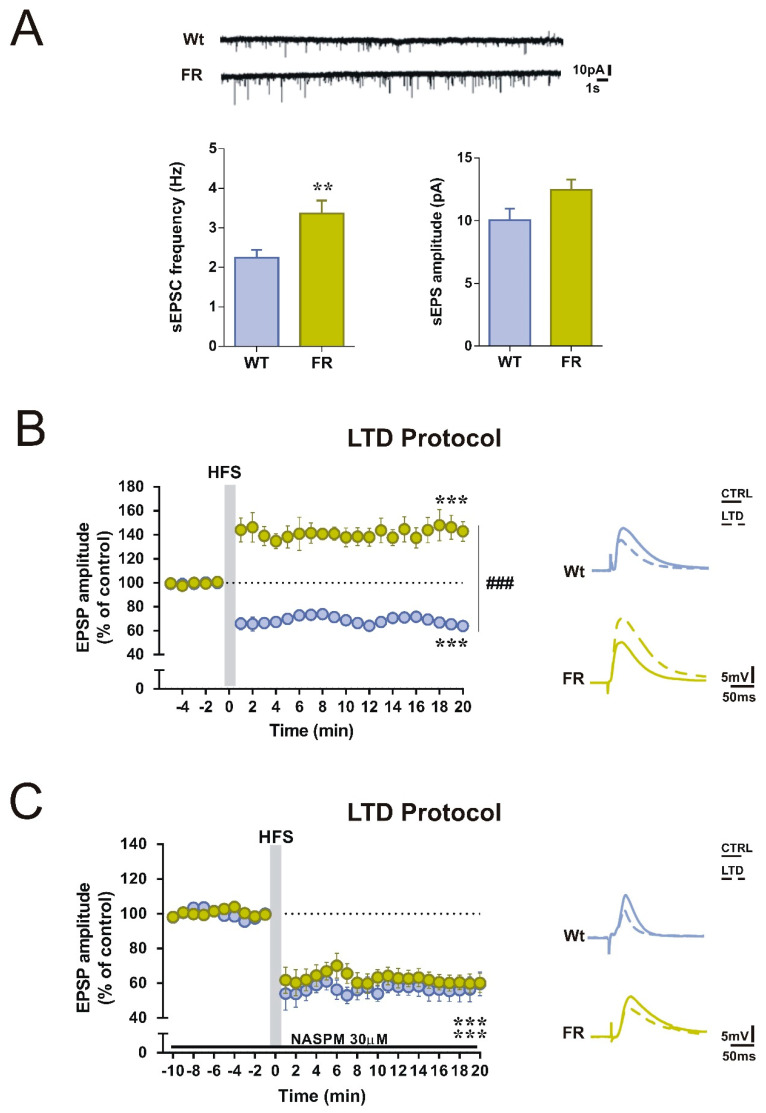
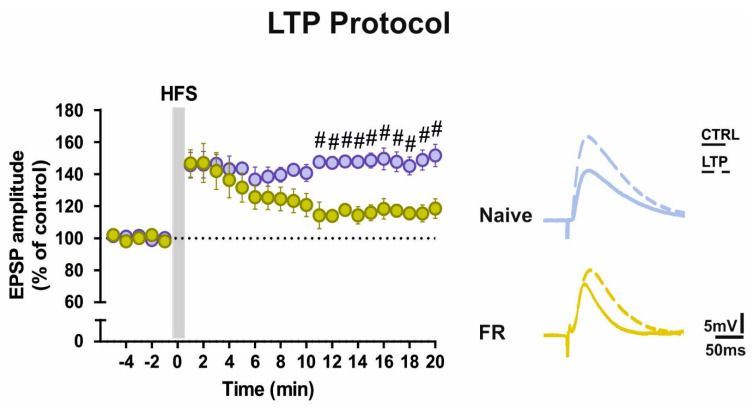
Food restriction is a robust nongenic, nonsurgical and nonpharmacologic intervention known to improve health and extend lifespan in various species. Food is considered the most essential and frequently consumed natural reward, and current observations have demonstrated homeostatic responses and neuroadaptations to sustained intermittent or chronic deprivation. Results obtained to date indicate that food deprivation affects glutamatergic synapses, favoring the insertion of GluA2-lacking α-Ammino-3-idrossi-5-Metil-4-idrossazol-Propionic Acid receptors (AMPARs) in postsynaptic membranes. Despite an increasing number of studies pointing towards specific changes in response to dietary restrictions in brain regions, such as the nucleus accumbens and hippocampus, none have investigated the long-term effects of such practice in the dorsal striatum. This basal ganglia nucleus is involved in habit formation and in eating behavior, especially that based on dopaminergic control of motivation for food in both humans and animals. Here, we explored whether we could retrieve long-term signs of changes in AMPARs subunit composition in dorsal striatal neurons of mice acutely deprived for 12 hours/day for two consecutive days by analyzing glutamatergic neurotransmission and the principal forms of dopamine and glutamate-dependent synaptic plasticity. Overall, our data show that a moderate food deprivation in experimental animals is a salient event mirrored by a series of neuroadaptations and suggest that dietary restriction may be determinant in shaping striatal synaptic plasticity in the physiological state.
Keywords: GluA1; calcium-permeable AMPA; dietary restriction; dorsolateral striatum; food deprivation; naphthyl-acetyl spermine.
Conflict of interest statement
The authors declare no conflict of interest.
Figures
References
-
- Chechko N., Vocke S., Habel U., Toygar T., Kuckartz L., Berthold-Losleben M., Laoutidis Z.G., Orfanos S., Wassenberg A., Karges W., et al. Effects of overnight fasting on working memory-related brain network: An fMRI study. Hum. Brain Mapp. 2015;36:839–851. doi: 10.1002/hbm.22668. - DOI - PMC - PubMed
MeSH terms
Substances
LinkOut - more resources
Full Text Sources
Other Literature Sources
