


Small Functional Foods: Comparative Phytochemical and Nutritional Analyses of Five Microgreens of the Brassicaceae Family
- PMID: 33672089
- PMCID: PMC7919663
- DOI: 10.3390/foods10020427
Small Functional Foods: Comparative Phytochemical and Nutritional Analyses of Five Microgreens of the Brassicaceae Family
Abstract
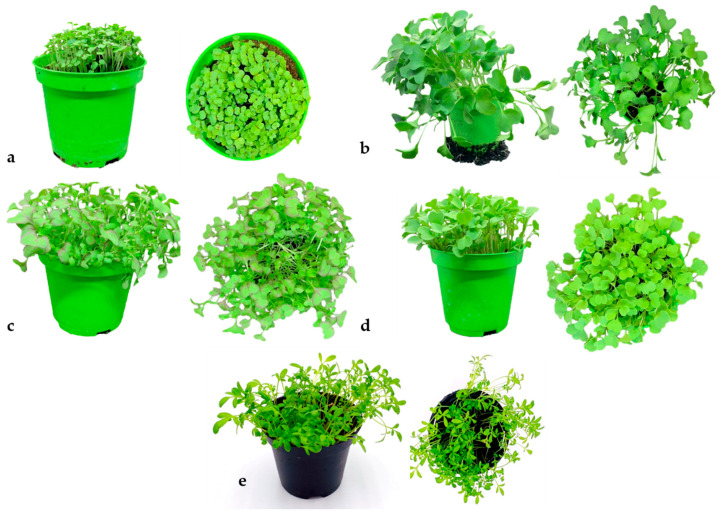
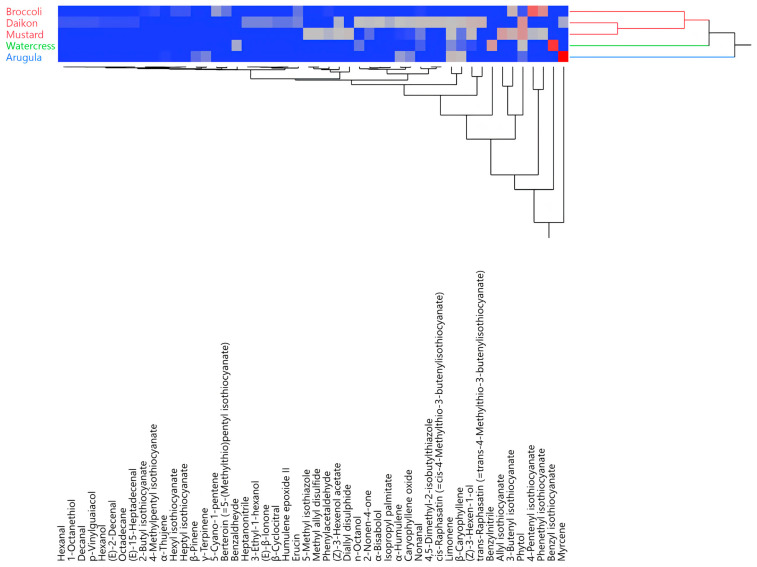
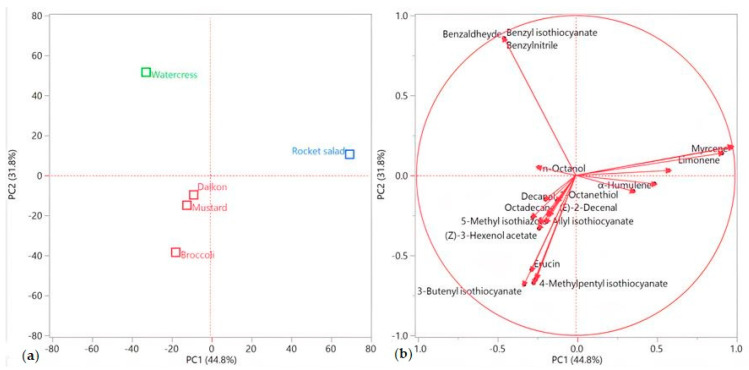
Microgreens are the seedlings of herbs and vegetables which are harvested at the development stage of their two cotyledonary leaves, or sometimes at the emergence of their rudimentary first pair of true leaves. They are functional foods, the consumption of which is steadily increasing due to their high nutritional value. The species of the Brassicaceae family are good sources of bioactive compounds, with a favorable nutritional profile. The present study analyzed some phytochemical compounds with nutritional values, such as chlorophylls, polyphenols, carotenoids, anthocyanins, ascorbic acid, total and reducing sugars, and the antioxidant activity of five Brassicaceae species: broccoli (Brassica oleracea L.), daikon (Raphanus raphanistrum subsp. sativus (L.) Domin), mustard (Brassica juncea (L.) Czern.), rocket salad (Eruca vesicaria (L.) Cav.), and watercress (Nasturtium officinale R.Br.). Broccoli had the highest polyphenol, carotenoid and chlorophyll contents, as well as a good antioxidant ability. Mustard was characterized by high ascorbic acid and total sugar contents. By contrast, rocket salad exhibited the lowest antioxidant content and activity. The essential oil (EO) composition of all of these species was determined in order to identify their profile and isothiocyanates content, which are compounds with many reported health benefits. Isothiocyanates were the most abundant group in broccoli (4-pentenyl isothiocyanate), mustard (allyl isothiocyanate), and watercress (benzyl isothiocyanate) EOs, while rocket salad and daikon exhibited higher contents of monoterpene hydrocarbons (myrcene) and oxygenated diterpenes (phytol), respectively. Broccoli microgreens exhibited the overall best nutritional profile, appearing as the most promising species to be consumed as a functional food among those analyzed.
Keywords: anthocyanins; antioxidant activity; arugula; ascorbic acid; broccoli; carotenoids; daikon; essential oil; isothiocyanates; mustard; polyphenols; rocket salad; watercress; white radish.
Conflict of interest statement
The authors declare no conflict of interest. The funders had no role in the design of the study; in the collection, analyses, or interpretation of data; in the writing of the manuscript, or in the decision to publish the results.
Figures
References
-
- Xiao Z., Lester G.E., Park E., Saftner R.A., Luo Y., Wang Q. Evaluation and correlation of sensory attributes and chemical compositions of emerging fresh produce: Microgreens. Postharvest Biol. Technol. 2015;110:140–148. doi: 10.1016/j.postharvbio.2015.07.021. - DOI
-
- Saini R.K., Ko E.Y., Keum Y.-S. Minimally processed ready-to-eat baby-leaf vegetables: Production, processing, storage, microbial safety, and nutritional potential. Food Rev. Int. 2017;33:644–663. doi: 10.1080/87559129.2016.1204614. - DOI
-
- Kyriacou M.C., Rouphael Y., Di Gioia F., Kyratzis A., Serio F., Renna M., De Pascale S., Santamaria P. Micro-scale vegetable production and the rise of microgreens. Trends Food Sci. Technol. 2016;57:103–115. doi: 10.1016/j.tifs.2016.09.005. - DOI
LinkOut - more resources
Full Text Sources
Other Literature Sources
