


Internal Jugular Vein Thrombosis: Etiology, Symptomatology, Diagnosis and Current Treatment
- PMID: 33672254
- PMCID: PMC7926529
- DOI: 10.3390/diagnostics11020378
Internal Jugular Vein Thrombosis: Etiology, Symptomatology, Diagnosis and Current Treatment
Abstract
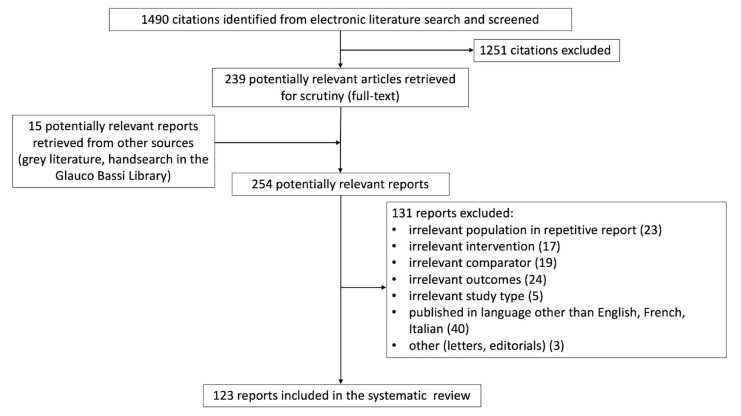
(1) Background: internal jugular vein thrombosis (IJVthr) is a potentially life-threating disease but no comprehensive reviews on etiology, symptomatology, diagnosis and current treatment guidelines are yet available; (2) Methods: we prospectively developed a protocol that defined objectives, search strategy for study identification, criteria for study selection, data extraction, study outcomes, and statistical methodology, according to the PRISMA standard. We performed a computerized search of English-language publications listed in the various electronic databases. We also retrieved relevant reports from other sources, especially by the means of hand search in the Glauco Bassi Library of the University of Ferrara; (3) Results: using the predefined search strategy, we retrieved and screened 1490 titles. Data from randomized control trials were few and limited to the central vein catheterization and to the IJVthr anticoagulation treatment. Systematic reviews were found just for Lemierre syndrome, the risk of pulmonary embolism, and the IJVthr following catheterization. The majority of the information required in our pre-defined objectives comes from perspectives observational studies and case reports. The methodological quality of the included studies was from moderate to good. After title and abstract evaluation, 1251 papers were excluded, leaving 239 manuscripts available. Finally, just 123 studies were eligible for inclusion. We found out the description of 30 different signs, symptoms, and blood biomarkers related to this condition, as well as 24 different reported causes of IJVthr. (4) Conclusions: IJVthr is often an underestimated clinical problem despite being one of the major sources of pulmonary embolism as well as a potential cause of stroke in the case of the upward propagation of the thrombus. More common symptoms are neck pain and headache, whereas swelling, erythema and the palpable cord sign beneath the sternocleidomastoid muscle, frequently associated with fever, are the most reported clinical signs. An ultrasound of the neck, even limited to the simple and rapid assessment of the compression maneuver, is a quick, economic, cost-effective, noninvasive tool. High quality studies are currently lacking.
Keywords: brain circulation; cerebral venous drainage; deep veins thrombosis; internal jugular vein; venous thromboembolism.
Conflict of interest statement
The authors declare no conflict of interest.
Figures
References
-
- Kumar V., Abbas A.K., Fausto N., Robbins S.L., Cotran R.S. Robbins and Cotran Pathologic Basis of Disease. Elsevier Saunders; Philadelphia, PA, USA: 1984.
-
- Uzun K., Erkoc R., Yuca K., Etlik O., Doğan E., Sayarlıoglu H., Işlek A., Çankaya H. Internal Jugular Vein thrombosis two Different Etiologies. Electron. J. Gen. Med. 2005;2:123–128. doi: 10.29333/ejgm/82324. - DOI
Publication types
LinkOut - more resources
Full Text Sources
Other Literature Sources
Medical
