


ACE Inhibitory and Antihypertensive Activities of Wine Lees and Relationship among Bioactivity and Phenolic Profile
- PMID: 33672674
- PMCID: PMC7924335
- DOI: 10.3390/nu13020679
ACE Inhibitory and Antihypertensive Activities of Wine Lees and Relationship among Bioactivity and Phenolic Profile
Abstract
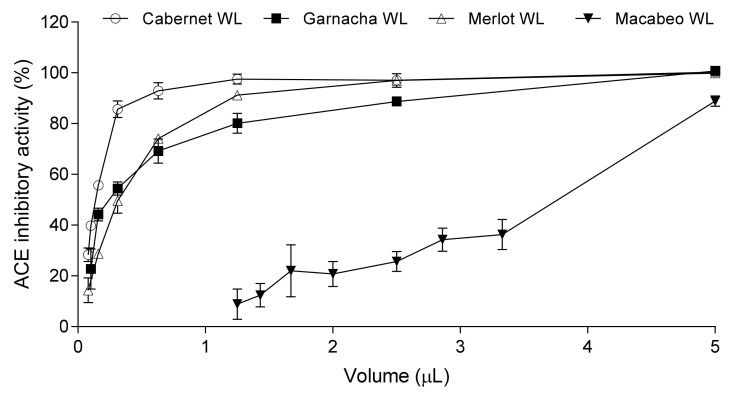
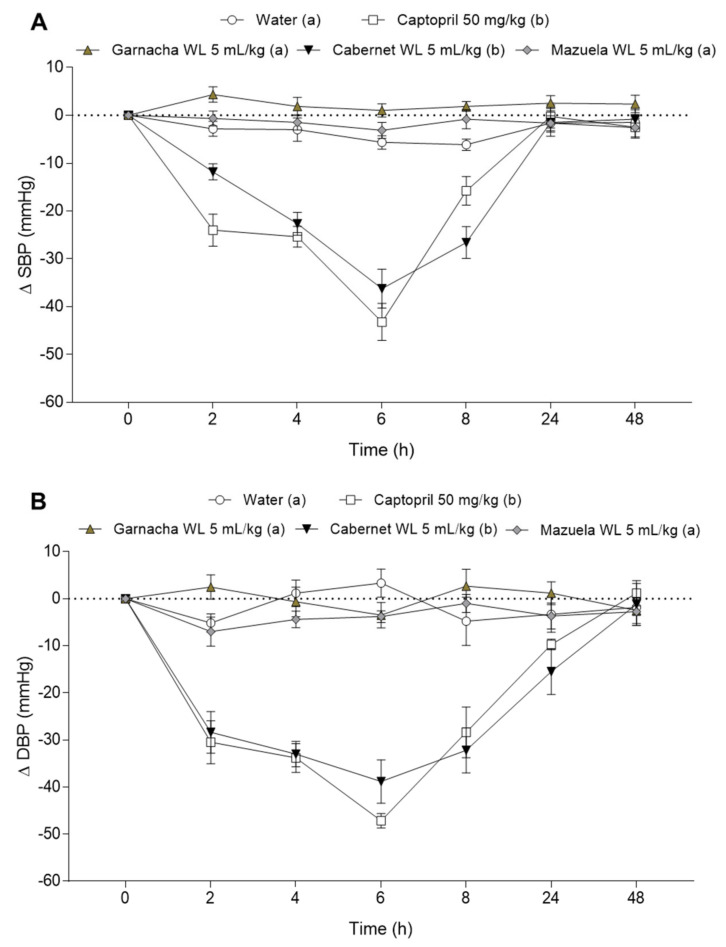
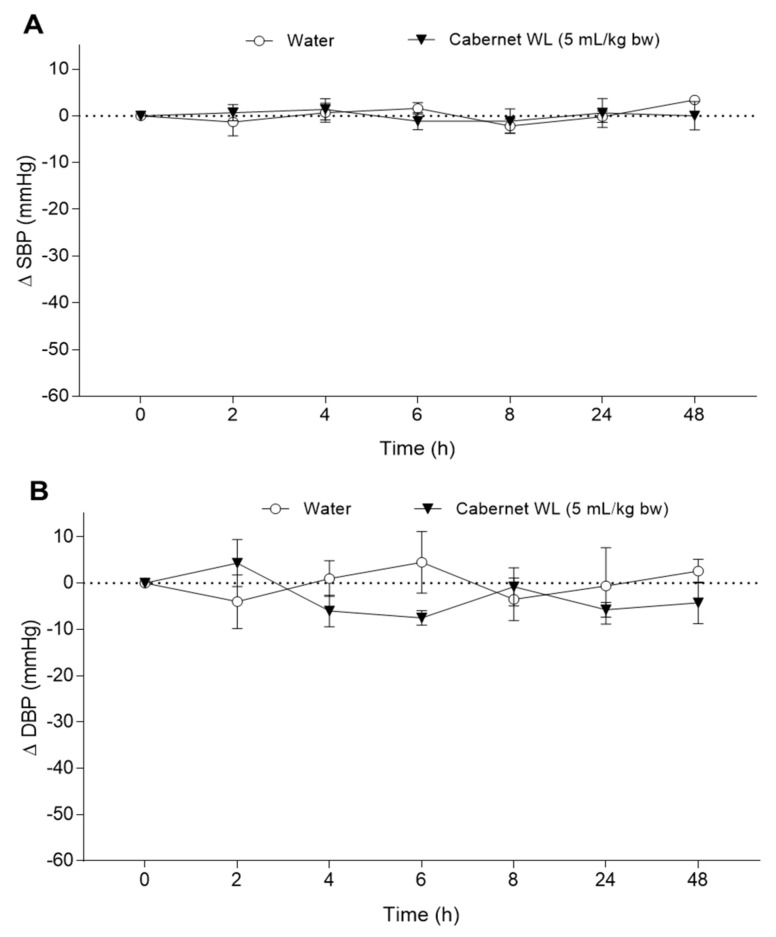
Wine lees (WL) are by-products generated in the winemaking process. The aim of this study was to investigate the angiotensin-converting enzyme inhibitory (ACEi) activity, and the blood pressure (BP) lowering effect of WL from individual grape varieties. The relationship among their activities and phenolic profiles was also studied. Three WL, from Cabernet, Mazuela, and Garnacha grape varieties, were firstly selected based on their ACEi properties. Their phenolic profiles were fully characterized by UHPLC-ESI-Q-TOF-MS. Then, their potential antihypertensive effects were evaluated in spontaneously hypertensive rats (SHR). BP was recorded before and after their oral administrations (2, 4, 6, 8, 24, and 48 h) at a dose of 5 mL/kg bw. Cabernet WL (CWL) exhibited a potent antihypertensive activity, similar to that obtained with the drug Captopril. This BP-lowering effect was related to the high amount of anthocyanins and flavanols present in these lees. In addition, a potential hypotensive effect of CWL was discarded in normotensive Wistar-Kyoto rats. Finally, the ACEi and antihypertensive activities of CWL coming from a different harvest were confirmed. Our results suggest the potential of CWL for controlling arterial BP, opening the door to commercial use within the wine industry.
Keywords: Cabernet grape variety; SHR; blood pressure; hypertension; polyphenols; winery by-product.
Conflict of interest statement
The authors declare no conflict of interest.
Figures



References
-
- Forouzanfar M.H., Liu P., Roth G.A., Ng M., Biryukov S., Marczak L., Alexander L., Estep K., Abate K.H., Akinyemiju T.F., et al. Global burden of hypertension and systolic blood pressure of at least 110 to 115 mmHg, 1990–2015. JAMA J. Am. Med. Assoc. 2017;317:165–182. doi: 10.1001/jama.2016.19043. - DOI - PubMed
-
- Hypertension. [(accessed on 22 May 2020)]; Available online: https://www.who.int/news-room/fact-sheets/detail/hypertension.
MeSH terms
Substances
Grants and funding
- AEI-010300-2013-254/Spanish Centre for the Development of industrial Technology (CDTI)
- RETOS COLABORACIÓN: RTC-2017-6044-2/Spanish Ministry of Economy and Competitiveness and European Regional Development Fund (FEDER)
- AEI-010500-2014-201/Spanish Centre for the Development of industrial Technology (CDTI)
- AEI-010500-2015-328/Spanish Centre for the Development of industrial Technology (CDTI)
LinkOut - more resources
Full Text Sources
Other Literature Sources
Medical
Miscellaneous
