


Chemical Composition and Nutritional Value of Different Species of Vespa Hornets
- PMID: 33672798
- PMCID: PMC7917720
- DOI: 10.3390/foods10020418
Chemical Composition and Nutritional Value of Different Species of Vespa Hornets
Abstract
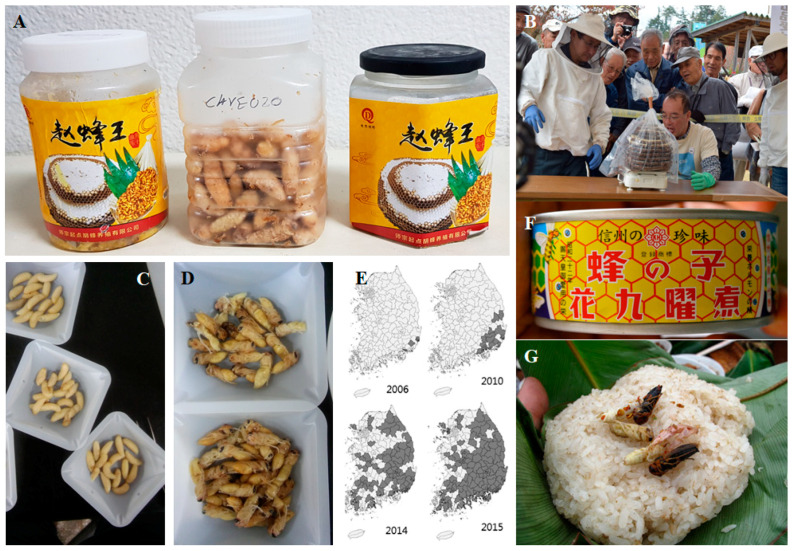
We genetically identified three different species of hornets and analyzed the nutrient compositions of their edible brood. Samples were collected from a commercial production unit in Shizong province of China and from forests near Andong City in Korea. The species were identified as Vespa velutina, V. mandarinia, and V. basalis from China and V. velutina from Korea. Farmed V. velutina and V. mandarinia were found to have similar protein contents, i.e., total amino acids, whereas V. basalis contained less protein. The V. velutina brood collected from the forest contained the highest amount of amino acids. Altogether 17 proteinogenic amino acids were detected and quantified with similar patterns of distribution in all three species: leucine followed by tyrosine and lysine being predominant among the essential and glutamic acid among the non-essential amino acids. A different pattern was found for fatty acids: The polyunsaturated fatty acid proportion was highest in V. mandarinia and V. basalis, but saturated fatty acids dominated in the case of V. velutina from two different sources. The high amounts of unsaturated fatty acids in the lipids of the hornets could be expected to exhibit nutritional benefits, including reducing cardiovascular disorders and inflammations. High minerals contents, especially micro minerals such as iron, zinc, and a high K/Na ratio in hornets could help mitigate mineral deficiencies among those of the population with inadequate nutrition.
Keywords: Vespa basalis; Vespa mandarinia; Vespa velutina; amino acids; entomophagy; fatty acids; minerals.
Conflict of interest statement
The authors declare no conflict of interest.
Figures
References
-
- Ying F., Xiaoming C., Long S., Zhiyong C. Common edible wasps in Yunnan Province, China and their nutritional value. In: Durst P.B., Johnson D.V., Leslie R.N., Shono K., editors. Forest Insects as Food: Human Bites Back. Food and Agriculture Organi-zation of the United Nations; Regional Office for Asia and the Pacific; Bangkok, Thailand: 2010. pp. 93–98.
-
- Kim H.S., Jung C. Nutritional characteristics of edible insects as potential food materials. Korean J. Apic. 2013;28:1–8.
-
- Hanboonsong Y., Durst P.B. Edible Insects in Lao PDR: Building on Tradition to Enhance Food Security. Food and Agriculture Organization of the United Nations—Regional Office for Asia and the Pacific; Bangkok, Thailand: 2014.
-
- Carpenter J.M., Kojima J. Checklist of the species in the subfamily Vespinae (Insects: Hymenoptera: Vespinae) Nat. Hist. Bull. Ibaraki Univ. 1997;1:51–92.
Grants and funding
LinkOut - more resources
Full Text Sources
Other Literature Sources
