


Monoterpenes and Sesquiterpenes of Essential Oils from Psidium Species and Their Biological Properties
- PMID: 33673039
- PMCID: PMC7917929
- DOI: 10.3390/molecules26040965
Monoterpenes and Sesquiterpenes of Essential Oils from Psidium Species and Their Biological Properties
Abstract
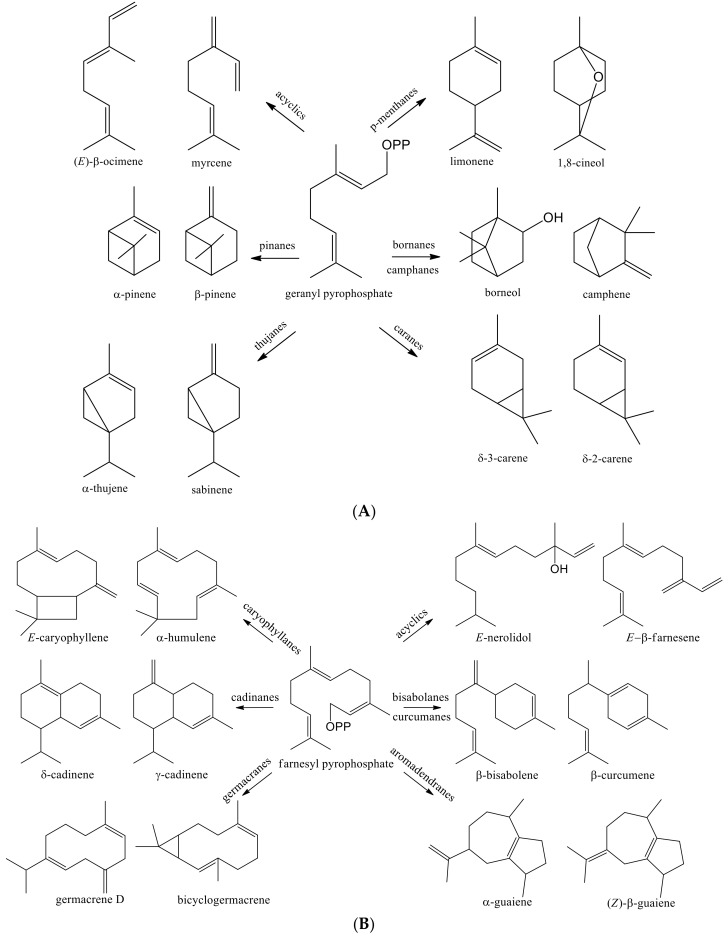
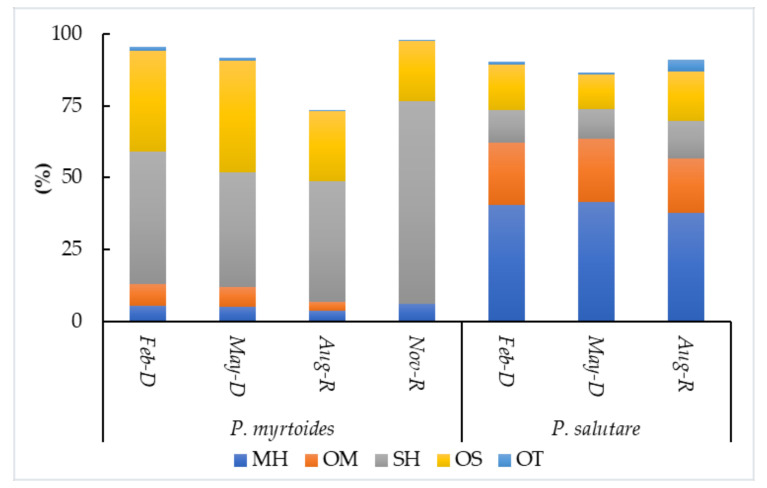
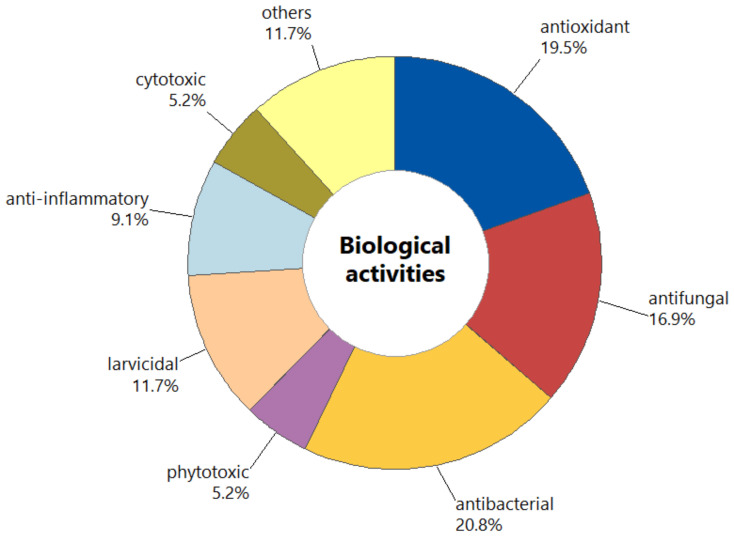
Psidium (Myrtaceae) comprises approximately 266 species, distributed in tropical and subtropical regions of the world. Psidium taxa have great ecological, economic, and medicinal relevance due to their essential oils' chemical diversity and biological potential. This review reports 18 Psidium species growing around the world and the chemical and biological properties of their essential oils. Chemically, 110 oil records are reported with significant variability of volatile constituents, according to their seasonality and collection sites. Monoterpenes and sesquiterpenes with acyclic (C10 and C15), p-menthane, pinane, bisabolane, germacrane, caryophyllane, cadinane, and aromadendrane skeleton-types, were the primary constituents. The essential oils showed various biological activities, including antioxidant, antifungal, antibacterial, phytotoxic, larvicidal, anti-inflammatory, and cytotoxic properties. This review contributes to the Psidium species rational and economic exploration as natural sources to produce new drugs.
Keywords: Myrtaceae; Psidium; biological activities; essential oil variability; monoterpenes; sesquiterpenes.
Conflict of interest statement
The authors declare no conflict of interest.
Figures
References
-
- Soares-Silva L.H., Proença C.E.B. A new species of Psidium L. (Myrtaceae) from southern Brazil. Bot. J. Linn. Soc. 2008;158:51–54. doi: 10.1111/j.1095-8339.2008.00727.x. - DOI
-
- The Angiosperm Phylogeny Group An update of the Angiosperm Phylogeny Group classification for the orders and families of flowering plants: APG IV. Bot. J. Linn. Soc. 2016;181:1–20. doi: 10.1111/boj.12385. - DOI
-
- Psidium L. [(accessed on 10 July 2020)]; Available online: https://www.gbif.org/species/3187232.
-
- Tuler A.C., Carrijo T.T., Ferreria M.F.S., Peixoto A.L. Flora of Espírito santo: Psidium (Myrtaceae) Rodriguésia. 2017;68:1791–1805. doi: 10.1590/2175-7860201768515. - DOI
-
- Gressler E., Pizo M.A., Morellato L.P.C. Polinização e dispersão de sementes em Myrtaceae do Brasil. Rev. Bras. Botânica. 2006;29:509–530. doi: 10.1590/S0100-84042006000400002. - DOI
Publication types
MeSH terms
Substances
LinkOut - more resources
Full Text Sources
Other Literature Sources
