


Clinical utility of cerebrospinal fluid vitamin D-binding protein as a novel biomarker for the diagnosis of viral and bacterial CNS infections
- PMID: 33673834
- PMCID: PMC7934275
- DOI: 10.1186/s12879-021-05924-z
Clinical utility of cerebrospinal fluid vitamin D-binding protein as a novel biomarker for the diagnosis of viral and bacterial CNS infections
Abstract
Background: Rapid and accurate diagnosis of central nervous system (CNS) infections is important, and laboratory tests help diagnose CNS infections. Even when the patient has symptoms, laboratory tests often do not reveal any specific findings. The potential of vitamin D-binding protein (VDBP) to be used as a biomarker for viral and bacterial CNS infections was studied.
Methods: A total of 302 subjects with suspected CNS infection who underwent lumbar puncture were included. Clinical and laboratory data were collected retrospectively. VDBP levels were measured in the cerebrospinal fluid (CSF) samples. Genotyping for the GC gene encoding VDBP was also performed. VDBP levels were analyzed and compared by CNS infection, pathogen, CSF opening pressure, and GC genotype.
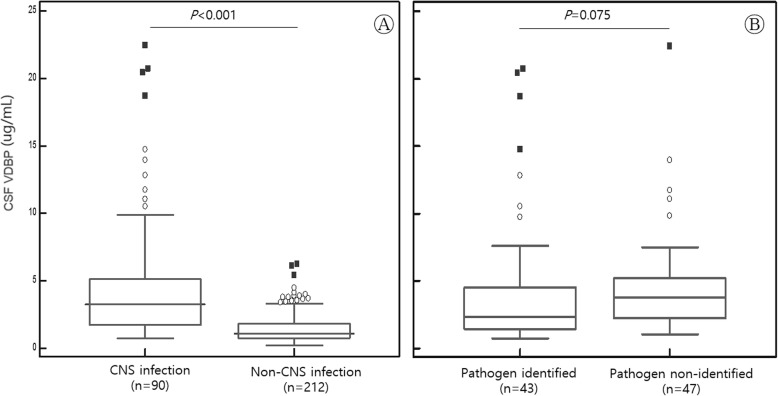
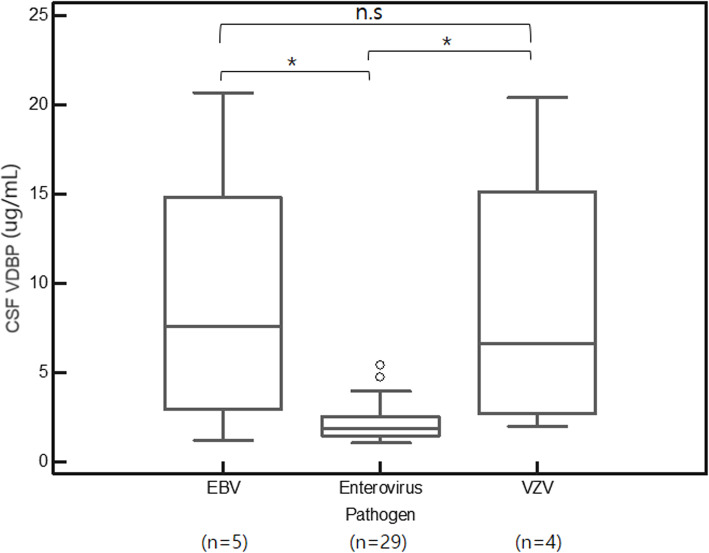
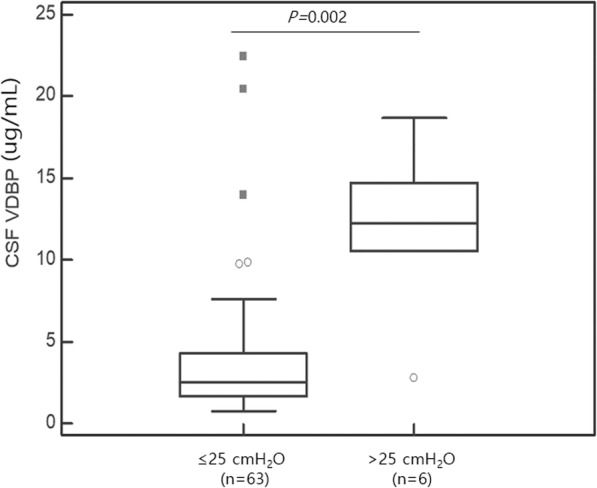
Results: A CNS infection group (n = 90) and a non-CNS infection group (n = 212) were studied. In terms of its receiver operating characteristic, CSF VDBP showed an area under the curve of 0.726 for the diagnosis of CNS infection. CSF VDBP levels were significantly different between the CNS infection and non-infection groups. The CNS infection group with enterovirus showed a statistically lower distribution of CSF VDBP levels than the other virus groups. The group with CSF opening pressure > 25 cmH2O showed higher CSF VDBP levels than the other groups. There was no significant difference in GC gene allele distribution between the CNS infection and non-infection groups.
Conclusions: CSF VDBP levels were increased in patients with CNS infection. The CSF VDBP showed potential as a new biomarker for viral and bacterial CNS infections.
Keywords: Biomarker; Cerebrospinal fluid; Diagnosis; GC genotype; Infection; Vitamin D-binding protein.
Conflict of interest statement
The authors declare that they have no competing interests.
Figures

References
-
- McGill F, Heyderman RS, Michael BD, Defres S, Beeching NJ, Borrow R, Glennie L, Gaillemin O, Wyncoll D, Kaczmarski E, et al. The UK joint specialist societies guideline on the diagnosis and management of acute meningitis and meningococcal sepsis in immunocompetent adults. J Inf Secur. 2016;72(4):405–438. - PubMed
MeSH terms
Substances
Grants and funding
LinkOut - more resources
Full Text Sources
Other Literature Sources
Miscellaneous
