


Clinical and radiological outcomes of acetabular revision surgery with trabecular titanium cups in Paprosky type II and III bone defects
- PMID: 33675431
- PMCID: PMC7937008
- DOI: 10.1186/s10195-021-00571-1
Clinical and radiological outcomes of acetabular revision surgery with trabecular titanium cups in Paprosky type II and III bone defects
Abstract
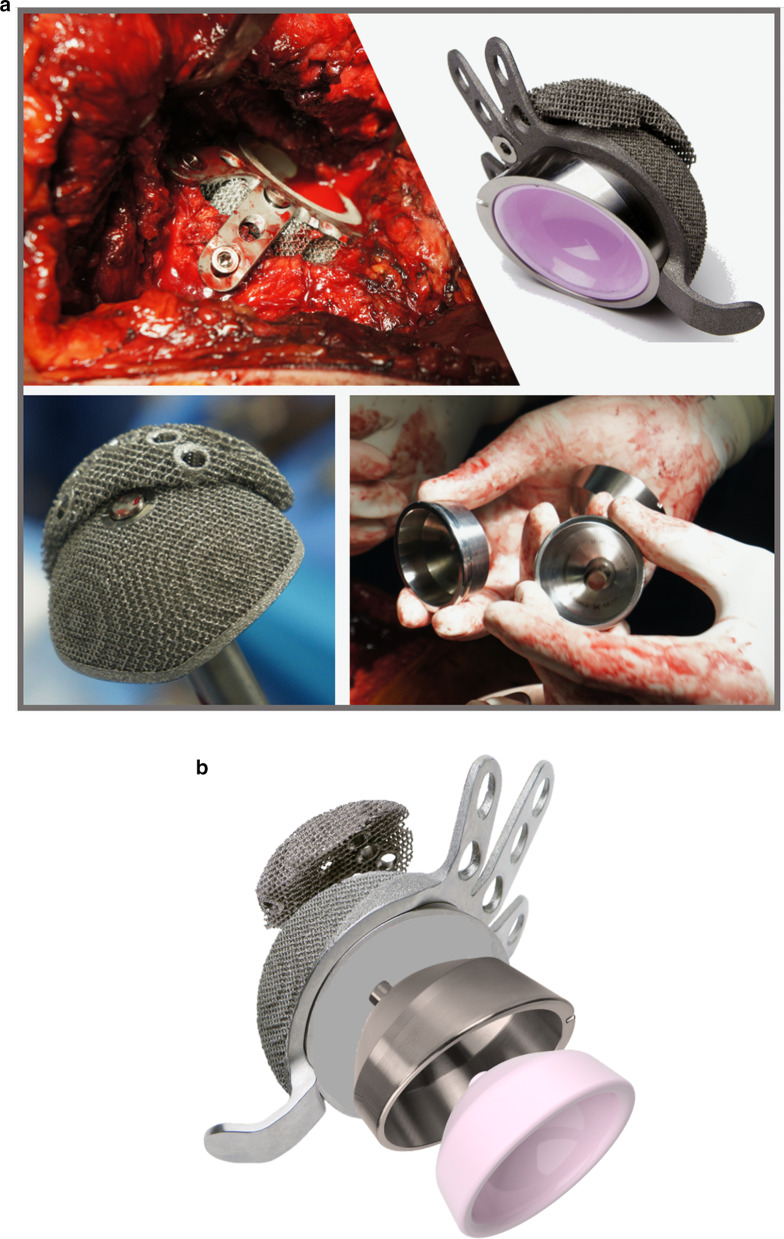
Background: This prospective study aims to evaluate the mid-term clinical outcomes and radiographic stability of two different types of cementless trabecular titanium acetabular components in total hip revision surgery.
Methods: Between December 2008 and February 2017, 104 cup revisions were performed using trabecular titanium revision cups. Mean age of patients was 70 (range 29-90; SD 11) years. The majority of revisions were performed for aseptic loosening (86 cases, 82.69%), but in all the other diagnoses (18 cases), a significant bone loss (Paprosky type II or III) was registered preoperatively. Bone defects were classified according to Paprosky acetabular classification. We observed 53 type II defects and 42 type III defects. Cups were chosen according to the type of defect.
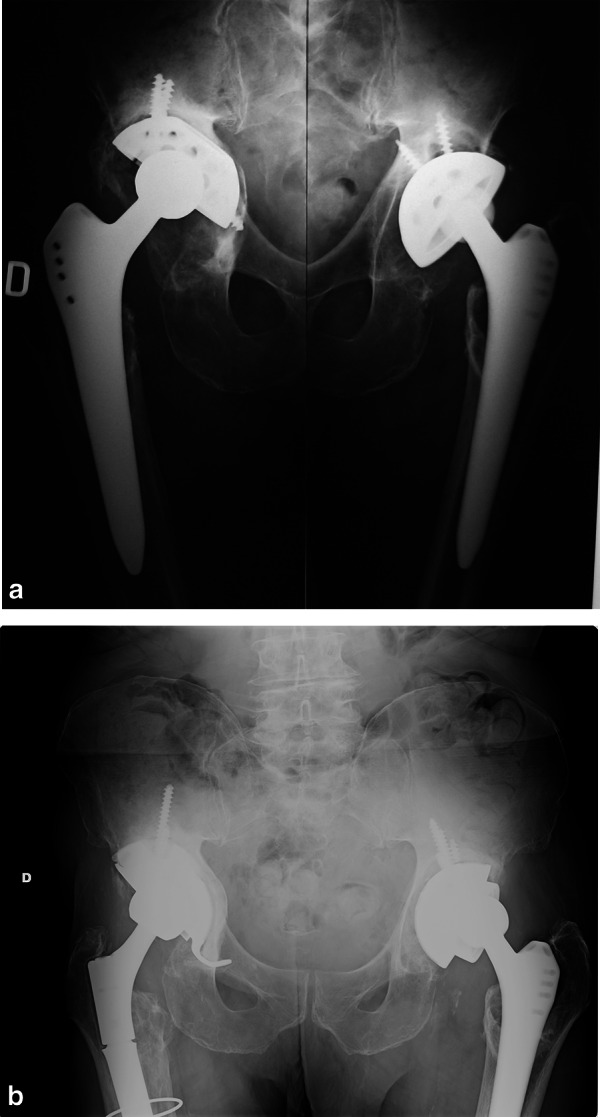
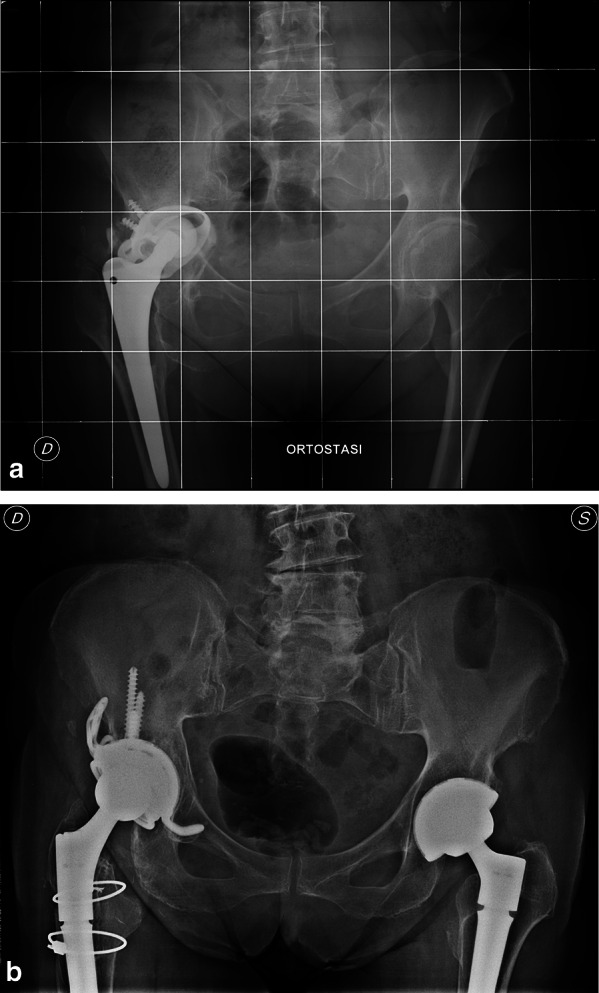
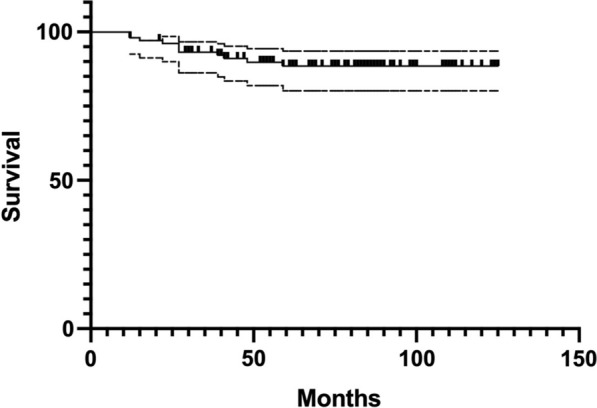
Results: Average follow-up was 91 (range 24-146) months. Mean Harris Hip Score (HHS) improved from 43.7 (range 25-70; SD 9) preoperatively to 84.4 (range 46-99; SD 7.56) at last follow-up. One (1.05%) cup showed radiographic radiolucent lines inferior to 2 mm and was clinically asymptomatic. One (1.05%) cup was loose and showed periacetabular allograft reabsorption. Kaplan-Meier survivorship was assessed to be 88.54% (95% CI 80.18-93.52%) at 71 months, with failure of the cup for any reason as the endpoint.
Conclusion: Trabecular titanium revision cups showed good clinical and radiographic results at mid-term follow-up in Paprosky type II and III bone defects.
Level of evidence: Level IV prospective case series.
Keywords: Acetabular bone loss; Acetabular reconstruction; Revision total hip arthroplasty; Trabecular titanium cup.
Conflict of interest statement
There are no competing interests to declare. F. Benazzo is a consultant and have a teaching contract with Lima-corporate. There are no competing interests for any of the other authors. The other authors have no disclosures.
Figures
References
-
- Levine B (2008) A new era in porous metals: applications in orthopaedics. In: MetFoam 2007—Proceedings of the 5th international conference on porous metals and metallic foams, p 251–254. https://doi.org/10.1002/adem.200800215
-
- Matharu GS, Judge A, Murray DW, Pandit HG. Trabecular metal versus non-trabecular metal acetabular components and the risk of re-revision following revision total hip arthroplasty: a propensity score-matched study from the national joint registry for England and Wales. J Bone Joint Surg Am. 2018;100:1132–1140. doi: 10.2106/JBJS.17.00718. - DOI - PubMed
MeSH terms
Substances
LinkOut - more resources
Full Text Sources
Other Literature Sources
Medical
Research Materials
