


Kinetic modeling of anaerobic degradation of plant-derived aromatic mixtures by Rhodopseudomonas palustris
- PMID: 33675449
- PMCID: PMC7997838
- DOI: 10.1007/s10532-021-09932-3
Kinetic modeling of anaerobic degradation of plant-derived aromatic mixtures by Rhodopseudomonas palustris
Abstract
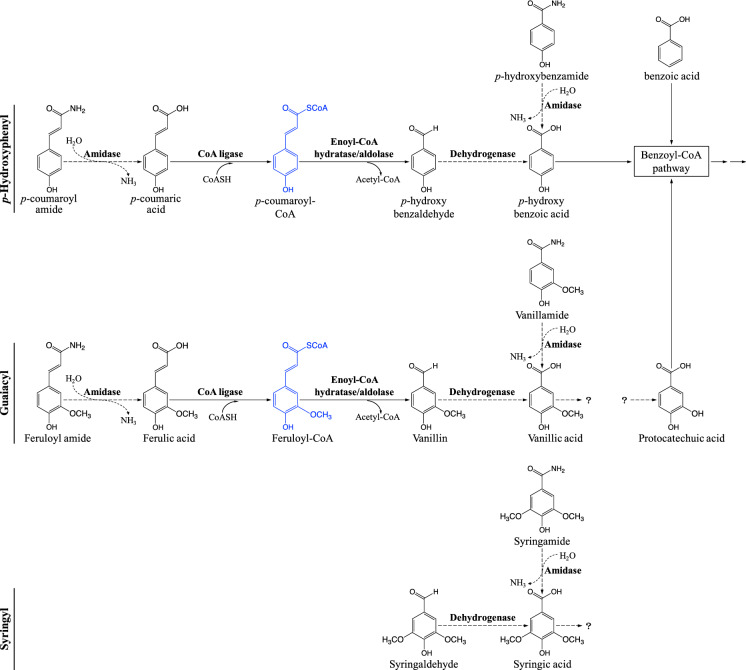
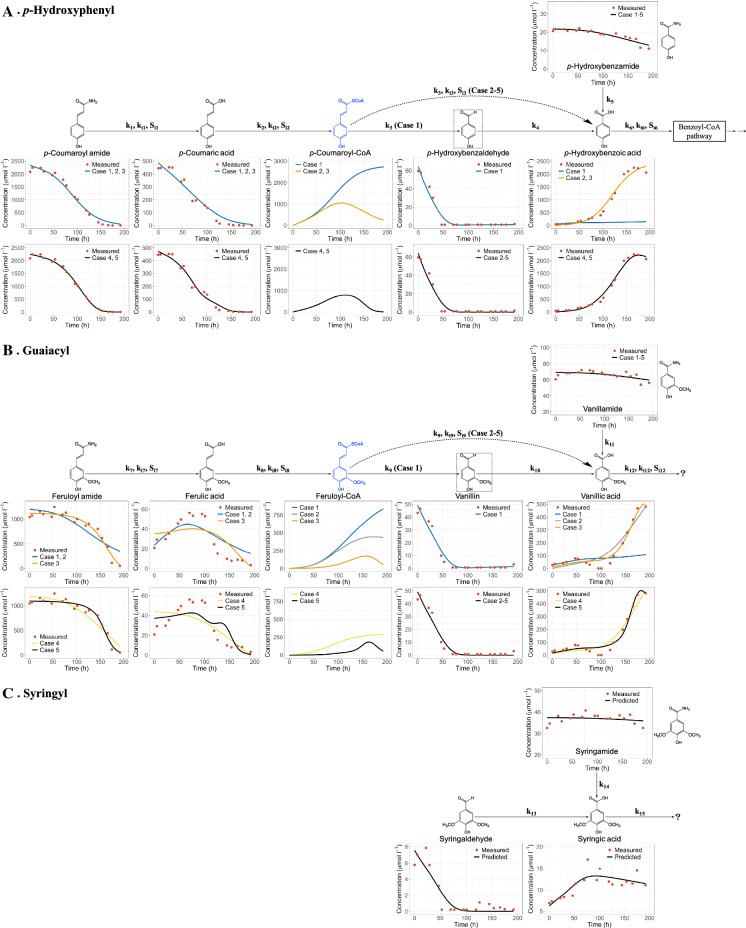
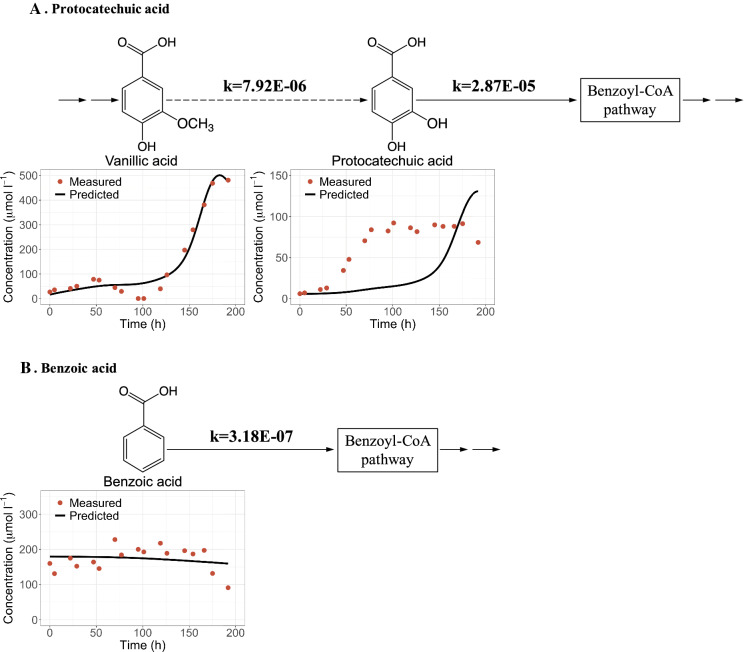
Rhodopseudomonas palustris is a model microorganism for studying the anaerobic metabolism of aromatic compounds. While it is well documented which aromatics can serve as sole organic carbon sources, co-metabolism of other aromatics is poorly understood. This study used kinetic modeling to analyze the simultaneous degradation of aromatic compounds present in corn stover hydrolysates and model the co-metabolism of aromatics not known to support growth of R. palustris as sole organic substrates. The simulation predicted that p-coumaroyl amide and feruloyl amide were hydrolyzed to p-coumaric acid and ferulic acid, respectively, and further transformed via p-coumaroyl-CoA and feruloyl-CoA. The modeling also suggested that metabolism of p-hydroxyphenyl aromatics was slowed by substrate inhibition, whereas the transformation of guaiacyl aromatics was inhibited by their p-hydroxyphenyl counterparts. It also predicted that substrate channeling may occur during degradation of p-coumaroyl-CoA and feruloyl-CoA, resulting in no detectable accumulation of p-hydroxybenzaldehyde and vanillin, during the transformation of these CoA ligated compounds to p-hydroxybenzoic acid and vanillic acid, respectively. While the simulation correctly represented the known transformation of p-hydroxybenzoic acid via the benzoyl-CoA pathway, it also suggested co-metabolism of vanillic acid and syringic acid, which are known not to serve as photoheterotrophic growth substrate for R. palustris.
Keywords: Anaerobic degradation; Co-metabolism; Kinetic modeling; Plant-derived aromatics; Rhodopseudomonas palustris; Substrate inhibition.
Conflict of interest statement
The authors declare that they have no conflict of interest.
Figures
References
-
- Atkinson KA. An Introduction to numerical analysis. 2. New York: John Wiley and Sons; 1989.
MeSH terms
Supplementary concepts
Grants and funding
LinkOut - more resources
Full Text Sources
Other Literature Sources
