


The impact of food insecurity on HIV outcomes in Senegal, West Africa: a prospective longitudinal study
- PMID: 33676463
- PMCID: PMC7936446
- DOI: 10.1186/s12889-021-10444-1
The impact of food insecurity on HIV outcomes in Senegal, West Africa: a prospective longitudinal study
Abstract
Background: Understanding the impact of food insecurity on HIV outcomes is critical for the development and implementation of effective, evidence-based interventions to address food insecurity and improve the HIV care cascade. We conducted a prospective, longitudinal study to determine the impact of food insecurity on HIV outcomes in Senegal, West Africa.
Methods: HIV-infected individuals presenting for care and initiation of ART through the Senegalese National AIDS program in Dakar and Ziguinchor were eligible for enrollment. Data were collected using interviews, clinical evaluations, laboratory analyses, and chart review at enrollment, month 6, and month 12. Logistic regression was used to determine the association between food insecurity and HIV outcomes.
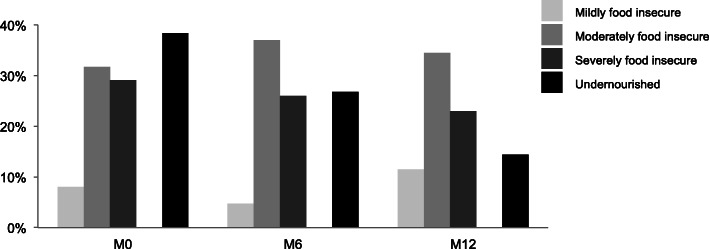
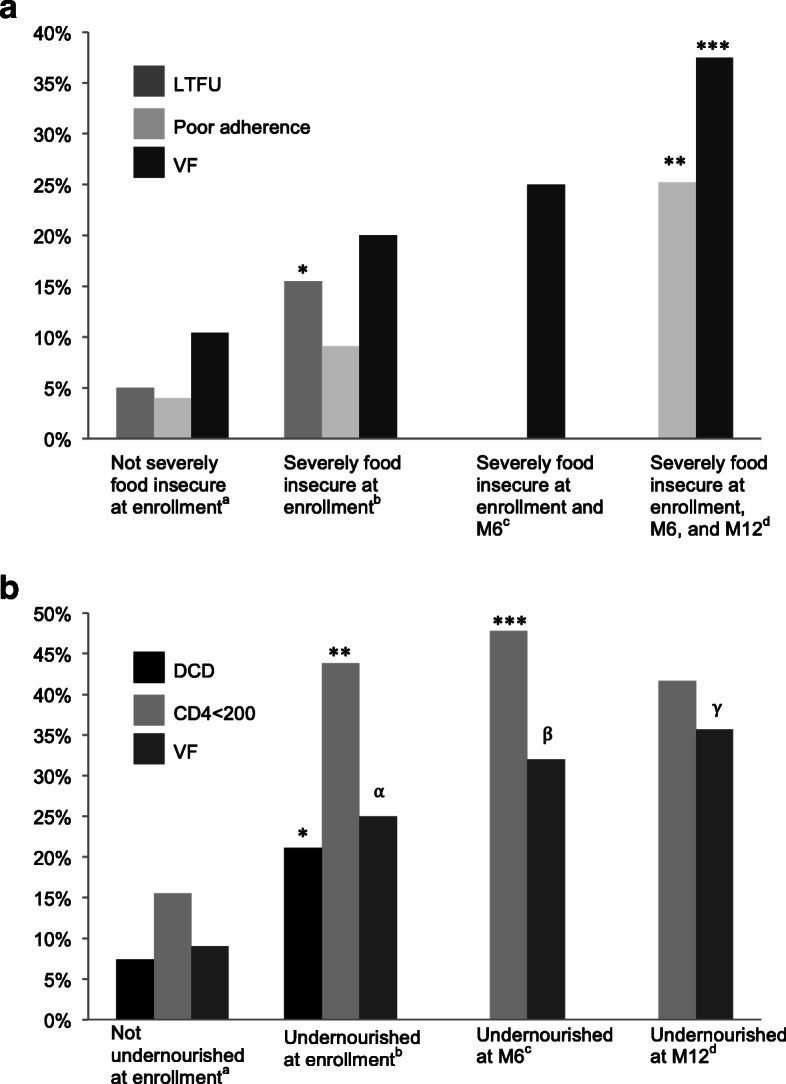
Results: Among the 207 participants in this study, 70% were female and the median age was 37 years. The majority (69%) were food insecure at enrollment, 29% were severely food insecure, and 38% were undernourished. Nearly a third (32%) had no formal education, 23% practiced agriculture, and 40% owned livestock. The median daily food expenditure per person was $0.58. The median round trip transportation time to clinic was 90 min (IQR 30-240). The median cost of transportation to clinic was $1.74. At month 12, 69% were food insecure, 23% were severely food insecure, and 14% were undernourished. At month 12, 43% had not disclosed their HIV status; food insecurity was associated with non-disclosure of HIV-status due to fear of stigmatization and feelings of shame. Severe food insecurity was a strong predictor of loss to follow-up (OR 3.13 [1.08-9.06]) and persistent severe food insecurity was associated with virologic failure (OR 5.14 [1.01-26.29]) and poor adherence to ART 8.00 [1.11-57.57]. Poor nutritional status was associated with poor immunologic recovery (OR 4.24 [1.56-11.47]), virologic failure (OR 3.39 [1.13-10.21]), and death (OR 3.35 [1.40-8.03]).
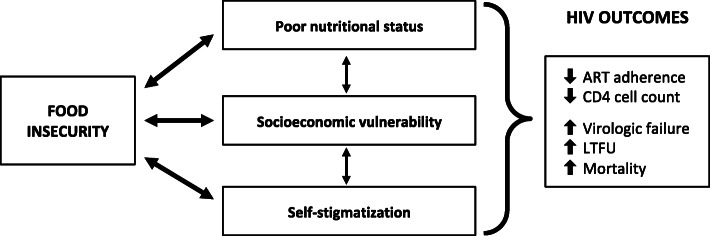
Conclusion: Severity and duration of food insecurity are important factors in understanding the relationship between food insecurity and HIV outcomes. Our findings highlight the importance of nutritional status, socioeconomic opportunity, and self-stigmatization in the complex pathway between food insecurity and HIV outcomes. Interdisciplinary, multisectoral efforts are needed to develop and implement effective interventions to address food insecurity among people living with HIV.
Keywords: Adherence; Agriculture; Care cascade; Food insecurity; HIV/AIDS; Loss to follow-up; Nutrition; Senegal; Social determinants; Stigma; Virologic failure; West Africa.
Conflict of interest statement
The authors declare that they have no competing interests related to this work. N.A.B receives research support from the US National Institutes of Health. G.S.G has received research grants and research support from the US National Institutes of Health, University of Washington, Bill and Melinda Gates Foundation, Gilead Sciences, Alere Technologies, Merck & Co., Inc., Janssen Pharmaceutica, Cerus Corporation, ViiV Healthcare, Bristol-Myers Squibb, Thera technologies/TAI Med Biologics and Abbott Molecular Diagnostics. P.S.S is currently employed at Gilead Sciences. S.E.H has received research grants and support from the US National Institutes of Health, University of Washington, and Bill and Melinda Gates Foundation. All other authors have nothing to declare.
Figures
References
-
- Food and Agricultural Organization of the United Nations . The State of Food Security and Nutrition in the World, Rome. 2020.
-
- UNAIDS Data 2020. Available at: http://www.unaids.org/en/resources/documents/2020/unaids-data. Accessed 20 Feb 2021.
Publication types
MeSH terms
Grants and funding
LinkOut - more resources
Full Text Sources
Other Literature Sources
Medical
