


Major ceRNA regulation and key metabolic signature analysis of intervertebral disc degeneration
- PMID: 33676464
- PMCID: PMC7937257
- DOI: 10.1186/s12891-021-04109-8
Major ceRNA regulation and key metabolic signature analysis of intervertebral disc degeneration
Abstract
Background and objective: Intervertebral disc degeneration (IDD) is a complex multifactorial and irreversible pathological process. In IDD, multiple competing endogenous RNAs (ceRNA, including mRNA, lncRNA, and pseudogenes) can compete to bind with miRNAs. However, the potential metabolic signatures in nucleus pulposus (NP) cells remain poorly understood. This study investigated key metabolic genes and the ceRNA regulatory mechanisms in the pathogenesis of IDD based on microarray datasets.
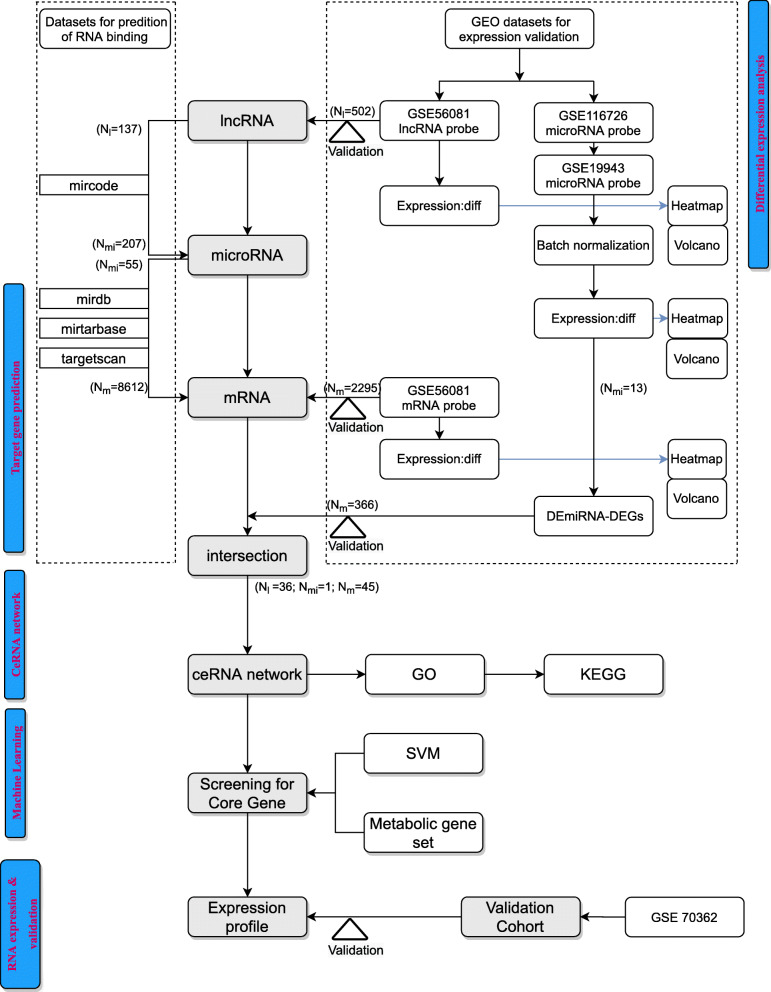
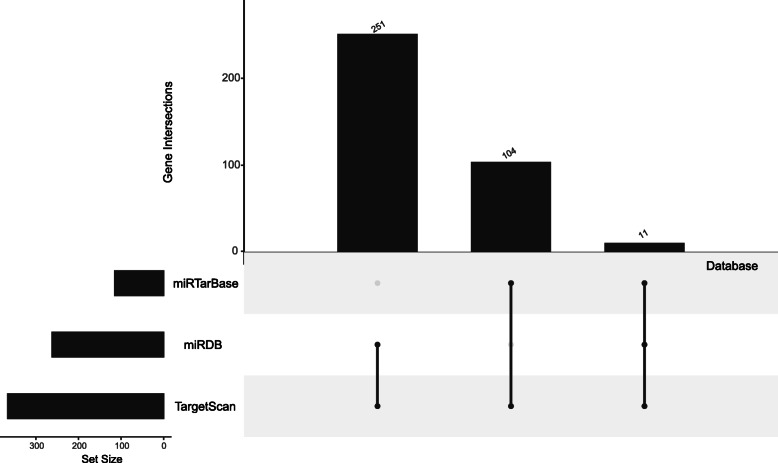
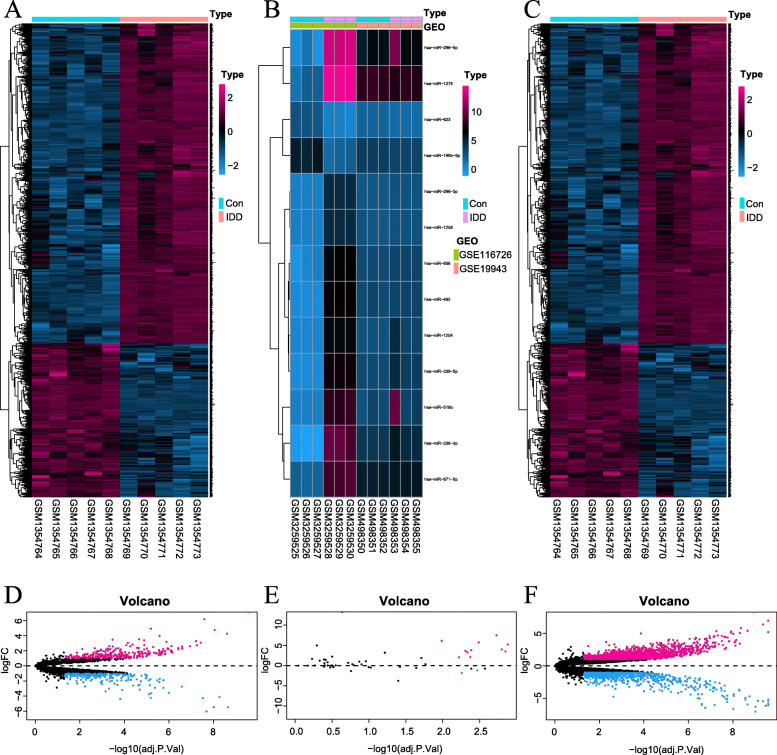
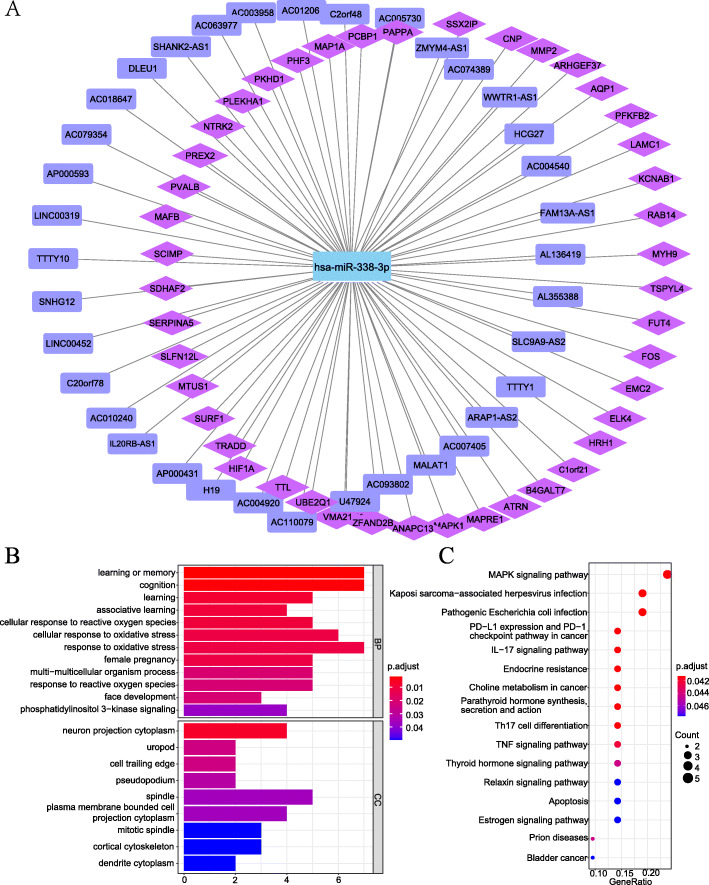
Methods: We retrieved and downloaded four independent IDD microarray datasets from the Gene Expression Omnibus. Combining the predicted interactions from online databases (miRcode, miRDB, miRTarBase, and TargetScan), differentially expressed lncRNAs (DElncRNAs), miRNAs (DEmiRNAs), and mRNAs (DEmRNAs) were identified. A ceRNA network was constructed and annotated using GO and KEGG pathway enrichment analyses. Moreover, we searched the online metabolic gene set and used support vector machine (SVM) to find the critical metabolic DEmRNA(s) and other DERNAs. Differential gene expression was validated with a merged dataset.
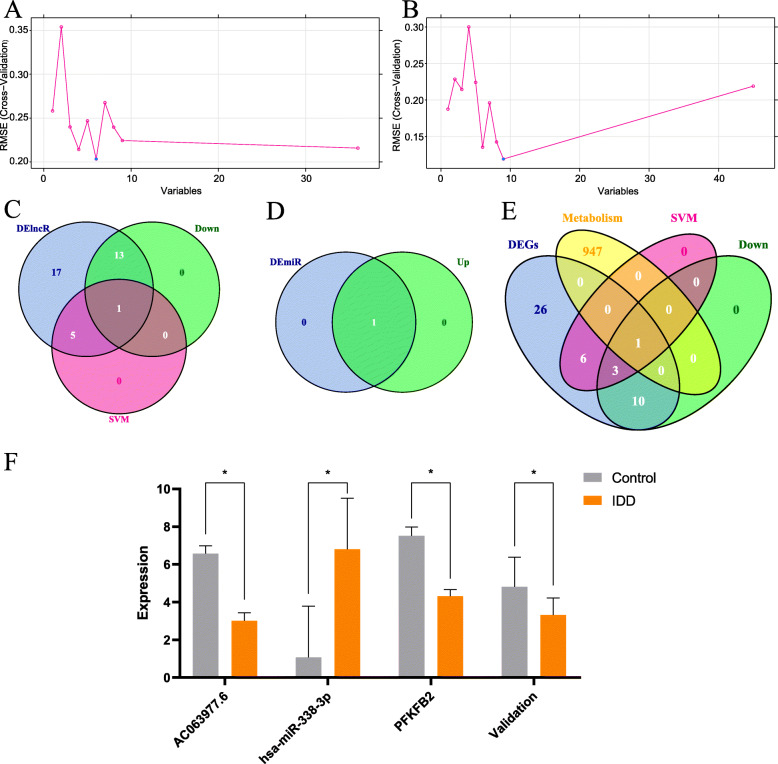
Results: A total of 45 DEmRNAs, 36 DElncRNAs, and only one DEmiRNA (miR-338-3p) were identified in the IDD microarray datasets. GO and KEGG pathway enrichment analyses revealed that the DEmRNAs were predominantly enriched in the PI3K-Akt signaling pathway, MAPK signaling pathway, IL-17 signaling pathway, apoptosis, and cellular response to oxidative stress. Based on SVM screening, 6-phosphofructo-2-kinase/fructose-2,6-bisphosphatase (PFK/FBPase) 2 is the critical metabolic gene with lower expression in IDD, and AC063977.6 is the key lncRNA with lower expression in IDD. The ceRNA hypothesis suggests that AC063977.6, miR-338-3p (high expression), and PFKFB2 are dysregulated as an axis in IDD.
Conclusions: The results suggest that lncRNA AC063977.6 correlate with PFKFB2, the vital metabolic signature gene, via targeting miR-338-3p during IDD pathogenesis. The current study may shed light on unraveling the pathogenesis of IDD.
Keywords: Competing endogenous RNA; Intervertebral disc degeneration; Long noncoding RNA; Metabolism; MicroRNA.
Conflict of interest statement
The authors declare that they do not have anything to disclose regarding conflict of interest with respect to this manuscript.
Figures
References
-
- Capoor MN, Ruzicka F, Machackova T, Jancalek R, Smrcka M, Schmitz JE, Hermanova M, Sana J, Michu E, Baird JC, et al. Prevalence of Propionibacterium acnes in intervertebral discs of patients undergoing lumbar microdiscectomy: a prospective cross-sectional study. PLoS One. 2016;11(8):e0161676. doi: 10.1371/journal.pone.0161676. - DOI - PMC - PubMed
MeSH terms
Substances
LinkOut - more resources
Full Text Sources
Other Literature Sources
Miscellaneous
