


Examining the news media reaction to a national sugary beverage tax in South Africa: a quantitative content analysis
- PMID: 33676468
- PMCID: PMC7937301
- DOI: 10.1186/s12889-021-10460-1
Examining the news media reaction to a national sugary beverage tax in South Africa: a quantitative content analysis
Abstract
Background: South Africa was the first sub-Saharan African country to implement a sugar-sweetened beverage (SSB) tax called the Health Promotion Levy (HPL) in April 2018. Given news media can increase public awareness and sway opinions, this study analyzed how the media represented the HPL, including expressions of support or challenge, topics associated with the levy, and stakeholder views of the HPL.
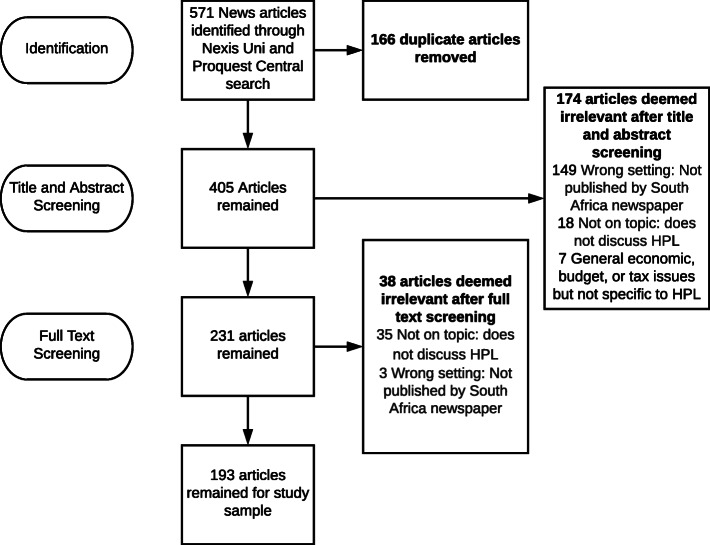
Methods: We performed a quantitative content analysis of online South African news articles related to the HPL published between January 1, 2017 and June 30, 2019. We coded the presence or absence of mentions related to health and economic effects of the HPL and HPL support or opposition. Prevalence of these mentions, overall and by source (industry, government, academics, other), were analyzed with Pearson χ2 and post-hoc Fisher exact tests.
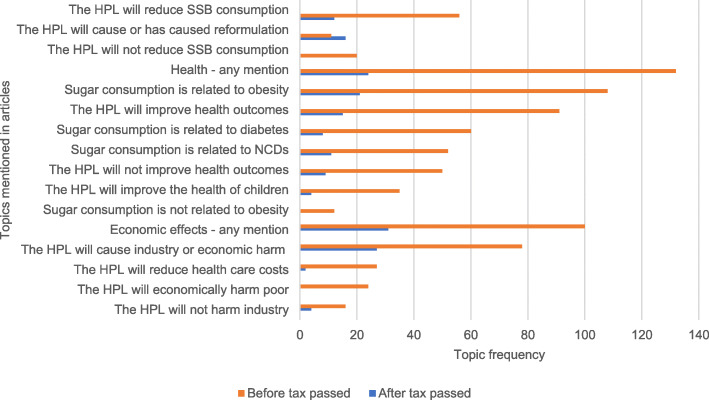
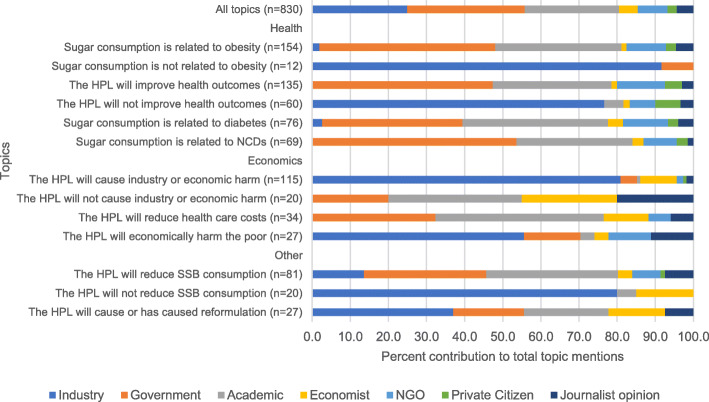
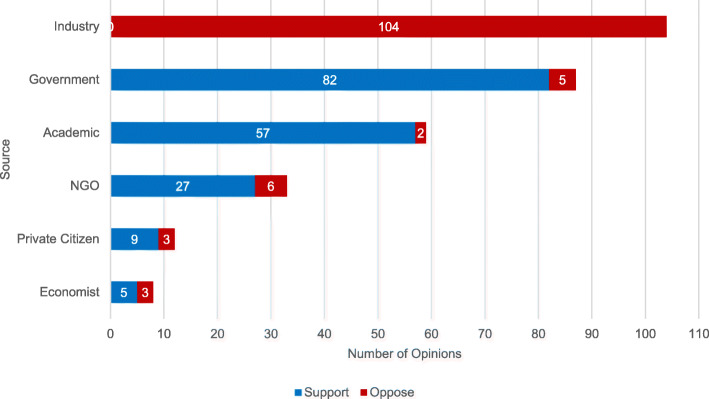
Results: Across all articles, 81% mentioned health, and 65% mentioned economics topics. 54% of articles expressed support, 26% opposition, and 20% a balanced view of the HPL. All sources except industry expressed majority support for the HPL. Health reasons were the most common justifications for support, and economic harms were the most common justifications for opposition. Statements that sugar intake is not related to obesity, the HPL will not reduce SSB intake, and the HPL will cause industry or economic harm were all disproportionately high in industry sources (92, 80, and 81% vs 25% prevalence in total sample) (p < 0.001). Statements that sugar intake is related to obesity and non-communicable diseases were disproportionately high in both government (46 and 54% vs 31% prevalence in total sample) (p < 0.001) and academics (33 and 38% vs 25% prevalence in total sample) (p < 0.05). Statements that the HPL will improve health and the HPL will reduce health care costs were disproportionately high in government (47% vs 31% prevalence in total sample) (p < 0.001) and academics (44% vs 25% prevalence in total sample) (p < 0.05), respectively.
Conclusions: Industry expressed no support for the HPL, whereas academics, government, and other sources mainly expressed support. Future studies would be improved by linking news media exposure to SSB intake data to better understand the effects news media may have on individual behavior change.
Keywords: Diabetes; News media; Obesity; Policy; South Africa; Sugar-sweetened beverages; Tax.
Conflict of interest statement
The authors declare that they have no competing interests.
Figures

References
Publication types
MeSH terms
Substances
Grants and funding
LinkOut - more resources
Full Text Sources
Other Literature Sources
Research Materials
Miscellaneous
