


Standardization of three-dimensional pose of cylindrical implants from intraoral radiographs: a preliminary study
- PMID: 33676469
- PMCID: PMC7937219
- DOI: 10.1186/s12903-021-01448-9
Standardization of three-dimensional pose of cylindrical implants from intraoral radiographs: a preliminary study
Abstract
Background: To introduce a theoretical solution to a posteriori describe the pose of a cylindrical dental fixture as appearing on radiographs; to experimentally validate the method described.
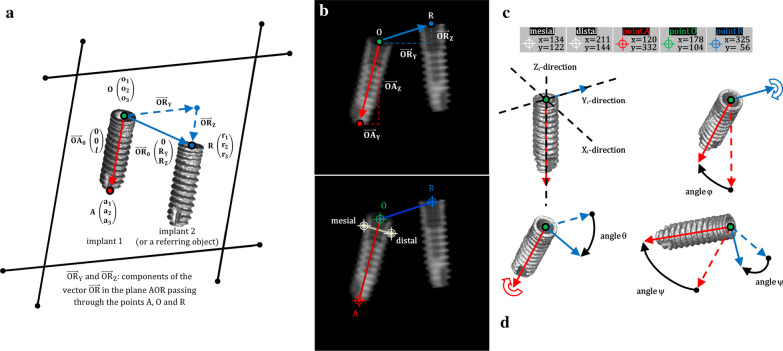
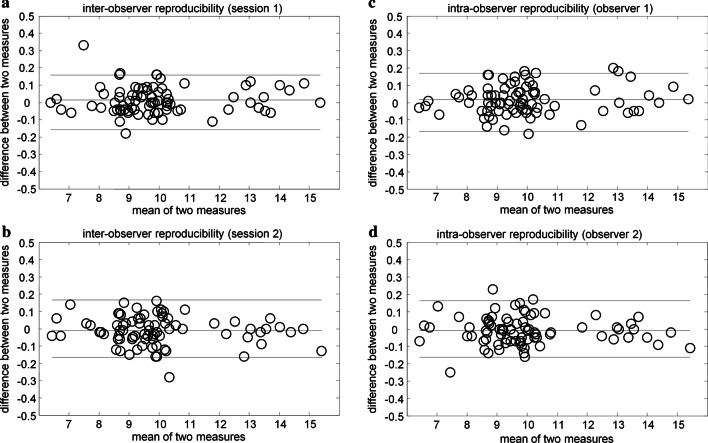
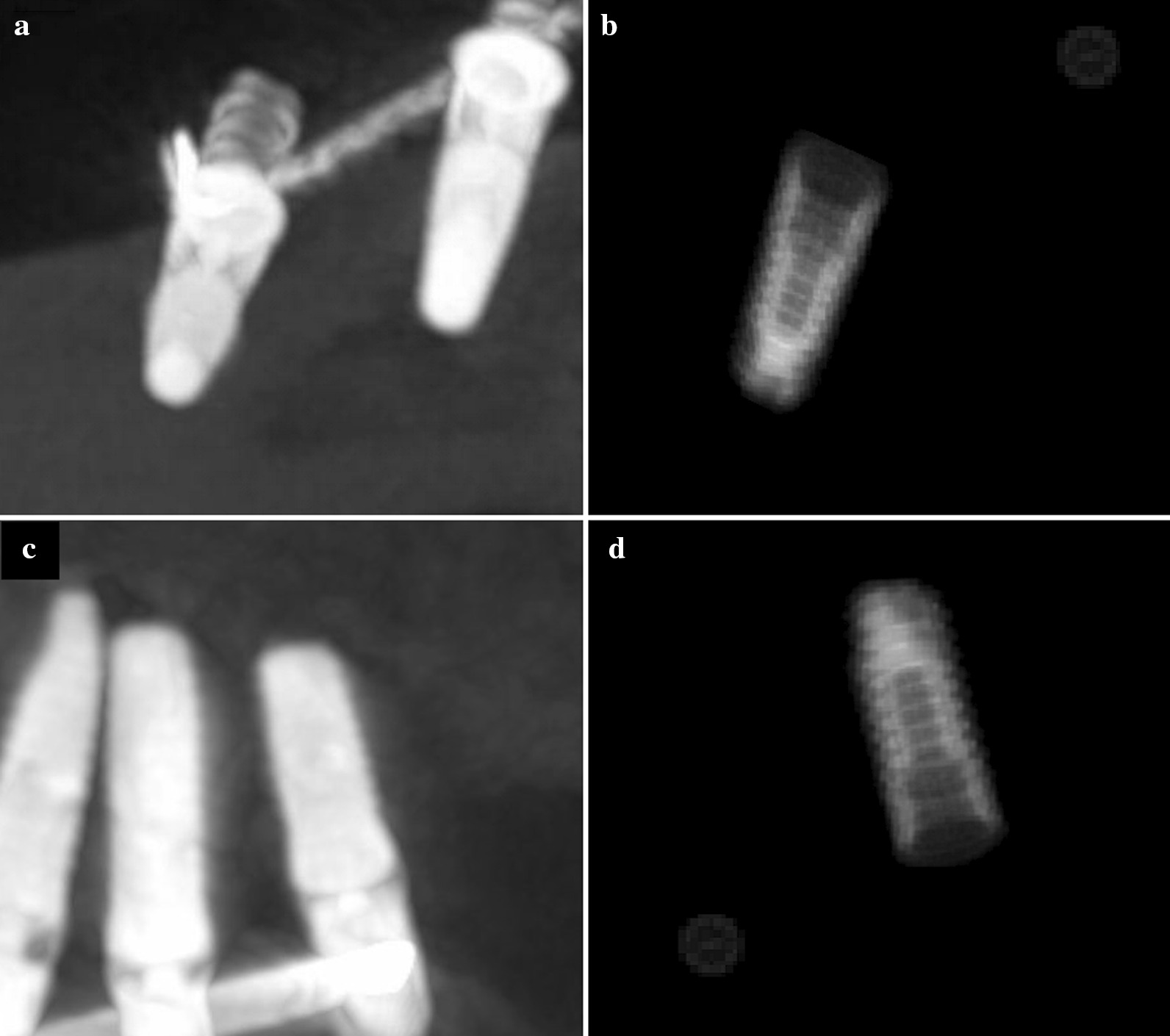
Methods: The pose of a conventional dental implant was described by a triplet of angles (phi-pitch, theta-roll, and psi-yaw) which was calculated throughout vector analysis. Radiographic- and simulated-image obtained with an algorithm were compared to test effectiveness, reproducibility, and accuracy of the method. The length of the dental implant as appearing on the simulated image was calculated by the trigonometric function and then compared with real length as it appeared on a two-dimensional radiograph.
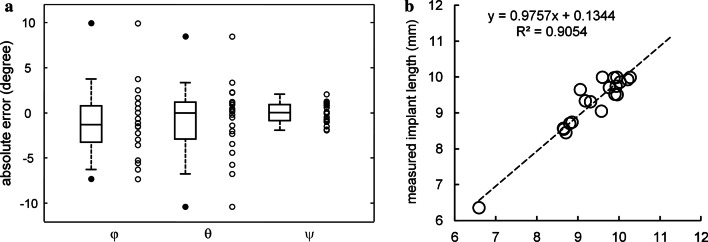
Results: Twenty radiographs were analyzed for the present in silico and retrospective study. Among 40 fittings, 37 resulted as resolved with residuals ≤ 1 mm. Similar results were obtained for radiographic and simulated implants with absolute errors of - 1.1° ± 3.9° for phi; - 0.9° ± 4.1° for theta; 0° ± 1.1° for psi. The real and simulated length of the implants appeared to be heavily correlated. Linear dependence was verified by the results of the robust linear regression: 0.9757 (slope), + 0.1344 mm (intercept), and an adjusted coefficient of determination of 0.9054.
Conclusions: The method allowed clinicians to calculate, a posteriori, a single real triplet of angles (phi, theta, psi) by analyzing a two-dimensional radiograph and to identify cases where standardization of repeated intraoral radiographies was not achieved. The a posteriori standardization of two-dimensional radiographs could allowed the clinicians to minimize the patient's exposure to ionizing radiations for the measurement of marginal bone levels around dental implants.
Keywords: Computer simulation; Dental implant(s); Dental informatics/bioinformatic; Digital imaging/radiology; Mathematical modeling.
Conflict of interest statement
The authors declare that they have no competing interest.
Figures
References
-
- Cassetta M, Di Giorgio R, Barbato E. Are intraoral radiographs reliable in determining peri-implant marginal bone level changes? The correlation between open surgical measurements and peri-apical radiographs. Int J Oral Maxillofac Surg. 2018;47(10):1358–1364. doi: 10.1016/j.ijom.2018.05.018. - DOI - PubMed
-
- Menchini-Fabris GB, Covani U, Toti P, Marconcini S, Barone A, Martuscelli R. A methodological approach to standardize and control the quality of the position and alignment of lamina implants on two-dimensional radiographs. Oral Radiol. 2020;36:288–306. doi: 10.1007/s11282-019-00374-5. - DOI - PubMed
MeSH terms
Substances
LinkOut - more resources
Full Text Sources
Other Literature Sources
