


A survey of International Health Regulations National Focal Points experiences in carrying out their functions
- PMID: 33676512
- PMCID: PMC7936598
- DOI: 10.1186/s12992-021-00675-7
A survey of International Health Regulations National Focal Points experiences in carrying out their functions
Abstract
Background: The 2005 International Health Regulations (IHR (2005)) require States Parties to establish National Focal Points (NFPs) responsible for notifying the World Health Organization (WHO) of potential events that might constitute public health emergencies of international concern (PHEICs), such as outbreaks of novel infectious diseases. Given the critical role of NFPs in the global surveillance and response system supported by the IHR, we sought to assess their experiences in carrying out their functions.
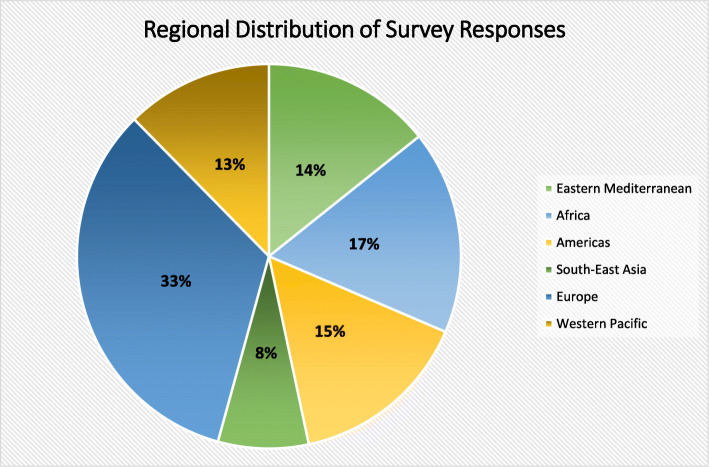
Methods: In collaboration with WHO officials, we administered a voluntary online survey to all 196 States Parties to the IHR (2005) in Africa, Asia, Europe, and South and North America, from October to November 2019. The survey was available in six languages via a secure internet-based system.
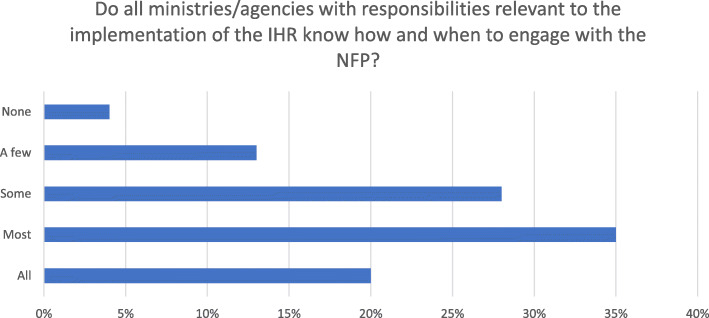
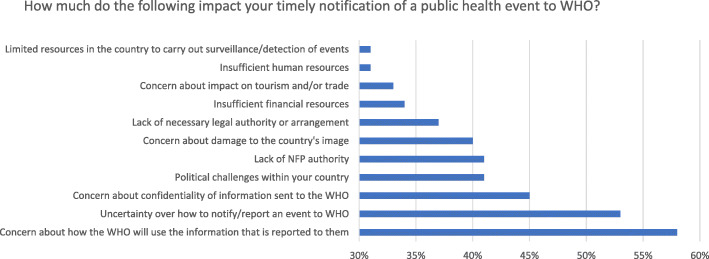
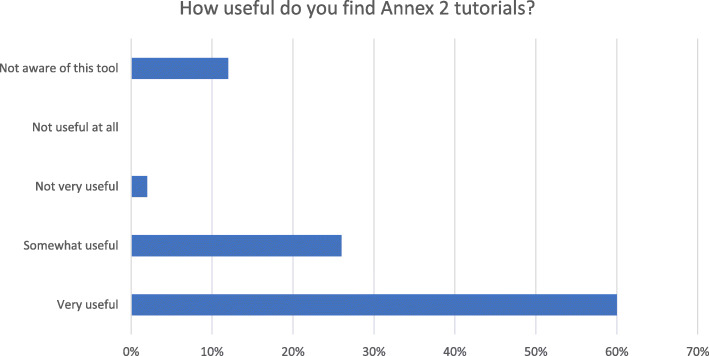
Results: In total, 121 NFP representatives answered the 56-question survey; 105 in full, and an additional 16 in part, resulting in a response rate of 62% (121 responses to 196 invitations to participate). The majority of NFPs knew how to notify the WHO of a potential PHEIC, and believed they have the content expertise to carry out their functions. Respondents found training workshops organized by WHO Regional Offices helpful on how to report PHEICs. NFPs experienced challenges in four critical areas: 1) insufficient intersectoral collaboration within their countries, including limited access to, or a lack of cooperation from, key relevant ministries; 2) inadequate communications, such as deficient information technology systems in place to carry out their functions in a timely fashion; 3) lack of authority to report potential PHEICs; and 4) inadequacies in some resources made available by the WHO, including a key tool - the NFP Guide. Finally, many NFP representatives expressed concern about how WHO uses the information they receive from NFPs.
Conclusion: Our study, conducted just prior to the COVID-19 pandemic, illustrates key challenges experienced by NFPs that can affect States Parties and WHO performance when outbreaks occur. In order for NFPs to be able to rapidly and successfully communicate potential PHEICs such as COVID-19 in the future, continued measures need to be taken by both WHO and States Parties to ensure NFPs have the necessary authority, capacity, training, and resources to effectively carry out their functions as described in the IHR.
Keywords: COVID-19; Health security; International health regulations (IHR); National Focal Point (NFP); Public health; Public health emergency of international concern (PHEIC).
Conflict of interest statement
This study was funded by the World Health Organization and completed independently by the Ottawa Hospital Research Institute.
Professor Gostin is Director of the WHO Collaborating Center on National and Global Health Law and is on the IHR expert roster.
Professor Fidler has served as a consultant to the WHO and is on the IHR expert roster.
Dr. Wilson has served as a consultant to the WHO on IHR related issues.
Dr. Hollmeyer is employed by WHO at the International Health Regulations Secretariat, WHO Headquarters, Geneva, Switzerland.
Figures
References
-
- World Health Organization . International Health Regulations (2005) Third Edition. 2016.
-
- World Health Organization. Implementation of the International Health Regulations (2005) Report of the Review Committee on Second Extensions for Establishing National Public Health Capacities and on IHR Implementation. [cited 2020 May 26]. Available from: https://apps.who.int/gb/ebwha/pdf_files/WHA68/A68_22Add1-en.pdf?ua=1
-
- World Health Organization . Implementation of the International Health Regulations (2005) Report of the Review Committee on Second Extensions for Establishing National Public Health Capacities and on IHR Implementation Report by the Director-General. 2015.
Publication types
MeSH terms
Grants and funding
LinkOut - more resources
Full Text Sources
Other Literature Sources
