


Cell-based non-invasive prenatal testing for monogenic disorders: confirmation of unaffected fetuses following preimplantation genetic testing
- PMID: 33677749
- PMCID: PMC8417213
- DOI: 10.1007/s10815-021-02104-5
Cell-based non-invasive prenatal testing for monogenic disorders: confirmation of unaffected fetuses following preimplantation genetic testing
Abstract
Purpose: Proof of concept of the use of cell-based non-invasive prenatal testing (cbNIPT) as an alternative to chorionic villus sampling (CVS) following preimplantation genetic testing for monogenic disorders (PGT-M).
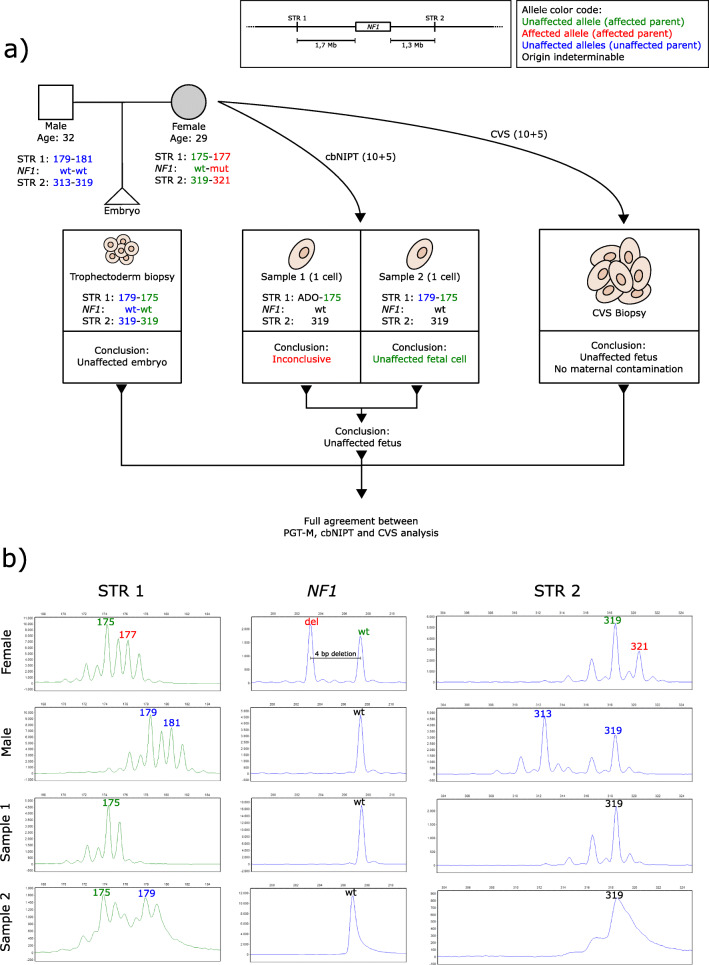
Method: PGT-M was performed by combined testing of short tandem repeat (STR) markers and direct mutation detection, followed by transfer of an unaffected embryo. Patients who opted for follow-up of PGT-M by CVS had blood sampled, from which potential fetal extravillous throphoblast cells were isolated. The cell origin and mutational status were determined by combined testing of STR markers and direct mutation detection using the same setup as during PGT. The cbNIPT results with respect to the mutational status were compared to those of genetic testing of the CVS.
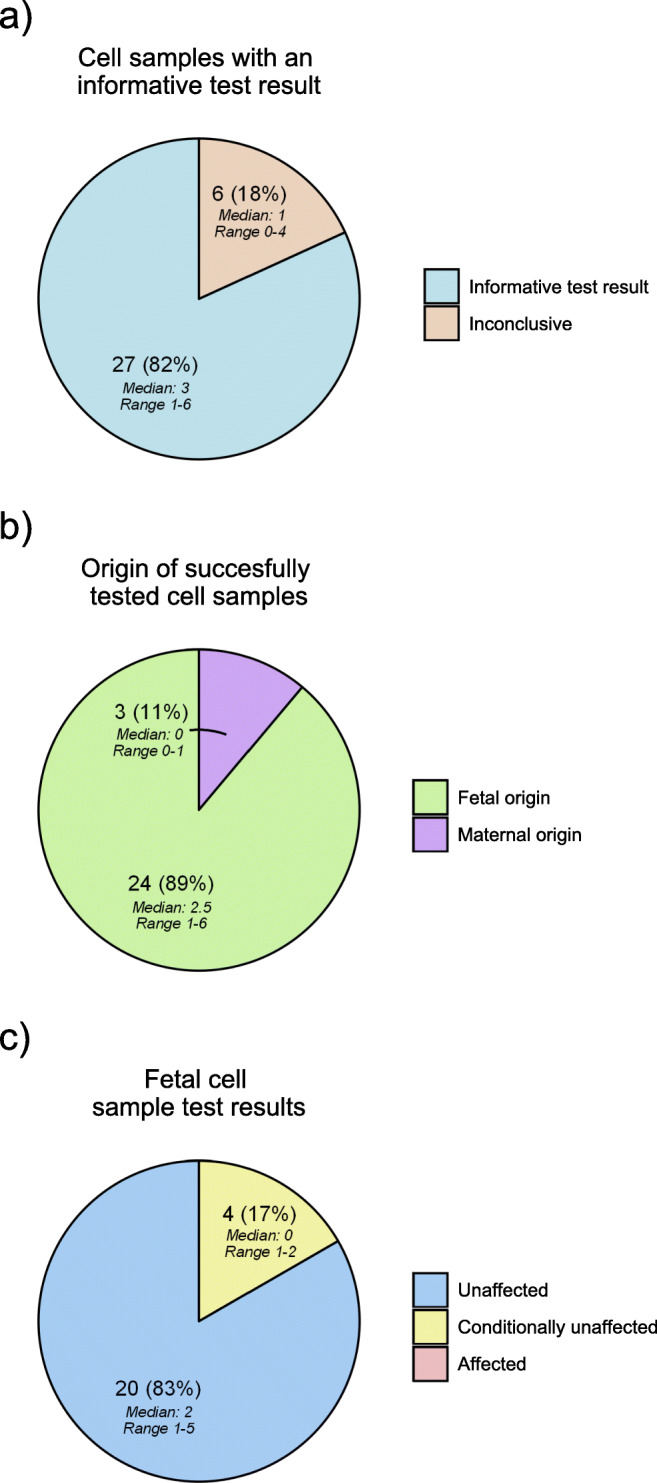
Results: Eight patients had blood collected between gestational weeks 10 and 13, from which 33 potential fetal cell samples were isolated. Twenty-seven out of 33 isolated cell samples were successfully tested (82%), of which 24 were of fetal origin (89%). This corresponds to a median of 2.5 successfully tested fetal cell samples per case (range 1-6). All fetal cell samples had a genetic profile identical to that of the transferred embryo confirming a pregnancy with an unaffected fetus, in accordance with the CVS results.
Conclusion: These findings show that although measures are needed to enhance the test success rate and the number of cells identified, cbNIPT is a promising alternative to CVS.
Trial registration number: N-20180001.
Keywords: PGT-M; Prenatal testing; STR markers; cbNIPT.
© 2021. The Author(s).
Figures
References
-
- Harton G, Braude P, Lashwood A, Schmutzler A, Traeger-Synodinos J, Wilton L, Harper JC, European Society for Human Reproduction and Embryology (ESHRE) PGD Consortium ESHRE PGD consortium best practice guidelines for organization of a PGD centre for PGD/preimplantation genetic screening. Hum Reprod. 2011;26:14–24. doi: 10.1093/humrep/deq229. - DOI - PubMed
-
- Hill M, Twiss P, Verhoef TI, Drury S, McKay F, Mason S, Jenkins L, Morris S, Chitty LS. Non-invasive prenatal diagnosis for cystic fibrosis: Detection of paternal mutations, exploration of patient preferences and cost analysis. Prenat Diagn. 2015;35:950–958. doi: 10.1002/pd.4585. - DOI - PMC - PubMed
-
- Hill M, Johnson JA, Langlois S, Lee H, Winsor S, Dineley B, Horniachek M, Lalatta F, Ronzoni L, Barrett AN, Advani HV, Choolani M, Rabinowitz R, Pajkrt E, van Schendel RV, Henneman L, Rommers W, Bilardo CM, Rendeiro P, Ribeiro MJ, Rocha J, Bay Lund IC, Petersen OB, Becher N, Vogel I, Stefánsdottir V, Ingvarsdottir S, Gottfredsdottir H, Morris S, Chitty LS. Preferences for prenatal tests for Down syndrome: an international comparison of the views of pregnant women and health professionals. Eur J Hum Genet. 2016;24:968–975. doi: 10.1038/ejhg.2015.249. - DOI - PMC - PubMed
Publication types
MeSH terms
Grants and funding
LinkOut - more resources
Full Text Sources
Other Literature Sources
Medical
