


The Effect of Prolonged Pre-Operative Halo Gravity Traction for Severe Spinal Deformities on the Cervical Spine Radiographs
- PMID: 33678056
- PMCID: PMC9972284
- DOI: 10.1177/2192568221998644
The Effect of Prolonged Pre-Operative Halo Gravity Traction for Severe Spinal Deformities on the Cervical Spine Radiographs
Abstract
Study design: Retrospective review of consecutive series.
Objective: The study sought to assess the effect of prolonged pre-operative halo gravity traction (HGT) on the c-spine radiographs.
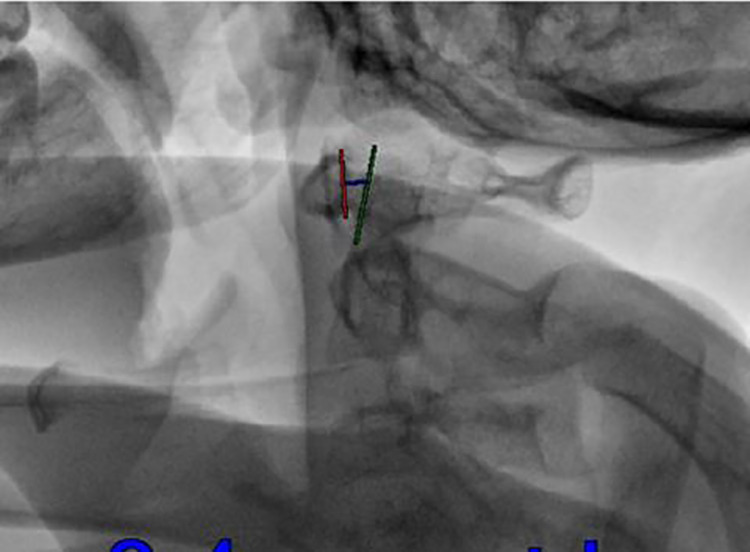
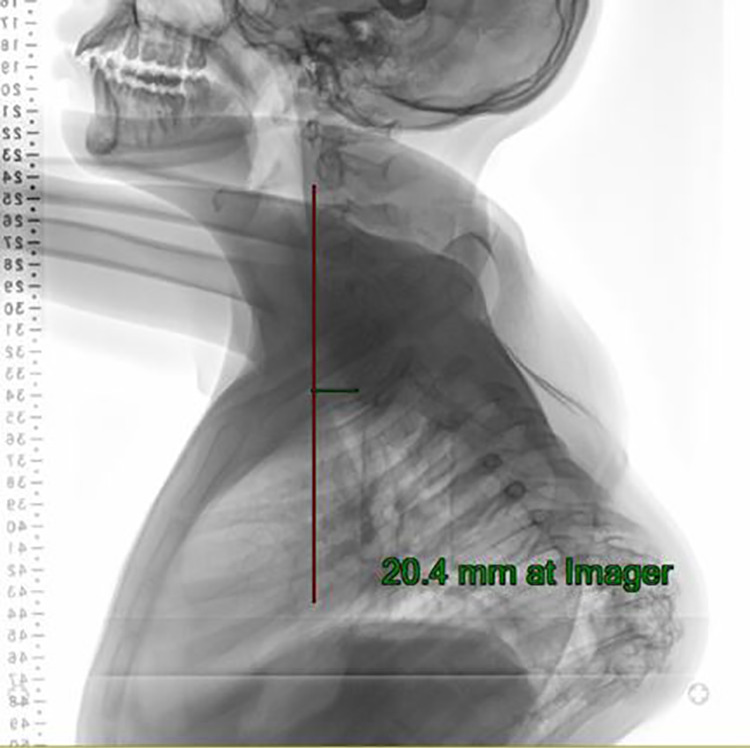
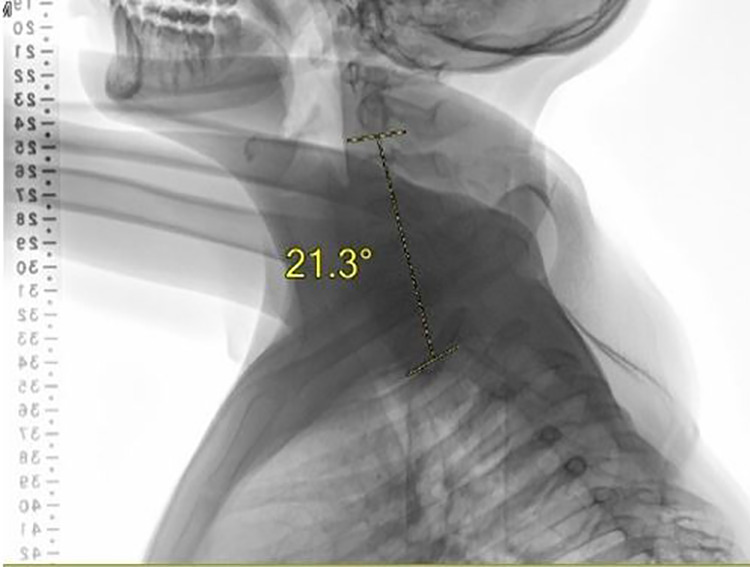
Methods: Data of 37 pediatric and adult patients who underwent ≥ 12wks pre-op HGT prior to definitive spine surgery from 2013-2015 at a single site in West Africa was reviewed. Radiographic assessment of the c-spine including ADI, SVA and C2-C7 Lordosis were done at pre HGT and at 4 weekly intervals. Paired T-Test was performed to evaluate changes in these parameters during HGT.
Results: 37pts, 18/19 (F/M). Average age 18.2yrs. Diagnoses: 22 idiopathic, 6 congenital, 3 Post TB, 2 NM and 4 NF. Average duration of HGT: 125 days. Baseline coronal Cobb:130 deg, corrected 30% in HGT; baseline sagittal Cobb:146 deg, corrected 32% post HGT. Baseline ADI (3.17 ± 0.63 mm) did not change at 4wks (P > 0.05) but reduced at 8wks (2.80 ± 0.56 mm) and 12wks (2.67 ± 0.51 mm) post HGT (P < 0.05). Baseline HGT SVA (20.7 ± 14.98 mm) significantly improved at 4wks (11.55 ± 10.26 mm), 8wks (7.54 ± 6.78 mm) and 12wks (8.88 ± 4.5 mm) (P < 0.05). Baseline C2-C7 lordosis (43 ± 20.1 deg) reduced at 4wks (26 ± 16.37 deg), 8wks (17.8 ± 14.77 deg) and 12wks (16.7 ± 11.33 deg) post HGT (P < 0.05). There was no incidence of atlanto-axial instability on flexion extension radiographs at any interval.
Conclusion: Prolonged HGT, while providing partial correction of severe spine deformities, also appeared to have no adverse effect on atlanto-axial stability or cervical alignment. Therefore, HGT can be safely applied for several weeks in the preoperative management of severe spine deformities in pediatric/adult patients.
Keywords: atlanto-dental interval; cervical spine; halo gravity traction; sagittal; sagittal balance; vertical axis.
Conflict of interest statement
The author(s) declared no potential conflicts of interest with respect to the research, authorship, and/or publication of this article.
Figures
References
-
- Ames CP, Blondel B, Scheer JK, et al. Cervical radiographical alignment: comprehensive assessment techniques and potential importance in cervical myelopathy. Spine. 2013. 15;38(22S):S149–S160. - PubMed
-
- Scheer JK, Passias PG, Sorocean AM, et al. Association between preoperative cervical sagittal deformity and inferior outcomes at 2-year follow-up in patients with adult thoracolumbar deformity: analysis of 182 patients: Presented at the 2015 AANS/CNS Joint Section on Disorders of the Spine and Peripheral Nerves. J Neurosurg Spine. 2016;24(1):108–115. - PubMed
-
- Smith JS, Lafage V, Schwab FJ, et al. Prevalence and type of cervical deformity among 470 adults with thoracolumbar deformity. Spine. 2014;39(17):E1001–E1009. - PubMed
LinkOut - more resources
Full Text Sources
Other Literature Sources
Miscellaneous
