


β-sitosterol Mediated Silver Nanoparticles Induce Cytotoxicity in Human Colon Cancer HT-29 Cells
- PMID: 33680372
- PMCID: PMC7903430
- DOI: 10.18502/ajmb.v13i1.4577
β-sitosterol Mediated Silver Nanoparticles Induce Cytotoxicity in Human Colon Cancer HT-29 Cells
Abstract
Background: Silver nanoparticles (AgNP) are commonly used metallic nanoparticles in health care systems. Colon cancer incidence is increasing worldwide. In this study, AgNP was synthesized using β-sitosterol and its cytotoxic potential was evaluated in human colon cancer (HT-29) cells.
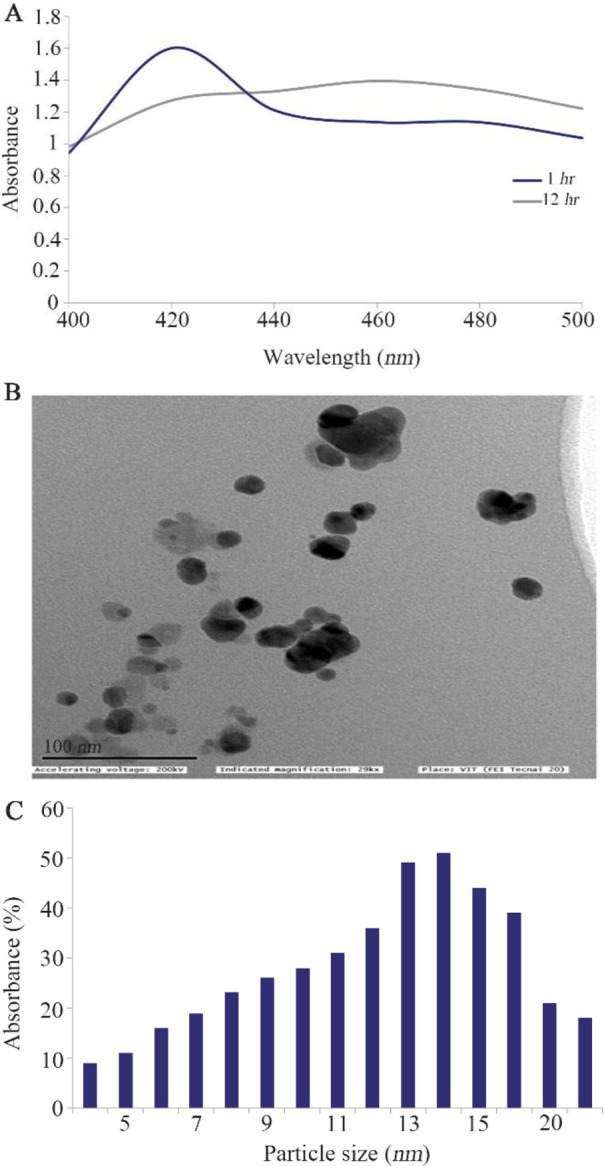
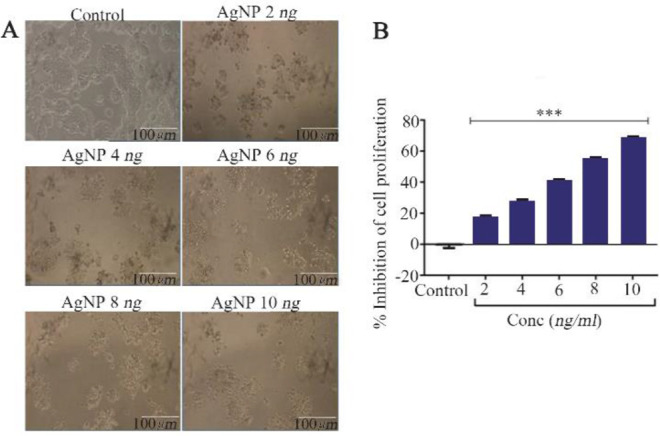
Methods: Characterization of AgNP was analyzed by TEM and spectrophotometry analysis. HT-29 cells were treated with different concentrations (2, 4, 6, 8 and 10 ng/ml) of AgNPs and cytotoxicity was evaluated by MTT assay. The apoptosis was analyzed by the flow cytometry. The expression of p53 protein was analyzed by western blotting.
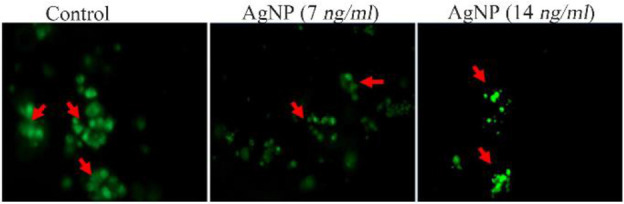
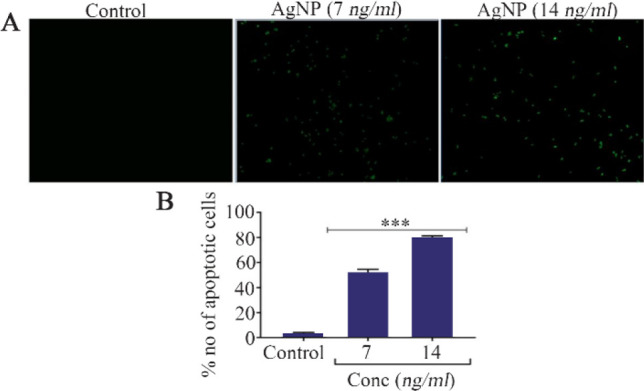
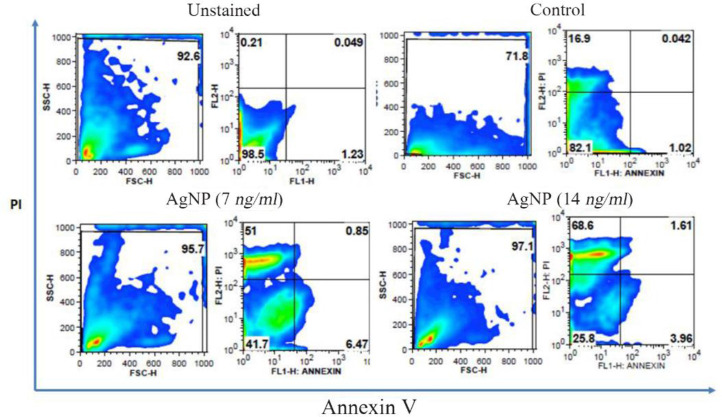
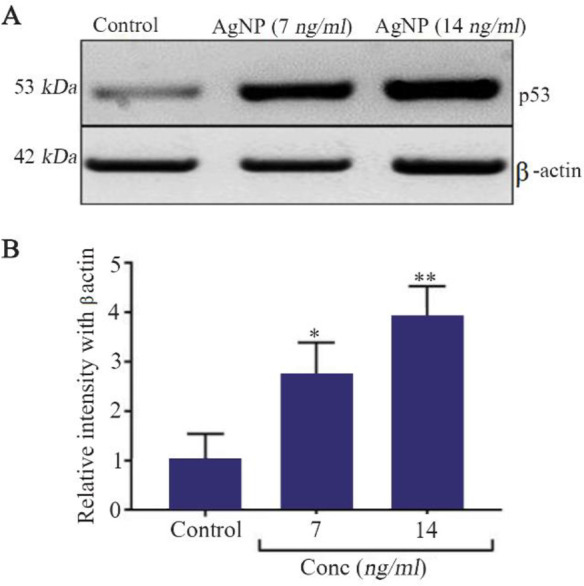
Results: β-sitosterol mediated AgNP are spherical in shape and induced concentration-dependent cytotoxicity in HT-29 cells. AgNP caused apoptosis related morphological changes as evidenced by annexin positive staining. AgNP treatments also induced the p53 expression in HT-29 cells.
Conclusion: Our present result suggests that β-sitosterol mediated AgNP induce apoptosis in colon cancer cells and this finding may pave the way for further experimental analysis in vivo.
Keywords: Apoptosis; Colon neoplasms; HT29 cells; Silver nanoparticles; β-sitosterol.
Copyright© 2021 Avicenna Research Institute.
Conflict of interest statement
Conflict of Interest The authors declare they have no conflict of interest.
Figures
References
-
- Shi C, Wu F, Zhu XC, Xu J. Incorporation of beta-sitosterol into the membrane increases resistance to oxidative stress and lipid peroxidation via estrogen receptor-mediated PI3K/GSK3beta signaling. Biochim Biophys Acta 2013;1830(3):2538–44. - PubMed
LinkOut - more resources
Full Text Sources
Research Materials
Miscellaneous