


Physiological and biochemical responses involved in vegetative desiccation tolerance of resurrection plant Selaginella brachystachya
- PMID: 33680700
- PMCID: PMC7897589
- DOI: 10.1007/s13205-021-02667-1
Physiological and biochemical responses involved in vegetative desiccation tolerance of resurrection plant Selaginella brachystachya
Abstract
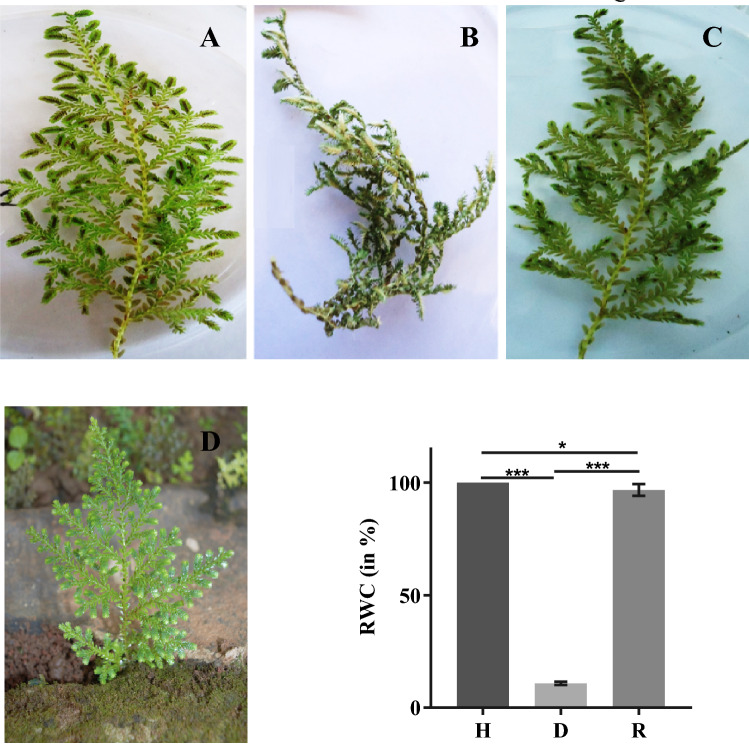
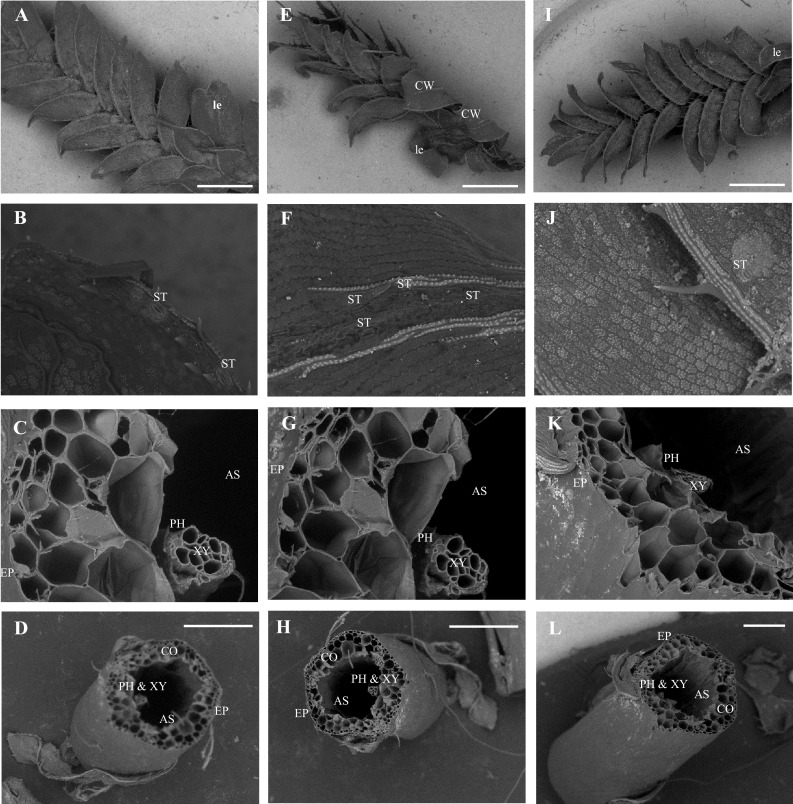
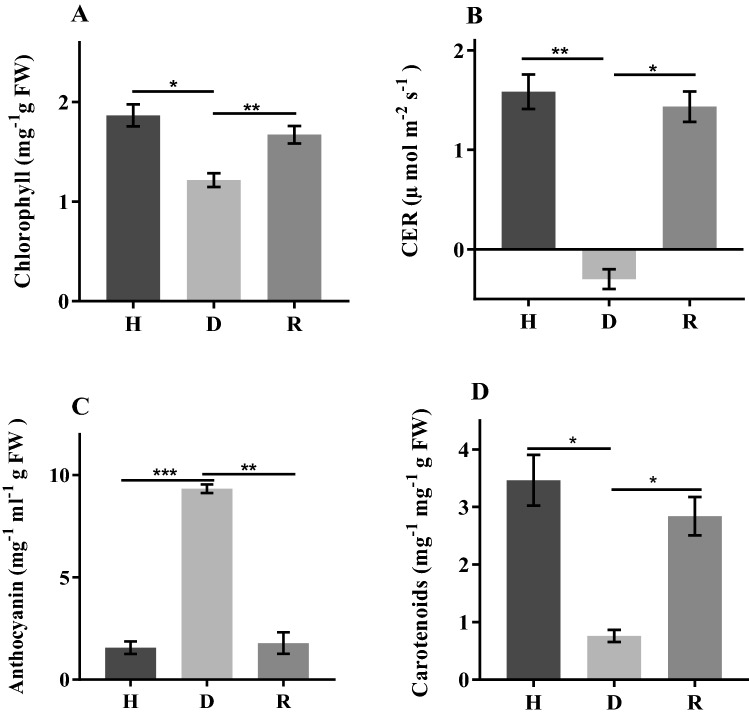
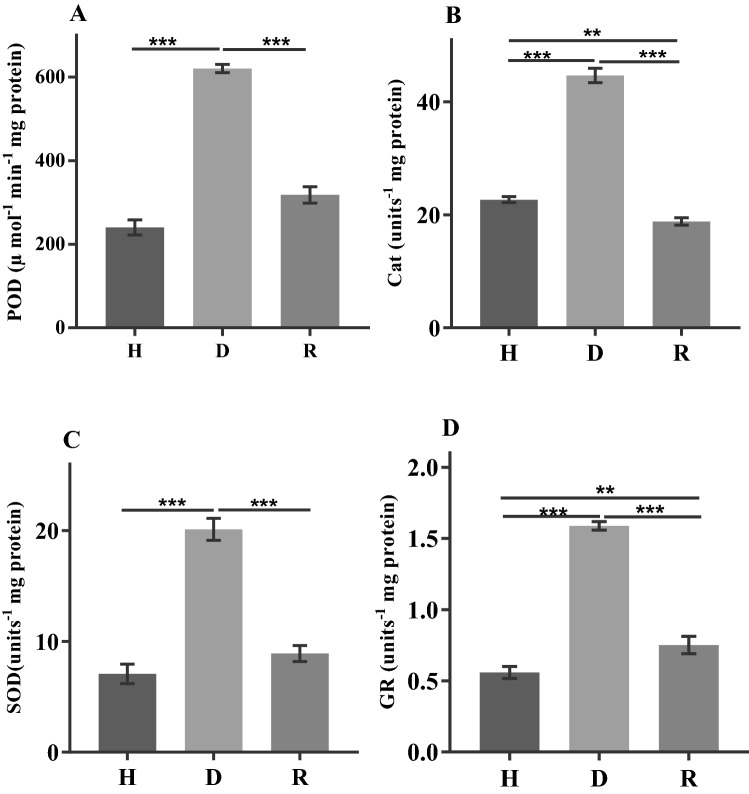
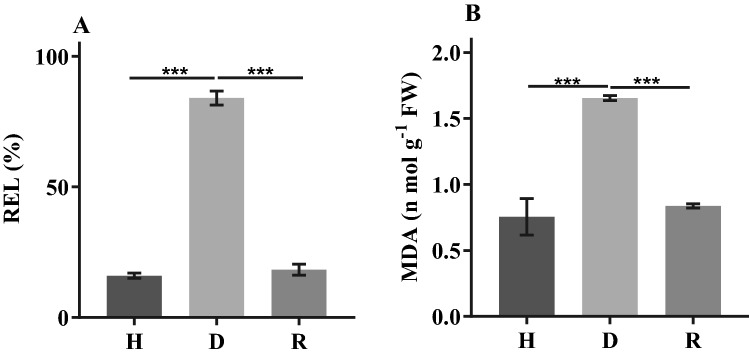
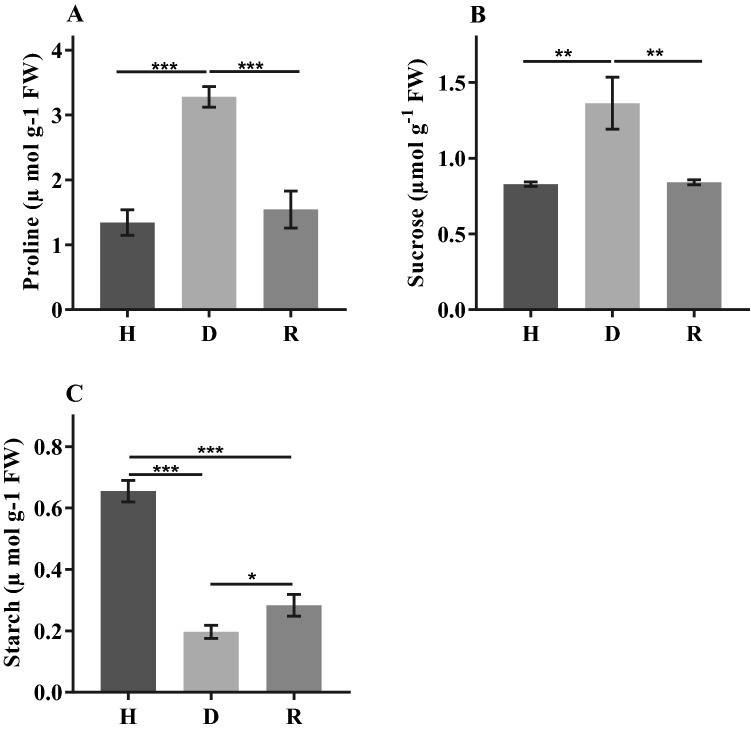
The vegetative desiccation tolerance of Selaginella brachystachya has been evaluated for its ability to revive from a desiccation (air dry) state and start normal functioning when rehydrated. In this study, S. brachystachya was identified by DNA barcoding. Experiments were conducted using the detached hydrated, desiccated and rehydrated fronds under laboratory conditions to understand the mechanism of revival upon the water availability. Scanning Electron Microscope images during desiccation showed closed stomata and inside curled leaves. Chlorophyll concentration decreased by 1.1 fold in desiccated state and recovered completely upon rehydration. However, the total carotenoid content decreased 4.5 fold while the anthocyanin concentration increased 5.98 fold and the CO2 exchange rate became negative during desiccation. Lipid peroxidation and superoxide radical production were enhanced during desiccation by 68.32 and 73.4%, respectively. Relative electrolyte leakage was found to be minimal during desiccation. Activities of antioxidant enzymes, namely peroxidase (158.33%), glutathione reductase (107.70%), catalase (92.95%) and superoxide dismutase (184.70%) were found to be higher in the desiccated state. The proline concentration increased by 1.4 fold, starch concentration decreased 3.9 fold and sucrose content increased 2.8 fold during desiccation. Upon rehydration, S. brachystachya recovered its original morphology, physiological and biochemical functions. Our results demonstrate that S. brachystachya minimizes desiccation stress through a range of morphological, physiological and biochemical mechanisms. These results provide useful insights into desiccation tolerance mechanisms for potential utilization in enhancing stress tolerance in crop plants.
Supplementary information: The online version contains supplementary material available at 10.1007/s13205-021-02667-1.
Keywords: Antioxidants; Desiccation tolerance; Photosynthetic parameters; Proline; REL; ROS; RWC; Resurrection plants; S. brachystachya; Starch; Sucrose; Ultrastructure.
© King Abdulaziz City for Science and Technology 2021.
Conflict of interest statement
Conflict of InterestThe authors declare that they have no conflicts of interest.
Figures

References
-
- Abdalla KO, Baker B, Rafudeen MS. Proteomic analysis of nuclear proteins during dehydration of the resurrection plant Xerophyta viscosa. Plant Growth Regul. 2010;62:279–292. doi: 10.1007/s10725-010-9497-2. - DOI
-
- Abouzari A, Fakheri BA. Reactive oxygen species: generation, oxidative damage, and signal transduction. Int J Life Sci. 2015;9:3–17. doi: 10.3126/ijls.v9i5.12699. - DOI
-
- Alam A, Dwivedi A, Emmanuel I. Resurrection plants: Imperative resources in developing strategies to drought and desiccation pressure. Plant Sci Today. 2019;6:333. doi: 10.14719/pst.2019.6.3.542. - DOI
-
- Anwar Hossain M, Hoque MdA, Burritt DJ, Fujita M. oxidative damage to plants. Amsterdam: Elsevier; 2014. Proline protects plants against abiotic oxidative stress; pp. 477–522.
LinkOut - more resources
Full Text Sources
Other Literature Sources
