


Gender dysphoria: prejudice from childhood to adulthood, but no impact on inflammation. A cross-sectional controlled study
- PMID: 33681906
- PMCID: PMC7932037
- DOI: 10.47626/2237-6089-2020-0007
Gender dysphoria: prejudice from childhood to adulthood, but no impact on inflammation. A cross-sectional controlled study
Abstract
Introduction: Gender dysphoria (GD) is characterized by a marked incongruence between experienced gender and one's gender assigned at birth. Transsexual individuals present a higher prevalence of psychiatric disorders when compared to non-transsexual populations, and it has been proposed that minority stress, i.e., discrimination or prejudice, has a relevant impact on these outcomes. Transsexuals also show increased chances of having experienced maltreatment during childhood. Interleukin (IL)-1β, IL-6, IL-10 and tumor necrosis factor-alpha (TNF-α) are inflammatory cytokines that regulate our immune system. Imbalanced levels in such cytokines are linked to history of childhood maltreatment and psychiatric disorders. We compared differences in IL-1β, IL-6, IL-10 and TNF-α levels and exposure to traumatic events in childhood and adulthood in individuals with and without GD (DSM-5).
Methods: Cross-sectional controlled study comparing 34 transsexual women and 31 non-transsexual men. They underwent a thorough structured interview, assessing sociodemographic information, mood and anxiety symptoms, childhood maltreatment, explicit discrimination and suicidal ideation. Inflammatory cytokine levels (IL-1β, IL-6, IL-10 and TNF-α) were measured by multiplex immunoassay.
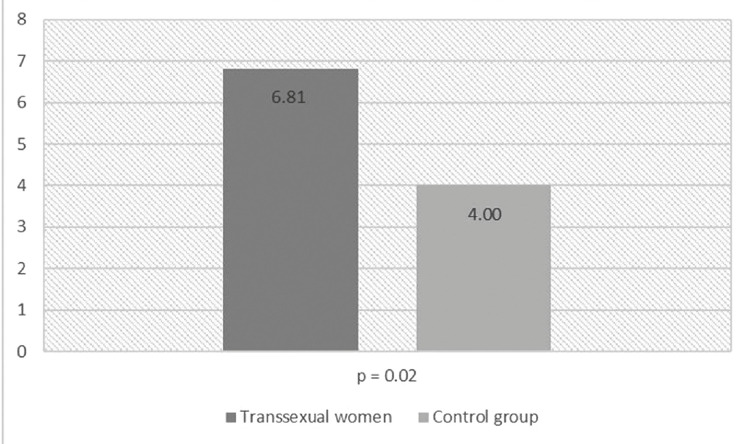
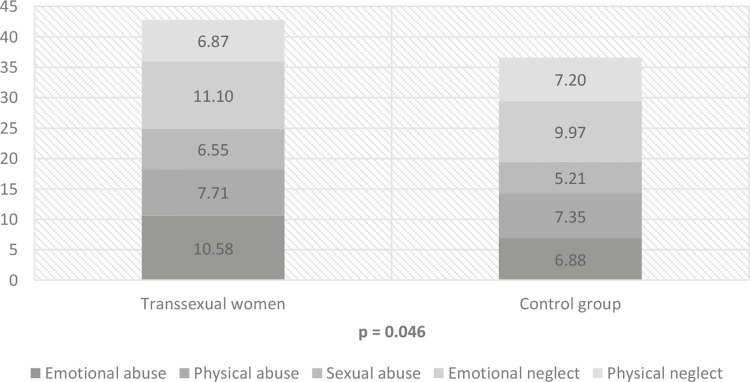
Results: Individuals with GD experienced more discrimination (p = 0.002) and childhood maltreatment (p = 0.046) than non-transsexual men. Higher suicidal ideation (p < 0.001) and previous suicide attempt (p = 0.001) rates were observed in transsexual women. However, no differences were observed in the levels of any cytokine.
Conclusions: These results suggest that transsexual women are more exposed to stressful events from childhood to adulthood than non-transsexual men and that GD per se does not play a role in inflammatory markers.
Conflict of interest statement
Disclosure
No conflicts of interest declared concerning the publication of this article.
Figures
References
-
- . American Psychiatric Association. Diagnostic and Statistical Manual of Mental Disorders, Fifth Edition (DSM-5). Arlington: American Psychiatric Publishing; 2013.
-
- . Arcelus J, Bouman WP, Van Den Noortgate W, Claes L, Witcomb G, Fernandez-Aranda F. Systematic review and meta-analysis of prevalence studies in transsexualism. Eur Psychiatry. 2015;30:807-15. - PubMed
-
- . Kersting A, Reutemann M, Gast U, Ohrmann P, Suslow T, Michael N, et al. Dissociative disorders and traumatic childhood experiences in transsexuals. J Nerv Ment Dis. 2003;191:182-9. - PubMed
-
- . Bandini E, Fisher AD, Ricca V, Ristori J, Meriggiola MC, Jannini EA, et al. Childhood maltreatment in subjects with male-to-female gender identity disorder. Int J Impot Res. 2011;23:276-85. - PubMed
MeSH terms
Substances
LinkOut - more resources
Full Text Sources
Other Literature Sources